

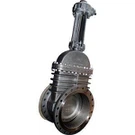
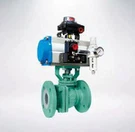
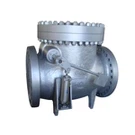
As a supplier of API Gate Valves, I often receive inquiries about the advantages of these valves. However, it's equally important to understand their disadvantages to make an informed decision. In this blog, I'll delve into the drawbacks of API Gate Valves based on my experience in the industry.
1. Slow Operation
One of the primary disadvantages of API Gate Valves is their slow operation. Unlike some other types of valves, such as ball valves or butterfly valves, gate valves require multiple turns of the handwheel to fully open or close. This is because the gate needs to be lifted or lowered through a threaded stem. For applications where rapid shut - off or opening is required, such as in emergency situations, this slow operation can be a significant drawback. For example, in a pipeline carrying highly flammable substances, a quick - acting valve might be needed to prevent a potential explosion, and an API Gate Valve may not be the best choice due to its slow response time.
2. High Torque Requirement
API Gate Valves typically require a relatively high amount of torque to operate, especially in larger sizes or when the valve has been in service for a long time. The high torque is needed to overcome the friction between the gate and the seat, as well as the resistance of the threaded stem. This means that more powerful actuators are required if the valve is to be automated. For instance, in a large - scale industrial plant, using electric or pneumatic actuators to operate API Gate Valves can be costly due to the high power requirements. Moreover, manual operation of large - sized API Gate Valves can be physically demanding for operators, which may lead to operator fatigue and potential errors.
3. Limited Flow Control
API Gate Valves are mainly designed for on - off service, and they are not well - suited for precise flow control. When a gate valve is partially open, the flow of fluid through the valve is turbulent. The gate creates an irregular flow path, which can cause vibration, noise, and erosion of the valve components. The flow coefficient of a gate valve is also highly non - linear when it is not fully open or closed. This makes it difficult to accurately control the flow rate of the fluid. In applications where precise flow regulation is necessary, such as in some chemical processes or water treatment plants, other types of valves like globe valves or control valves are more appropriate.
4. Sealing Challenges
Although API Gate Valves are designed to provide a tight seal when fully closed, they can face sealing challenges over time. The seat and gate of the valve are subject to wear and tear due to the flow of fluid, especially if the fluid contains abrasive particles. In addition, corrosion can also affect the sealing performance of the valve. For example, in a pipeline carrying seawater, the high salt content can cause corrosion of the valve components, leading to leaks. Some types of API Gate Valves, such as soft seat gate valve, use a soft material for the seat to improve sealing, but these soft seats can be damaged more easily by high - temperature or high - pressure fluids.
5. Maintenance Requirements
API Gate Valves generally have higher maintenance requirements compared to some other types of valves. The internal components of the valve, such as the gate, seat, and stem, need to be inspected regularly for wear, corrosion, and damage. If the valve is installed in a hard - to - reach location, maintenance can be even more difficult and time - consuming. For example, in an underground pipeline, accessing the valve for maintenance may require excavation work. Additionally, the disassembly and reassembly of a gate valve during maintenance need to be carried out carefully to ensure proper alignment and sealing. Failure to perform maintenance correctly can lead to valve malfunction and potential safety hazards.
6. Susceptibility to Water Hammer
Water hammer is a pressure surge or wave caused by the sudden change in the flow velocity of a fluid in a pipeline. API Gate Valves, due to their slow operation, can be more susceptible to water hammer. When the valve is closed suddenly, the kinetic energy of the flowing fluid is converted into pressure energy, which can cause high - pressure spikes in the pipeline. These pressure spikes can damage the valve, pipes, and other components in the system. For example, in a water supply system, water hammer can lead to pipe bursts and valve failures. Special precautions, such as installing surge suppressors, need to be taken when using API Gate Valves in systems where water hammer is a concern.
7. Space Requirements
API Gate Valves usually require more space for installation compared to some other types of valves. The valve body and the stem of the gate valve need sufficient clearance for operation. In applications where space is limited, such as in offshore platforms or compact industrial installations, the large size of API Gate Valves can be a problem. For instance, in a ship's engine room, where space is at a premium, the use of API Gate Valves may require a more complex piping layout to accommodate the valve.


8. Cost
The initial cost of API Gate Valves can be relatively high, especially for larger sizes or valves with special materials and features. The manufacturing process of API Gate Valves involves precision machining of the gate, seat, and stem, which adds to the cost. Additionally, as mentioned earlier, the need for more powerful actuators for automation and the higher maintenance requirements also contribute to the overall cost of using API Gate Valves. For small - scale projects or applications with budget constraints, the high cost of API Gate Valves may make them an unattractive option.
Despite these disadvantages, API Gate Valves still have their place in many industries. They are reliable for on - off service in applications where flow control is not critical and where a tight seal is required when the valve is closed. If you are considering using API Gate Valves for your project, it's important to carefully weigh the advantages and disadvantages based on your specific requirements.
If you have any questions about API Gate Valves, including Bellow Sealed Gate Valve and Ceramic Lined Gate Valve, or if you are interested in purchasing our products, feel free to contact us for a detailed discussion. Our team of experts can help you select the most suitable valve for your application and provide you with professional advice.
References
- Valve Handbook, Cameron International Corporation
- Industrial Valves: Selection, Installation, and Maintenance, McGraw - Hill Professional