

Latest Products
Contact Us
- Anfeng Village, Oubei Street, Yongjia County, Wenzhou, Zhejiang, China
- marketing@sqvalves.com
- +86-577-67159376
The Plug Valve Manufacturer!
We-SQ Technology is a specialized industrial valves supplier and exporter in Wenzhou,China, focus on supplying integrated solutions for industrial valves which are applied broadly in petroleum, chemical, metallurgical power generation, mining and water treatment industries.
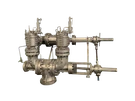
 lubricated plug valve
lubricated plug valve are metal seated valves providing a tight shut off ( 0 leakage ) sealing, valves shall be regularly lubricated along with their operation by injection of suitable grease. Due to
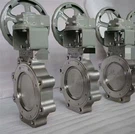
Add to Inquiry Double Block and Bleed Plug Valve
Compared to other types of DBB valves, Double Block and Bleed plug Valve has the Double Isolation and Bleed function and therefore it provides double security due to two seals that are independent on
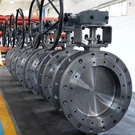
Add to Inquiry PFA Lined Plug Valve
PFA Lined Plug Valve is special for controlling the strong corrosive media.Its body inner surface is lined with different fluorine plastics which can be selected to suit with different working
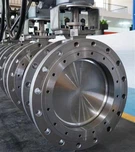
Add to Inquiry Metal sealing Lift Plug Valve
Lift Type Plug Valve is metal seated non-lubricated plug valve and is recommended for use in hash application in the chemical or petrochemical industry.
Add to Inquiry Soft Seat Plug Valve
Soft Seat Plug Valve achieves easy, convenient turning without lubrication. It is ideal for corrosive medium, and it has self-cleaning function on valve rotation.
Add to Inquiry
Why Choose Us
Our certificates
We launched our quality management as ISO 9001, and awarded API 6D,API 600, API 607,CE/PED approvals for the products .And we are making continuous improvement on our product performance and quality control all the time.
Dedicated Customer Service
Our customer service team is committed to providing exceptional support and addressing any concerns promptly. We prioritize clear communication and proactive problem-solving to ensure a seamless experience for every client.
Versatility in Applications
One of the key advancements in industrial ball valves is their increased versatility. These valves are now designed to handle a diverse range of applications, from general-purpose use to specialized industries such as petrochemicals, oil and gas, water treatment, and more. Their adaptability makes them a go-to solution for various industrial fluid control needs.
Excellent Shut-off Capability: Plug valves provide tight sealing when closed, preventing leakage effectively.
Simple and Reliable Operation: They are easy to operate with a 90-degree rotation, making them reliable for flow control.
Versatility: Plug valves are suitable for various applications, including throttling, on-off control, and isolation.
Minimal Pressure Drop: They offer low resistance to flow, resulting in minimal pressure loss across the valve.
Durability: Plug valves are robust and can withstand harsh environments and abrasive media.

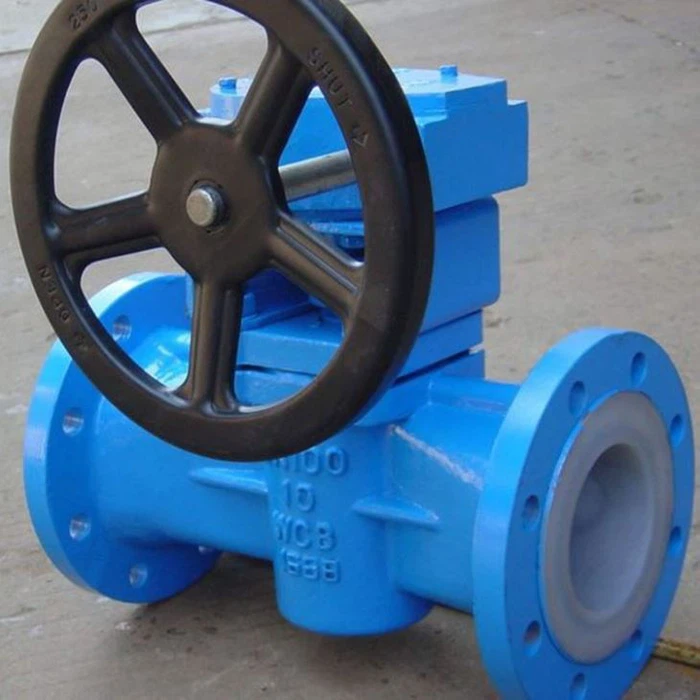
Bi-Directional Flow: They can handle flow in both directions, providing flexibility in installation.
Adaptability to Multiport Configurations: Plug valves can be designed with multiple ports, simplifying complex piping systems.
Cost-Effective: They are often more cost-effective than other types of valves for certain applications.
Low Maintenance: With fewer moving parts, plug valves generally require less maintenance compared to some other valve types.
Wide Range of Materials: Plug valves are available in various materials to suit different applications, including corrosive and high-temperature environments.
Components of a Plug Valve
The Plug Valve Body
The valve body has all the internal components of the valve. The body connects to the pipes through an end connection.
The Plug valve Stem
The stem of the valve connects the disc (or disk) to the actuator. This helps in transferring the movement of the actuator to the plug disc thereby opening or closing the plug disc. The plug valve has a little stem that connects to the disc.
The Plug valve disc
The plug disc which is known as the tapered disc acts as a plug hence differentiating the plug valve and the globe valve. Out of all the valves, the plug valve, ball valve, and globe valve have some similarities. The major difference is in the way that how the disc looks like. The Globe valve has a cylindrical disc. The plug valve has a solid metal piece with tapered ends.
Classification of plug valves
Soft seal plug valves
Soft seal plug valves are often used in harsh environments such as corrosive, highly toxic and high hazard media, where leakage is strictly prohibited, and where valve materials will not pollute the media. According to the working medium, the valve body can be made of carbon steel, alloy steel and stainless steel.
Oil lubricated hard seal plug valves
Oil lubricated hard seal plug valves can be divided into conventional oil lubricated plug valves and pressure balanced plug valves. Special grease is injected from the top of the plug body between the conical hole of the valve body and the plug body, then an oil film is formed to reduce the opening and closing torque of the valve, to improve sealing performance and service life. The working pressure can reach 64mpa, the maximum working temperature can reach 325 degrees, and the maximum diameter can reach 600mm.


Lifting plug valves
There are many structural forms of lifting plug valve. According to the materials of sealing surface, lifting plug valve is divided into soft seal and hard seal. The basic principle is to raise the cock when it is opened. The friction between the cock and the sealing surface of the valve body can be reduced when the cock rotates 90 degrees to the full opening of the valve; When closing the valve, turn the cock 90 degrees to the closed position and then lower it to contact the sealing surface of the valve body to achieve sealing.
Three-way and four-way plug valves
Three-way and four-way plug valves are suitable for fluid reversing, changing medium flow direction or medium distribution. According to the requirements of service conditions, soft seal bushing or soft seal and hard seal lifting plug valve can be selected.
Applications of Plug valves
Asphalt and bitumen industries
Plug valves are a popular choice in the asphalt and bitumen industries due to their robust design and ability to handle the challenging conditions involved. Plug valves provide excellent sealing, preventing leaks of the highly viscous and often hot materials. They can be can be operated quickly and easily, even with gloves on, which is important in harsh industrial environments. Available in various port configurations (2-way, 3-way, etc.), they can handle a wide range of applications.
Oil piping systems
Plug valves are extensively used in oil piping systems, where they play a crucial role in regulating the flow of crude oil, refined products, and various petroleum derivatives. These valves are well-suited for handling the high pressures and demanding conditions commonly encountered in oil pipelines. Their ability to provide a tight shut-off and withstand abrasive particles makes them ideal for controlling the flow of oil and ensuring the efficient operation of oil transportation networks.
High-pressure & extreme temperature flow systems
Plug valves excel in high-pressure and extreme temperature flow systems, such as those found in power plants, refineries, and industrial processes. These valves are designed to handle the challenging conditions often associated with such applications. With their robust construction and reliable sealing mechanisms, plug valves can effectively manage the flow of fluids under elevated pressures and temperature extremes, ensuring safe and efficient operation in demanding environments.
Chemical servicing
In chemical processing industries, plug valves are widely employed to control the flow of various chemicals, acids, and corrosive substances. The materials used in plug valves can be selected to resist chemical attacks and provide excellent corrosion resistance. Their ability to handle aggressive media and provide a tight seal makes them invaluable in chemical servicing applications, protecting equipment and ensuring precise control over the flow of chemicals in diverse processes.
Corrosive substances processing
Whether in the pharmaceutical, petrochemical, or water treatment industries, plug valves can effectively manage corrosive fluids while maintaining a reliable seal. Their resistance to corrosion and ability to withstand aggressive environments make them a preferred choice for applications where corrosion is a significant concern, safeguarding the integrity of the system and ensuring the efficient processing of corrosive substances.
FAQ
Find professional plug valve manufacturers and suppliers in China here. We're offering high quality plug valve with competitive price. Welcome to contact our factory for more details.
turbine check valve, vacuum check valve, low pressure check valve