

Latest Products
Contact Us
- Anfeng Village, Oubei Street, Yongjia County, Wenzhou, Zhejiang, China
- marketing@sqvalves.com
- +86-577-67159376
The Butterfly Valve Manufacturer!
We-SQ Technology is a specialized industrial valves supplier and exporter in Wenzhou,China, focus on supplying integrated solutions for industrial valves which are applied broadly in petroleum, chemical, metallurgical power generation, mining and water treatment industries.
 Metal To Metal Butterfly Valve
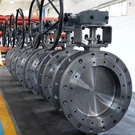
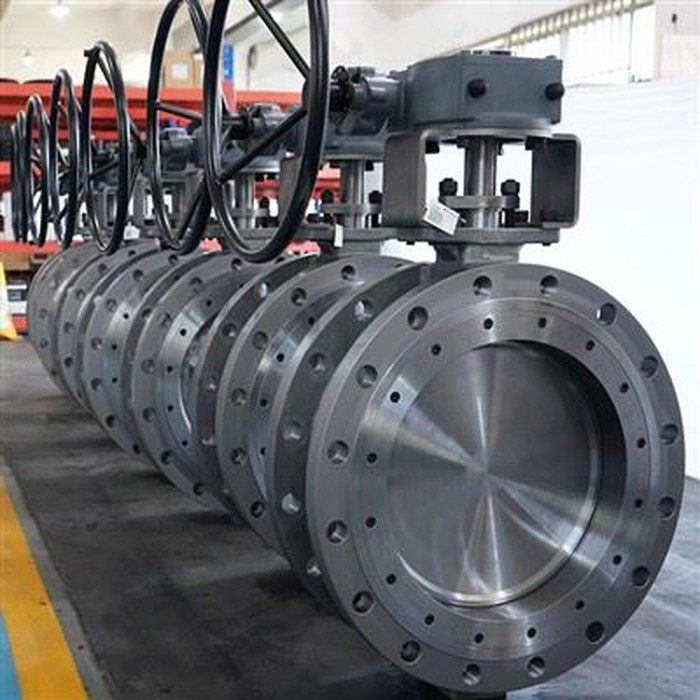
Production Range: Double Flanges Connection &BW End 150LB-300LB:NPS8-NPS80 600LB-900LB:NPS4-NPS48 1500LB-2500LB:NPS10-NPS40 Features: Metal to Metal Sealing with zero leakage, suitable for the
Add to Inquiry High Performance Butterfly Valve
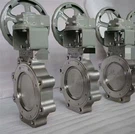
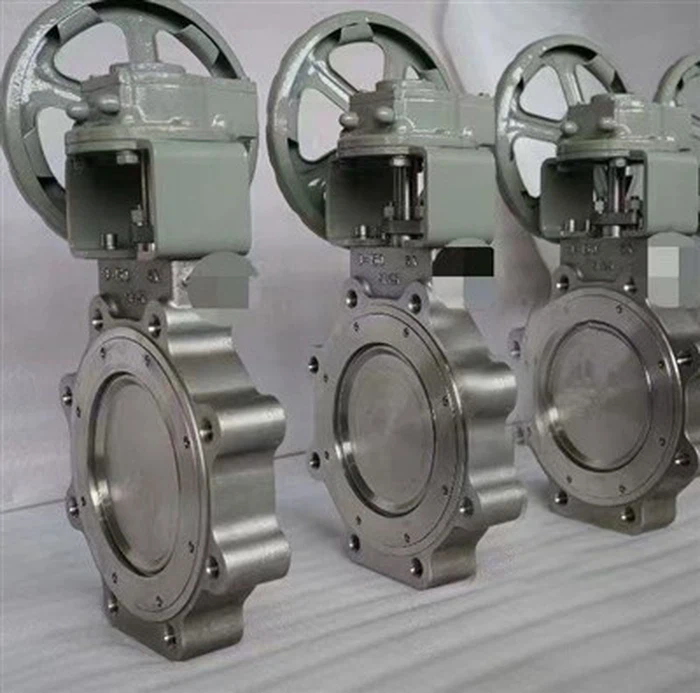
High Performance Butterfly Valve With Bidirectional Sealing Production Range: Wafer Type&Lug Type 150LB-300LB, NPS2-NPS48 150LB-300LB:NPS2-NPS48 600LB-900LB:NPS4-NPS40 1500LB: NPS6-NPS24 Double
Add to Inquiry Metal To Metal Butterfly Valve With Bidirectional Sealing
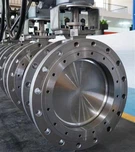
Metal To Metal Butterfly Valve With Bidirectional Sealing Production Range: Double Flanges Connection &BW End 150LB-300LB:NPS8-NPS80 600LB-900LB:NPS4-NPS48 1500LB-2500LB:NPS10-NPS40 Features:
Add to Inquiry triple offset Butterfly Valve
The metal seated butterfly valve is mainly used in industries that work under extreme pressure and temperatures. The metal seats are designed to make the valve much more versatile and durable, so
Add to Inquiry Teflon Lined Butterfly Valve
· Size Range:2 - 80 (50mm - 2000mm). · Body Style: Wafer, Lug, Double Flanged. · Temperature Range:0°F to 392°F (-18°C to 200°C).
Add to Inquiry soft seat butterfly valve
A resilient seated butterfly valve with superior design features and materials of construction to provide repeatable tight shutoff in severe abrasive and corrosive environments for a variety of
Add to Inquiry
Why Choose Us
Our certificates
We launched our quality management as ISO 9001, and awarded API 6D,API 600, API 607,CE/PED approvals for the products .And we are making continuous improvement on our product performance and quality control all the time.
Dedicated Customer Service
Our customer service team is committed to providing exceptional support and addressing any concerns promptly. We prioritize clear communication and proactive problem-solving to ensure a seamless experience for every client.
Versatility in Applications
One of the key advancements in industrial ball valves is their increased versatility. These valves are now designed to handle a diverse range of applications, from general-purpose use to specialized industries such as petrochemicals, oil and gas, water treatment, and more. Their adaptability makes them a go-to solution for various industrial fluid control needs.
Advantages of butterfly valves
Lightweight and Compact
Butterfly valves are great for several applications because they are very lightweight and provide reasonable flow control in a compact design. You will generally want to use a metal-seated valve for more extreme fluid processing, while a soft-seated butterfly valve is best for applications with low pressures and temperatures. The butterfly disc takes up little space but offers enough strength for most pump systems.
Simple and Cost Effective
Butterfly valves are very simple in design and have minimal maintenance requirements. They are easy to install and operate. Plus, they are typically much less expensive than a ball valve of the same size. They do not require much torque to operate effectively and can be automated for energy-efficient operation.
Quick and Efficient
The 90-degree turning radius allows for quick sealing upon actuation, which provides more accurate flow control with minimal effort to turn the valve on and off. Different butterfly valves are to consider, including zero-offset, double-offset, and triple-offset. The pressure will usually determine which type you need. The higher the offset, the more pressure the valve can handle.
Pressure Control
In addition to precision flow control, butterfly valves are excellent for pressure control. They experience minimal pressure drop during operation before the fluids recover energy quickly after leaving the valve. This keeps the pump system running efficiently with consistent fluid pressures.
Types Of Butterfly Valves
Rubber-Lined Valves
Less expensive valves for non-demanding, non-abrasive, lower temperature applications. Normally for 150-300# (PN10-25) flanges
Plastic-Lined Valves
For use with harsh chemicals, ultrapure applications, sanitary, or abrasive applications. Normally for 150# (PN10/16) flanges
Metal Valves
For high-pressure or high-temperature applications, or those requiring fire resistance. Can be used in 150-2500# (PN10-160) flanges. Can be Single Offset, Double Offset, or Triple Offset
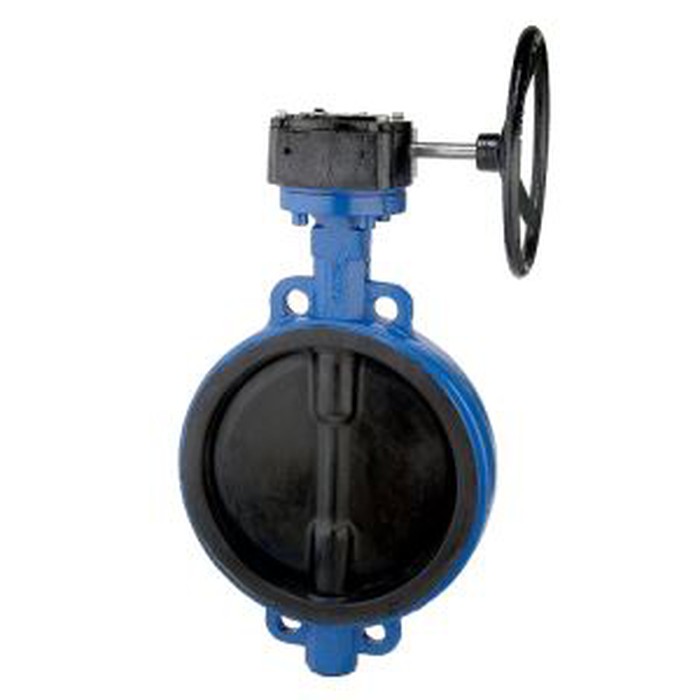
Butterfly valve body: Butterfly valves generally have bodies that fit between two pipe flanges, the most common being lug and wafer body design.
Butterfly valve disk: The disk is how the valve stops flow – it is equivalent to a plug in a plug valve, a gate in a gate valve or a ball in a ball valve. There are variations in disk design and orientation in order to improve flow, sealing and/or operating torque.
Butterfly valve Stem: The stem of the butterfly valve may be a one-piece shaft or a two-piece (split-stem) design. The stem in most resilient seated designs is protected from the media, thus allowing an efficient selection of material with respect to cost and mechanical properties.
Butterfly valve Seat: The seat of a resilient-seat butterfly valve utilises an interference fit between the disk edge and the seat to provide shutoff. The material of the seat can be made from many different elastomers or polymers. The seat may be bonded to the body or it may be pressed or locked in.
Applications of Butterfly Valves
Oil and gas industry
The oil and gas industry deals with fluids that are often under high pressure and are volatile. Reliable and efficient flow control is vital to ensure safe operations. Butterfly valves are extensively used in this industry due to their ease of operation and reliable sealing capabilities. They are used in various stages, including extraction, processing, transport, and storage. For example, during extraction, butterfly valves control the flow of crude oil from reservoirs to the surface. In refineries, they are used to regulate the flow of different petroleum products during the distillation process.
Chemical industry
The chemical industry involves the use of a wide range of substances, including both corrosive and non-corrosive fluids. Butterfly valves are a common choice in this industry because they can be designed with materials resistant to chemical corrosion, making them suitable for controlling the flow of such substances. For instance, in the manufacturing of synthetic materials like plastics or rubber, butterfly valves can regulate the flow of raw materials into reaction vessels.
Water and wastewater treatment plants
Water and wastewater treatment plants handle large volumes of water and require precise flow control for their day-to-day operations. Butterfly valves are used in various stages of water treatment. They control the flow of water into treatment tanks and regulate the release of treated water into the distribution system. In wastewater treatment, they manage the flow of wastewater into treatment ponds and control the discharge of treated water.
HVAC systems
In heating, ventilation, and air conditioning (HVAC) systems, butterfly valves play a pivotal role in managing the flow of cooling or heating medium (water or air). For example, in large commercial buildings, butterfly valves are used to control the flow of chilled or hot water in the HVAC system, thereby regulating the building's temperature.
Fire protection systems
Fire sprinkler systems are an essential part of any building's safety measures. Butterfly valves are used in these systems to manage the flow of water to the sprinklers. They ensure a quick and efficient water flow when required, contributing significantly to property and life protection during emergencies.
FAQ
Find professional butterfly valve manufacturers and suppliers in China here. We're offering high quality butterfly valve with competitive price. Welcome to contact our factory for more details.
inline check valve, truck check valve, swimming pool check valve