

When it comes to industrial fluid control systems, ball valves are a crucial component. As a ball valve supplier, I understand the significance of choosing the right ball valve for your specific needs. This blog post aims to guide you through the process of selecting the most suitable ball valve for your applications.
Understanding Ball Valves
Ball valves are quarter - turn valves that use a spherical closure unit (the ball) to control the flow of fluids. They offer reliable shut - off capabilities, are relatively easy to operate, and have low pressure drops. This makes them suitable for a wide range of industries, including oil and gas, chemical, water treatment, and power generation.
Factors to Consider When Choosing a Ball Valve
1. Valve Size
The size of the ball valve is determined by the pipe diameter in which it will be installed. A valve that is too small for the application may result in excessive pressure drops and reduced flow capacity, while a valve that is too large can be costly and may not operate optimally. It is essential to accurately measure the pipe diameter and choose a valve with a corresponding nominal size.
2. Material of Construction
The choice of material for the ball valve body, ball, and seals is critical as it determines the valve's resistance to corrosion, erosion, and high temperatures. Common materials include stainless steel, carbon steel, brass, and plastic.
- Stainless Steel: It is highly resistant to corrosion and is suitable for applications in chemical, food, and beverage industries. For example, in a food processing plant where hygiene and corrosion resistance are essential, stainless - steel ball valves are a popular choice.
- Carbon Steel: Carbon steel ball valves are known for their strength and durability. They are commonly used in oil and gas pipelines, where they can withstand high pressures and harsh environments.
- Brass: Brass ball valves are cost - effective and are often used in residential and small - scale commercial applications, such as plumbing systems.
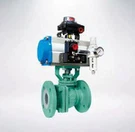
- Plastic: Plastic ball valves, like those made of PVC or PTFE, are lightweight, corrosion - resistant, and inexpensive. They are commonly used in water treatment and irrigation systems. As a supplier, we offer PFA Lined Ball Valve, which provides excellent corrosion resistance due to the PFA lining.
3. Pressure Rating
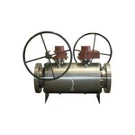
The pressure rating of the ball valve must be compatible with the maximum pressure of the fluid in the system. If the pressure exceeds the valve's rating, it can lead to leaks or even valve failure. It is important to consider both the normal operating pressure and any potential pressure surges in the system. For example, in a high - pressure oil pipeline, a ball valve with a high - pressure rating, such as a Fully Welded Ball Valve, may be required.
4. Temperature Range
The temperature of the fluid flowing through the valve affects its performance and the choice of materials. Some materials may become brittle at low temperatures, while others may lose their strength or sealing properties at high temperatures. Make sure the ball valve you choose can withstand the temperature range of your application. For instance, in a steam system with high - temperature requirements, the valve must be made of materials that can handle the heat without deformation.
5. End Connections
The type of end connections on the ball valve is determined by the piping system in which it will be installed. Common end connections include flanged, threaded, and welded.
- Flanged: Flanged connections are suitable for large - diameter pipes and high - pressure applications. They provide a strong and reliable connection and are easy to install and maintain.
- Threaded: Threaded connections are commonly used in small - diameter pipes and low - pressure systems. They are simple to install but may not be as suitable for high - vibration applications.
- Welded: Welded connections are the most permanent and leak - proof. They are used in applications where a high degree of integrity is required, such as in critical pipelines.
6. Ball Valve Type
There are different types of ball valves, each with its own advantages and disadvantages.
- Floating Ball Valve: In a floating ball valve, the ball is supported by the seat rings. This type of valve is simple in design and provides excellent sealing at low to medium pressures. Our API 6D Floating Type Ball Valve meets the API 6D standard and is suitable for a variety of applications.
- Trunnion - Mounted Ball Valve: A trunnion - mounted ball valve is used for high - pressure and large - diameter applications. The ball is supported by a trunnion, which reduces the friction between the ball and the seat, allowing for easier operation.
- V - Port Ball Valve: V - port ball valves are used for precise flow control. The V - shaped ball provides a linear flow characteristic, making them suitable for applications where accurate flow regulation is required.
Application - Specific Considerations
1. Oil and Gas Industry
In the oil and gas industry, ball valves must be able to withstand high pressures, corrosive fluids, and harsh environments. Fully welded ball valves are often used in pipelines for their excellent sealing properties and durability. Floating type ball valves are also commonly used in smaller - scale applications, such as wellhead control systems.


2. Chemical Industry
The chemical industry requires ball valves that are highly resistant to corrosion. PFA lined ball valves are a popular choice as they can handle a wide range of corrosive chemicals. The lining protects the valve body from chemical attack, ensuring a long service life.
3. Water Treatment Industry
In water treatment plants, ball valves are used for controlling the flow of water, chemicals, and sludge. Plastic ball valves are often used due to their low cost, corrosion resistance, and ease of installation. However, for larger - scale applications or high - pressure systems, stainless - steel ball valves may be more appropriate.
Quality and Certification
When choosing a ball valve, it is important to select a product from a reputable supplier that adheres to international standards. Look for valves that are certified to standards such as API, ASTM, and ISO. These certifications ensure that the valve has been tested and meets the required quality and performance criteria.
Conclusion
Choosing the right ball valve is a critical decision that can impact the efficiency, reliability, and safety of your fluid control system. By considering factors such as valve size, material of construction, pressure rating, temperature range, end connections, and ball valve type, you can select a valve that is best suited for your specific application.
As a ball valve supplier, we are committed to providing high - quality ball valves that meet the diverse needs of our customers. If you are in the process of selecting a ball valve for your project, we invite you to contact us for professional advice and to discuss your procurement requirements. We look forward to working with you to find the perfect ball valve solution for your application.
References
- API Standards Publication 6D, "Pipeline Valves"
- ASTM International Standards related to ball valve materials
- ISO Standards for valve manufacturing and performance