

In the realm of fluid control systems, swing type check valves play a pivotal role. These valves are designed to allow fluid to flow in one direction while preventing backflow, ensuring the smooth and safe operation of pipelines. One of the critical factors that can significantly influence the performance of a swing type check valve is the swing angle of the disc. As a leading supplier of swing type check valves, I've witnessed firsthand how this seemingly minor parameter can have far - reaching implications for valve performance.
Understanding the Swing Type Check Valve
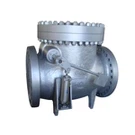
Before delving into the impact of the swing angle, it's essential to understand the basic structure and working principle of a swing type check valve. A swing type check valve consists of a valve body, a hinge pin, and a disc. The disc is attached to the hinge pin and can swing open or closed. When the fluid flows in the forward direction, the pressure of the fluid pushes the disc open, allowing the fluid to pass through the valve. Conversely, when the fluid tries to flow in the reverse direction, the disc swings back to its closed position, blocking the flow and preventing backflow.


How Swing Angle Affects Flow Capacity
The swing angle of the disc directly affects the flow capacity of the swing type check valve. A larger swing angle allows the disc to open wider, providing a larger flow area for the fluid. This means that more fluid can pass through the valve in a given period, resulting in higher flow rates. For example, in a large - scale water supply system, a swing type check valve with a larger swing angle can ensure that sufficient water is delivered to different parts of the system, meeting the high - demand requirements.
On the other hand, a smaller swing angle restricts the opening of the disc, reducing the flow area. This can lead to a decrease in flow capacity and an increase in pressure drop across the valve. In a pipeline where the fluid needs to flow at a high speed, a valve with a small swing angle may cause the fluid to encounter more resistance, which not only affects the efficiency of the system but also increases energy consumption.
Impact on Sealing Performance
The swing angle also has a profound impact on the sealing performance of the swing type check valve. When the fluid flow stops or reverses, the disc needs to swing back to its closed position to seal the valve. A proper swing angle ensures that the disc can make full contact with the valve seat, creating a tight seal. If the swing angle is too small, the disc may not fully close, leaving a gap between the disc and the valve seat. This can result in leakage, which is a serious problem in applications where preventing backflow is crucial, such as in chemical processing plants or oil and gas pipelines.
Conversely, if the swing angle is too large, the disc may over - swing, hitting the valve body or other components. This can cause damage to the disc and the valve seat, compromising the sealing performance over time. Moreover, an over - swinging disc may not return to its proper sealing position quickly enough, increasing the risk of backflow during the transition period.
Influence on Valve Response Time
The response time of a swing type check valve is another important performance metric, and the swing angle plays a key role in it. A valve with a smaller swing angle can close more quickly because the disc has a shorter distance to travel. This is beneficial in applications where rapid response to flow reversal is required, such as in steam systems where sudden backflow can cause water hammer, a potentially damaging phenomenon.
However, a very small swing angle may also limit the valve's ability to open fully, as mentioned earlier. In some cases, a balance needs to be struck between quick closing and full opening. A larger swing angle may result in a slower closing time but can provide better flow capacity when the valve is open.
Considerations for Different Applications
The optimal swing angle of a swing type check valve depends on the specific application requirements. In applications where high flow capacity is the primary concern, such as in large - diameter water pipelines or cooling water systems, a larger swing angle is usually preferred. This allows for unrestricted fluid flow and minimizes pressure drop.
For applications that require tight sealing and rapid response to flow reversal, such as in high - pressure steam systems or gas pipelines, a smaller swing angle may be more suitable. Valves with smaller swing angles can close quickly and form a reliable seal, preventing backflow and potential damage to the system.
Our Solutions as a Supplier
As a supplier of swing type check valves, we understand the importance of the swing angle in different applications. We offer a wide range of swing type check valves with various swing angles to meet the diverse needs of our customers. Our engineers work closely with clients to analyze their specific requirements, including flow rate, pressure, and fluid characteristics, and recommend the most appropriate valve with the optimal swing angle.
In addition to standard swing type check valves, we also provide specialized valves such as pressure seal check valve, Dual Plate Check Valve, and Damping Device check valve. These valves are designed with advanced features to further enhance performance in specific applications. For example, the damping device in our damping device check valve can control the swing speed of the disc, improving the valve's response time and reducing the impact of water hammer.
Conclusion
In conclusion, the swing angle of the disc is a critical factor that affects the performance of a swing type check valve in multiple aspects, including flow capacity, sealing performance, and response time. By carefully selecting the appropriate swing angle based on the specific application requirements, users can ensure the efficient and reliable operation of their fluid control systems.
As a trusted supplier of swing type check valves, we are committed to providing high - quality products and professional technical support. Whether you are looking for a standard valve or a customized solution, our team of experts is ready to assist you. If you are interested in our products or have any questions about swing type check valves, please feel free to contact us for procurement discussions. We look forward to partnering with you to meet your fluid control needs.
References
- ASME B16.34 - Valves - Flanged, Threaded, and Welding End.
- API 6D - Pipeline Valves - Specification for Pipeline Valves.
- ISO 5208 - Industrial valves - Pressure testing of valves.