

Measuring the flow through a plug valve is a critical aspect in various industrial applications, ensuring the efficient and safe operation of fluid systems. As a plug valve supplier, we understand the importance of accurate flow measurement and are committed to providing solutions that meet the diverse needs of our customers. In this blog, we will explore the methods and considerations for measuring the flow through a plug valve.
Understanding Plug Valves
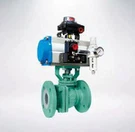
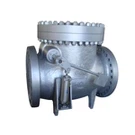
Before delving into flow measurement, it's essential to understand the types of plug valves available. We offer a range of plug valves, including the Twin Seal Orbit Plug Valve, lubricated plug valve, and Soft Seat Plug Valve. Each type has its unique characteristics and applications.
The Twin Seal Orbit Plug Valve features a double-sealing design, providing enhanced leakage protection and reliability. It is suitable for high-pressure and high-temperature applications, ensuring long-term performance in demanding environments. The lubricated plug valve, on the other hand, uses a lubricant to reduce friction and wear, extending the valve's lifespan and improving its sealing performance. The Soft Seat Plug Valve offers a soft sealing material, providing excellent sealing even in low-pressure applications and reducing the risk of leakage.
Importance of Flow Measurement
Accurate flow measurement through a plug valve is crucial for several reasons. Firstly, it helps in process control. In industrial processes, maintaining a specific flow rate is often necessary to ensure the quality and consistency of the end product. For example, in a chemical manufacturing process, the correct flow rate of reactants is essential for the chemical reactions to occur as intended. Incorrect flow rates can lead to sub - standard products, increased waste, and even safety hazards.
Secondly, flow measurement is important for energy efficiency. By accurately measuring the flow, operators can optimize the system to reduce energy consumption. For instance, if the flow rate is higher than required, it may result in unnecessary pumping power, increasing operational costs.
Finally, flow measurement is necessary for regulatory compliance. Many industries are subject to regulations regarding fluid flow, and accurate measurement ensures that the operations are within the legal limits.
Methods of Measuring Flow Through a Plug Valve
Differential Pressure Method
One of the most common methods for measuring flow through a plug valve is the differential pressure method. This method is based on the principle that the pressure drop across a constriction in a pipe is related to the flow rate. When the fluid passes through the plug valve, the valve acts as a constriction, creating a pressure difference between the upstream and downstream sides.
To measure the differential pressure, pressure sensors are installed on both the upstream and downstream sides of the plug valve. The difference in pressure is then used to calculate the flow rate using the Bernoulli's equation. However, it's important to note that the relationship between the differential pressure and the flow rate is non - linear, and calibration is required to ensure accurate measurements.
The differential pressure method has several advantages. It is relatively simple and cost - effective, and it can be used in a wide range of applications. However, it also has some limitations. The accuracy of the measurement can be affected by factors such as the viscosity of the fluid, the roughness of the pipe walls, and the presence of turbulence.
Ultrasonic Flow Meters
Ultrasonic flow meters are another popular option for measuring flow through a plug valve. These meters work by sending ultrasonic waves through the fluid in the pipe. The speed of the ultrasonic waves is affected by the flow rate of the fluid. By measuring the time it takes for the ultrasonic waves to travel upstream and downstream, the flow rate can be calculated.
There are two main types of ultrasonic flow meters: transit - time and Doppler. Transit - time ultrasonic flow meters are suitable for clean fluids, while Doppler flow meters are more suitable for fluids with particles or bubbles.
The advantages of ultrasonic flow meters include non - intrusive installation, which means that there is no need to cut the pipe or disrupt the flow. They also have a high degree of accuracy and can measure a wide range of flow rates. However, they can be affected by factors such as the temperature and density of the fluid, and the presence of air bubbles or solids in the fluid can reduce their accuracy.
Magnetic Flow Meters
Magnetic flow meters, also known as magmeters, are based on Faraday's law of electromagnetic induction. When a conductive fluid passes through a magnetic field created by the flow meter, an electromotive force (EMF) is generated. The magnitude of the EMF is proportional to the flow rate of the fluid.
Magnetic flow meters are highly accurate and can measure flow in both directions. They are also suitable for a wide range of conductive fluids, including water, wastewater, and some chemicals. However, they require the fluid to be conductive, and they can be relatively expensive compared to other flow measurement methods.
Considerations for Flow Measurement
Fluid Properties
The properties of the fluid being measured have a significant impact on the choice of flow measurement method. For example, if the fluid is viscous, the differential pressure method may not be as accurate due to the increased resistance to flow. In such cases, ultrasonic or magnetic flow meters may be more suitable.
The temperature and density of the fluid also need to be considered. Some flow measurement methods, such as ultrasonic flow meters, can be affected by changes in temperature and density. Therefore, it's important to select a method that is appropriate for the specific fluid properties.


Valve Position and Orientation
The position and orientation of the plug valve can also affect the accuracy of flow measurement. The valve should be installed in a straight section of the pipe to ensure a uniform flow profile. If the valve is installed in a curved or bent section of the pipe, it can create turbulence, which can affect the accuracy of the flow measurement.
The position of the valve within the pipe also matters. For example, if the valve is partially open, the flow pattern through the valve can be complex, and it may be more difficult to measure the flow accurately. Therefore, it's recommended to measure the flow when the valve is fully open or at a known position.
Calibration and Maintenance
Regardless of the flow measurement method used, calibration is essential to ensure accurate measurements. Calibration involves comparing the output of the flow meter with a known standard. Regular calibration helps to account for any changes in the flow meter's performance over time.
Maintenance is also important for the long - term accuracy of the flow measurement. The flow meters need to be cleaned and inspected regularly to ensure that they are functioning properly. Any damage or wear to the flow meter or the plug valve can affect the accuracy of the measurement.
Conclusion
Measuring the flow through a plug valve is a complex but important task. As a plug valve supplier, we offer a wide range of plug valves to meet the diverse needs of our customers. By understanding the different methods of flow measurement and the factors that affect their accuracy, we can help our customers choose the most suitable solution for their applications.
If you are interested in purchasing plug valves or need more information about flow measurement, we encourage you to contact us for further discussion. Our team of experts is ready to assist you in finding the best solutions for your specific requirements.
References
- Miller, R. W. (1996). Flow Measurement Engineering Handbook. McGraw - Hill.
- Spitzer, D. W. (2001). Flow Measurement: Practical Guides for Measurement and Control. ISA - The Instrumentation, Systems, and Automation Society.
- White, F. M. (2003). Fluid Mechanics. McGraw - Hill.