

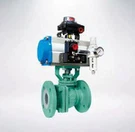
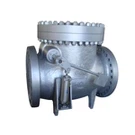
In the realm of industrial safety and fluid system management, pressure relief valves play a pivotal role. As a seasoned pressure relief valve supplier, I've witnessed firsthand the significance of these devices in safeguarding equipment and personnel from the perils of over - pressure situations. One of the fundamental distinctions that customers often inquire about is the difference between a balanced and an unbalanced pressure relief valve. In this blog, I'll delve into the details of these two types of valves, exploring their unique features, applications, and advantages.
Understanding Pressure Relief Valves
Before we dive into the differences between balanced and unbalanced pressure relief valves, let's briefly recap what a pressure relief valve is. A pressure relief valve is a safety device designed to automatically release a fluid (liquid or gas) from a system when the pressure within that system exceeds a pre - set limit. This helps prevent catastrophic failures, such as explosions or equipment damage, by maintaining the pressure within a safe operating range.
Unbalanced Pressure Relief Valves
Unbalanced pressure relief valves are the more traditional type of relief valves. They operate based on the principle of a direct - acting mechanism. In an unbalanced valve, the inlet pressure acts directly on the valve disc, which is held in place by a spring. When the inlet pressure exceeds the spring force, the valve disc lifts off its seat, allowing the fluid to flow out of the system until the pressure drops below the set point, at which time the valve closes again.
One of the main characteristics of unbalanced pressure relief valves is their simplicity. They have a relatively straightforward design, with fewer components compared to some other types of valves. This simplicity makes them cost - effective and easy to maintain. They are also highly reliable in many basic applications where the system pressure is relatively stable and not subject to significant fluctuations.
However, unbalanced pressure relief valves do have some limitations. Since the inlet pressure acts directly on the valve disc, any change in the backpressure (the pressure in the discharge side of the valve) can affect the valve's performance. High backpressure can cause the valve to open at a lower pressure than its set point or prevent it from closing properly. This makes unbalanced valves less suitable for applications where the backpressure is variable or high.
Balanced Pressure Relief Valves
Balanced pressure relief valves, on the other hand, are designed to overcome the limitations of unbalanced valves, particularly in relation to backpressure. These valves use a special design to isolate the valve disc from the effects of backpressure. There are different types of balanced designs, but one common approach is the use of a bellows or a piston arrangement.
In a balanced valve, the bellows or piston compensates for the backpressure, ensuring that the valve opens and closes based solely on the inlet pressure. This means that the valve's performance is not affected by changes in backpressure, making it suitable for applications where the backpressure is high or variable.


Another advantage of balanced pressure relief valves is their ability to provide more accurate pressure control. They can maintain a more consistent set point, even in the presence of backpressure, which is crucial in applications where precise pressure regulation is required.
However, balanced pressure relief valves are more complex in design than unbalanced valves. They have additional components, such as bellows or pistons, which increase their cost and require more careful maintenance. They are also generally larger in size, which may be a consideration in applications where space is limited.
Applications of Balanced and Unbalanced Pressure Relief Valves
The choice between a balanced and an unbalanced pressure relief valve depends largely on the specific application.
Unbalanced pressure relief valves are commonly used in applications where the backpressure is low and relatively stable. For example, they are often used in simple water systems, low - pressure steam systems, and some industrial processes where the pressure conditions are well - defined and do not change significantly. They are also suitable for applications where cost is a major factor and the performance requirements are not extremely demanding.
Balanced pressure relief valves, on the other hand, are preferred in applications where the backpressure is high or variable. They are commonly used in oil and gas processing plants, chemical industries, and power generation facilities. In these industries, the systems often operate under complex pressure conditions, and the ability of a balanced valve to maintain accurate pressure control regardless of backpressure is essential.
Pilot Operated Relief Valves
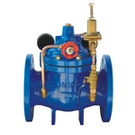
For applications that require even more precise control and flexibility, pilot operated relief valve can be a great option. Pilot operated relief valves use a small pilot valve to control the opening and closing of the main valve. This allows for very accurate pressure setting and can also provide additional features such as remote control and fast - acting response.
Switching Valves (Safety Valve Blocks)
In some systems, Switching valves(safety valve blocks) are used in conjunction with pressure relief valves. These valves can be used to isolate the pressure relief valve for maintenance or to switch between different relief paths. They add an extra layer of safety and flexibility to the system.
Pressure Vacuum Relief Valve
Another important type of valve in the pressure relief category is the Pressure Vacuum Relief Valve. This valve is designed to protect tanks and vessels from over - pressure as well as vacuum conditions. It can open to relieve excess pressure or admit air to prevent a vacuum from forming inside the vessel.
Conclusion
In summary, the main difference between a balanced and an unbalanced pressure relief valve lies in their response to backpressure. Unbalanced valves are simple, cost - effective, and suitable for applications with low and stable backpressure. Balanced valves, on the other hand, are more complex but offer better performance in applications with high or variable backpressure.
As a pressure relief valve supplier, I understand that choosing the right valve for your application is crucial. It requires a careful consideration of factors such as system pressure, backpressure, accuracy requirements, and cost. If you're unsure which type of valve is best for your needs, I'm here to help. Our team of experts can provide you with detailed technical advice and guidance to ensure that you select the most suitable pressure relief valve for your specific application.
If you're interested in purchasing pressure relief valves or have any questions about our products, please don't hesitate to contact us. We look forward to the opportunity to work with you and help you find the perfect solution for your pressure relief needs.
References
- ASME Boiler and Pressure Vessel Code, Section VIII, Division 1.
- API 520 and API 526 Standards for Pressure - Relieving Devices.
- Manufacturer's technical manuals for pressure relief valves.