

As a seasoned supplier of Knife Gate Valves, I understand the critical role these valves play in various industrial applications. One of the key aspects of ensuring the optimal performance of a Knife Gate Valve is the proper adjustment of its actuator stroke. In this blog post, I will share some in - depth insights on how to adjust the stroke of a Knife Gate Valve actuator.
Understanding the Importance of Actuator Stroke Adjustment
The actuator of a Knife Gate Valve is responsible for opening and closing the valve. Accurate stroke adjustment ensures that the valve fully opens to allow unobstructed flow and fully closes to prevent leakage. Improper stroke adjustment can lead to a range of issues, such as incomplete opening, which restricts flow and causes unnecessary pressure drops, or incomplete closing, resulting in material leakage. This not only affects the efficiency of the system but can also pose safety risks, especially in industries dealing with hazardous materials.
Tools Required for Stroke Adjustment
Before starting the adjustment process, gather the necessary tools. You will typically need a wrench set to loosen and tighten bolts, a measuring device like a caliper or a ruler to measure the stroke length accurately, and a torque wrench to ensure that all bolts are tightened to the correct specifications. Additionally, having a service manual for the specific Knife Gate Valve and actuator model is essential, as it provides detailed information on the valve's design and adjustment procedures.
Step - by - Step Stroke Adjustment Process
Step 1: Preparation
First, ensure that the system is shut down and depressurized. This is a crucial safety step to prevent any accidental release of materials or injury to the personnel performing the adjustment. Isolate the valve from the power supply to avoid any unexpected movement of the actuator.
Step 2: Access the Actuator
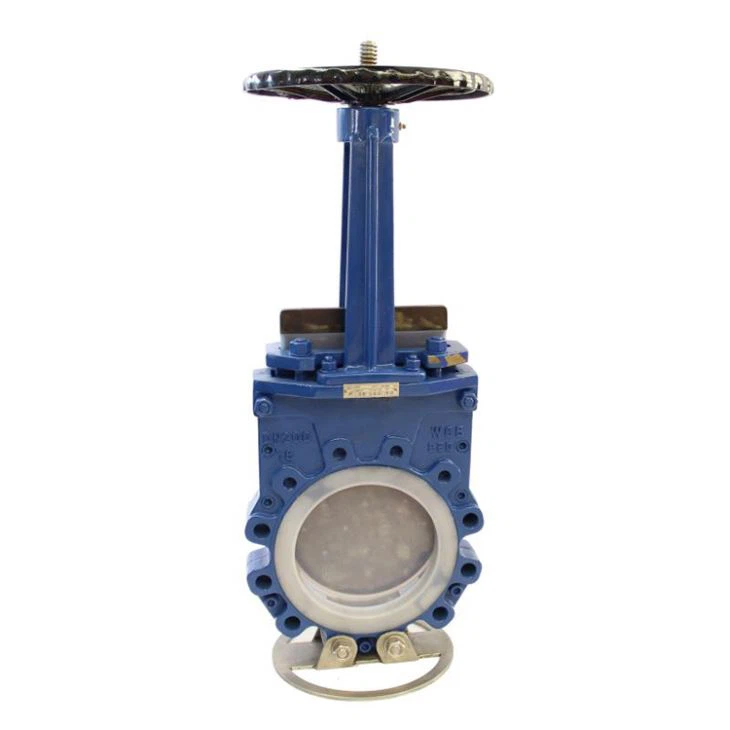
Locate the actuator on the Knife Gate Valve. The actuator is usually mounted on top of the valve body. Remove any covers or guards that may be protecting the adjustment mechanisms. This will give you clear access to the components that need to be adjusted.
Step 3: Identify the Stroke Adjustment Mechanisms
Different Knife Gate Valve actuators may have different stroke adjustment mechanisms. Some actuators use mechanical stops, which can be adjusted by loosening the locking nuts and moving the stops to the desired position. Others may have adjustable limit switches that control the end - points of the actuator's travel. Refer to the service manual to identify the specific adjustment mechanism for your actuator.
Step 4: Measure the Current Stroke
Use the measuring device to measure the current stroke length of the actuator. This will give you a baseline for the adjustment. Measure the distance from the fully open position to the fully closed position of the valve gate. Compare this measurement with the specifications provided in the service manual. If the measured stroke is different from the recommended value, adjustment is required.
Step 5: Adjust the Stroke
If the stroke is too short, you will need to increase the travel of the actuator. For mechanical stop - based actuators, loosen the locking nuts and move the stops further apart. For limit - switch - based actuators, adjust the position of the limit switches to allow for a longer stroke. If the stroke is too long, reverse the process by moving the stops closer together or adjusting the limit switches accordingly.

Step 6: Re - measure the Stroke
After making the adjustments, re - measure the stroke length to ensure that it is within the recommended range. Make any additional fine - tuning adjustments as necessary. This step may need to be repeated several times to achieve the exact stroke length.
Step 7: Secure the Adjustment
Once the correct stroke length is achieved, tighten the locking nuts on the mechanical stops or secure the limit switches in place. Use the torque wrench to ensure that all bolts are tightened to the specified torque values. This will prevent the adjustment from changing during normal operation.
Step 8: Test the Valve
Re - connect the power supply to the actuator and test the valve's operation. Open and close the valve several times to ensure that it moves smoothly and fully between the open and closed positions. Check for any signs of leakage or abnormal noise during the operation. If any issues are detected, repeat the adjustment process until the valve operates correctly.
Different Types of Knife Gate Valves and Their Stroke Adjustment Considerations
There are several types of Knife Gate Valves, each with its own unique characteristics that can affect the stroke adjustment process.
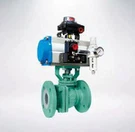
Ceramic knife gate valve
Ceramic knife gate valves, such as the ones available at Ceramic knife gate valve, are known for their excellent wear resistance and corrosion resistance. When adjusting the stroke of the actuator for a ceramic knife gate valve, extra care must be taken not to damage the ceramic components. The ceramic gate and seats are brittle and can crack if subjected to excessive force during the adjustment process. Therefore, use gentle force when making adjustments and ensure that all components are properly aligned.
Metal Seated Knife Gate Valve
Metal seated knife gate valves, like those on Metal Seated Knife Gate Valve, are more robust and can withstand higher pressures and temperatures. However, the metal - to - metal contact between the gate and seats may require more precise stroke adjustment to ensure a tight seal. Any misalignment or improper stroke can lead to premature wear of the metal components and leakage.
Resilient Seated Knife Gate Valve
Resilient seated knife gate valves, such as the resilient seated knife gate valve, use a resilient material for the seats, which provides a better seal and reduces the risk of leakage. When adjusting the stroke of the actuator for these valves, ensure that the gate does not over - compress the resilient seats, as this can cause deformation and reduce the valve's sealing performance over time.
Conclusion
Properly adjusting the stroke of a Knife Gate Valve actuator is a critical task that ensures the efficient and reliable operation of the valve. By following the step - by - step process outlined in this blog post and considering the specific characteristics of different types of Knife Gate Valves, you can achieve accurate stroke adjustment and avoid common issues such as leakage and restricted flow.
If you are in the market for high - quality Knife Gate Valves or need further assistance with stroke adjustment or valve maintenance, feel free to contact us for procurement and in - depth technical discussions. Our team of experts is always ready to provide you with the best solutions for your industrial valve needs.
References
- Manufacturer's service manuals for Knife Gate Valves and actuators
- Industry standards for valve operation and maintenance