

Hey there! As a gate valve supplier, I often get asked about the opening and closing time of gate valves. It's a pretty important topic, especially for those who rely on these valves in their industrial or commercial operations. So, let's dive right in and explore what affects the opening and closing time of a gate valve and why it matters.
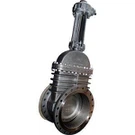
First off, what exactly is a gate valve? Well, it's a type of valve that uses a gate or wedge to control the flow of fluid through a pipeline. When the gate is fully raised, the valve is open, allowing fluid to pass through freely. When the gate is fully lowered, the valve is closed, blocking the flow of fluid. Simple enough, right?
Now, let's talk about the opening and closing time. The time it takes to open or close a gate valve can vary depending on several factors. One of the main factors is the size of the valve. Generally speaking, larger gate valves take longer to open and close than smaller ones. This is because there's more surface area to move and more fluid to displace. For example, a small Stainless Steel Gate Valve used in a residential plumbing system might open or close in just a few seconds, while a large industrial gate valve could take several minutes.


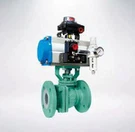
Another factor that affects the opening and closing time is the type of actuator used. An actuator is a device that provides the force needed to move the gate. There are several types of actuators, including manual, electric, pneumatic, and hydraulic. Manual actuators, like handwheels, rely on human power to open and close the valve. This can be time - consuming, especially for larger valves. Electric actuators use an electric motor to move the gate, and they can be programmed to open or close at a specific speed. Pneumatic actuators use compressed air to operate, and they're known for their relatively fast operation. Hydraulic actuators use hydraulic fluid to generate force, and they can provide a lot of power, but they may also have a slower opening and closing time compared to pneumatic actuators, depending on the system design.
The design of the valve itself also plays a role. Some gate valves are designed for quick - opening and closing, while others are designed for more precise control. For instance, a Bellow Sealed Gate Valve is often used in applications where tight sealing is required. These valves may have a more complex design that could potentially increase the opening and closing time, but they offer better protection against leakage.
Why does the opening and closing time matter? Well, in some applications, it's crucial to have a fast - acting valve. For example, in an emergency shutdown situation, a valve needs to close quickly to prevent the release of hazardous materials or to avoid damage to equipment. On the other hand, in some processes where a gradual change in flow is required, a slower opening or closing time might be more appropriate.
Let's take a look at an industrial scenario. Suppose you're working in a chemical plant, and there's a sudden increase in pressure in a pipeline. You need a valve that can close rapidly to prevent an over - pressure situation. In this case, a valve with a pneumatic actuator might be the best choice. The pneumatic actuator can quickly move the gate to the closed position, protecting the pipeline and the equipment connected to it.
Now, let's consider a water treatment plant. Here, the flow of water needs to be adjusted gradually to maintain the proper treatment process. A valve with a manual or electric actuator that allows for precise control over the opening and closing speed would be more suitable.
As a gate valve supplier, I understand the importance of choosing the right valve for your specific application. That's why we offer a wide range of gate valves, including API Gate Valve, which are designed to meet the strict standards of the oil and gas industry. These valves are built to withstand high pressures and harsh environments, and we can help you select the one with the appropriate opening and closing time for your needs.
If you're in the market for a gate valve, whether it's for a small plumbing project or a large industrial installation, don't hesitate to reach out. We have a team of experts who can answer all your questions and guide you through the selection process. We know that every application is unique, and we're committed to providing you with the best valve solution.
So, if you're looking for reliable gate valves with the right opening and closing time for your project, contact us today. We'll work with you to ensure that you get the valve that meets your requirements and fits your budget. Let's make your fluid control system more efficient and reliable together!
References:
- Industrial Valve Handbook: Covers various types of valves, including gate valves, and their operating principles.
- Valve Manufacturer's Catalogs: Provide detailed information on the features and performance of different gate valves.
- Engineering Journals: Contain research and case studies on valve design and operation.