

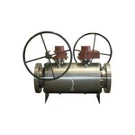
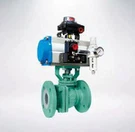
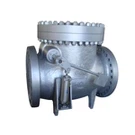
In the realm of industrial valves, fully welded ball valves stand out as a crucial component in various pipeline systems. They are designed to handle high - pressure and high - temperature applications, ensuring reliable and long - lasting performance. Among the different types of fully welded ball valves, the floating ball and trunnion - mounted ball designs are two of the most common, each with its own set of characteristics and applications. As a supplier of fully welded ball valves, understanding these differences is essential for providing the best solutions to our customers.
Floating Ball in Fully Welded Ball Valves
A floating ball valve is a design where the ball is not fixed in place but rather "floats" within the valve body. In a fully welded floating ball valve, the ball is held in position by the valve seats. When the valve is closed, the fluid pressure in the pipeline acts on the ball, pushing it against the downstream seat. This creates a tight seal, preventing the flow of fluid.
One of the primary advantages of a floating ball valve is its simplicity. The design is relatively straightforward, with fewer moving parts compared to other valve types. This simplicity translates into lower manufacturing costs, making floating ball valves a cost - effective option for many applications. Additionally, the floating ball design provides excellent sealing performance in low - to medium - pressure applications. The pressure - assisted sealing mechanism ensures a tight seal as the fluid pressure increases, which is particularly useful in pipelines where the pressure is not extremely high.
However, floating ball valves also have some limitations. As the ball is pushed against the seat by the fluid pressure, there is increased friction between the ball and the seat. This can lead to wear and tear over time, especially in high - pressure applications. The increased friction also means that higher operating torques are required to open and close the valve, which can be a challenge in larger valve sizes or in applications where remote operation is necessary. Floating ball valves are generally more suitable for smaller valve sizes and lower - pressure applications. For instance, in residential or small - scale commercial plumbing systems, floating ball valves can provide reliable service at a reasonable cost.
Trunnion - Mounted Ball in Fully Welded Ball Valves
In contrast, a trunnion - mounted ball valve features a ball that is fixed in place by a trunnion, which is a shaft or pin at the top and bottom of the ball. The trunnion supports the ball and reduces the load on the valve seats. When the valve is closed, the fluid pressure is partially absorbed by the trunnion, rather than being fully transferred to the seats.
The main advantage of a trunnion - mounted ball valve is its ability to handle high - pressure applications. The trunnion support reduces the friction between the ball and the seats, minimizing wear and tear. This results in a longer service life and better sealing performance in high - pressure environments. Trunnion - mounted ball valves also require lower operating torques compared to floating ball valves, especially in larger sizes. This makes them easier to operate, either manually or with the use of actuators.
Trunnion - mounted ball valves are commonly used in large - diameter pipelines, such as those found in the oil and gas industry. In offshore oil platforms, for example, where the pressure can be extremely high, trunnion - mounted ball valves are essential for controlling the flow of oil and gas. They are also suitable for applications where precise control is required, as the reduced friction allows for more accurate positioning of the ball.
However, the trunnion - mounted design is more complex and costly to manufacture. The additional components, such as the trunnion and its associated bearings, increase the overall cost of the valve. This makes trunnion - mounted ball valves less cost - effective for low - pressure applications where a floating ball valve would suffice.
Comparison of Key Features
Sealing Performance
In terms of sealing performance, both floating ball and trunnion - mounted ball valves can provide excellent seals. Floating ball valves rely on the fluid pressure to assist in sealing, which works well in low - to medium - pressure applications. Trunnion - mounted ball valves, on the other hand, provide consistent sealing performance even in high - pressure situations due to the trunnion support. The reduced load on the seats ensures that the seal remains intact over a longer period, even under extreme pressure conditions.
Operating Torque
Operating torque is an important consideration, especially in applications where the valve needs to be opened and closed frequently. Floating ball valves generally require higher operating torques, especially as the valve size increases or the pressure rises. This is because the ball has to overcome the friction between it and the seats. Trunnion - mounted ball valves, with their reduced friction, require lower operating torques, making them more suitable for large - scale and high - pressure applications.
Cost
Cost is often a deciding factor in valve selection. Floating ball valves are generally more affordable due to their simpler design and fewer components. They are a great choice for budget - conscious projects where the pressure requirements are not too high. Trunnion - mounted ball valves, with their more complex design and additional components, are more expensive. However, the investment can be justified in high - pressure applications where reliability and long - term performance are critical.
Application Suitability
Floating ball valves are well - suited for small - to medium - sized pipelines in low - to medium - pressure applications, such as water supply systems, small - scale chemical processing plants, and some residential plumbing applications. Trunnion - mounted ball valves are the preferred choice for large - diameter pipelines in high - pressure applications, including oil and gas transmission, refineries, and power generation plants.


Applications in Our Product Range
As a fully welded ball valve supplier, we offer both floating ball and trunnion - mounted ball valves to meet the diverse needs of our customers. Our floating ball valves are ideal for customers who are looking for a cost - effective solution for low - to medium - pressure applications. They are available in a range of sizes and materials to suit different pipeline requirements.
For customers in high - pressure industries, such as the oil and gas sector, our trunnion - mounted ball valves provide reliable performance and long - term durability. We ensure that our trunnion - mounted ball valves are manufactured to the highest standards, using high - quality materials and advanced manufacturing techniques.
In addition to these standard valve types, we also offer specialized valves such as DBB ball valve, PFA Lined Ball Valve, and Top Entry Ball Valve. These valves are designed to meet specific application requirements and provide enhanced performance in challenging environments.
Conclusion
In conclusion, the choice between a floating ball and a trunnion - mounted ball in a fully welded ball valve depends on several factors, including the pressure requirements, valve size, operating frequency, and budget. Floating ball valves offer a cost - effective solution for low - to medium - pressure applications, while trunnion - mounted ball valves are better suited for high - pressure and large - diameter pipelines.
As a fully welded ball valve supplier, we are committed to providing our customers with the best valve solutions. Our team of experts can help you select the right valve type based on your specific needs. Whether you are looking for a simple and cost - effective floating ball valve or a high - performance trunnion - mounted ball valve, we have the expertise and the product range to meet your requirements.
If you are interested in learning more about our fully welded ball valves or would like to discuss your specific application, please feel free to contact us. We are eager to engage in procurement discussions with you and provide you with the most suitable valve solutions for your projects.
References
- Valve Handbook, Valve Manufacturers Association
- Pipeline Engineering and Construction: A Practical Approach, Wiley
- Industrial Valves: Selection, Specification, and Installation, McGraw - Hill