

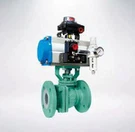
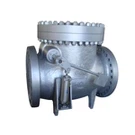
In the world of industrial applications, the selection of appropriate valves is crucial for ensuring the efficiency, safety, and reliability of systems. One such valve that often comes under scrutiny for specific applications is the fully welded ball valve. A question that frequently arises is whether a fully welded ball valve can be used in vacuum applications. As a supplier of fully welded ball valves, I am well - versed in the technical aspects and practical implications of this query, and I will delve into this topic in detail.
Understanding Vacuum Applications
Before discussing the suitability of fully welded ball valves for vacuum applications, it is essential to understand what vacuum applications entail. Vacuum systems are designed to operate at pressures below atmospheric pressure. These systems are used in a wide range of industries, including semiconductor manufacturing, chemical processing, food packaging, and pharmaceutical production. In these applications, maintaining a stable vacuum is of utmost importance to prevent contamination, ensure product quality, and optimize process efficiency.
The key requirements for valves in vacuum applications include:


- Leak - tightness: A valve must prevent any external air from entering the vacuum system. Even a small leak can disrupt the vacuum and compromise the entire process.
- Material Compatibility: The materials used in the valve should be compatible with the process media and the vacuum environment. Some materials may outgas in a vacuum, which can contaminate the system.
- Low Friction and Smooth Operation: Valves in vacuum systems often need to operate smoothly with minimal friction to avoid mechanical failures and ensure precise control.
Features of Fully Welded Ball Valves
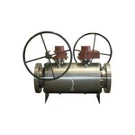
Fully welded ball valves are known for their robust construction and excellent sealing performance. These valves are typically made by welding the body parts together, eliminating the need for flange connections. This design offers several advantages:
- Enhanced Sealing: The welded construction provides a hermetic seal, minimizing the risk of external leakage. This is a significant advantage in vacuum applications where leak - tightness is critical.
- High Strength and Durability: The welded body can withstand high pressures and harsh operating conditions. In vacuum applications, where pressure differentials can be significant, the strength of the valve is essential to prevent deformation and maintain its integrity.
- Reduced Maintenance: With no flange connections, there are fewer potential leak points, reducing the need for frequent maintenance and inspection. This is beneficial in vacuum systems, where downtime for maintenance can be costly.
Suitability of Fully Welded Ball Valves in Vacuum Applications
Based on the features of fully welded ball valves and the requirements of vacuum applications, they can indeed be used effectively in many vacuum scenarios.
Leak - tightness
The hermetic seal provided by the welded construction of fully welded ball valves makes them highly suitable for maintaining a vacuum. The ball and seat of these valves are designed to provide a tight shut - off, preventing any air ingress into the system. This is particularly important in high - vacuum applications where even the slightest leak can have a significant impact on the process.
Material Selection
When it comes to vacuum applications, the choice of materials for fully welded ball valves is crucial. Stainless steel is a commonly used material for these valves due to its excellent corrosion resistance and low outgassing properties. Other materials, such as special alloys, can also be selected depending on the specific requirements of the application, such as the type of process media and the level of vacuum.
Operation in Vacuum
Fully welded ball valves can operate smoothly in vacuum environments. The ball valve design allows for low - friction operation, and the welded body provides stability. Additionally, the valve can be equipped with appropriate actuators, such as pneumatic or electric actuators, to ensure precise control even in vacuum conditions.
Considerations for Using Fully Welded Ball Valves in Vacuum Applications
While fully welded ball valves have many advantages for vacuum applications, there are also some considerations to keep in mind.
Outgassing
As mentioned earlier, outgassing can be a problem in vacuum systems. Even though materials like stainless steel have low outgassing properties, it is still important to ensure that the valve is properly cleaned and degassed before installation. This can help minimize the release of gases into the vacuum system.
Temperature and Pressure Ranges
Vacuum applications can involve a wide range of temperatures and pressures. Fully welded ball valves need to be selected based on the specific temperature and pressure requirements of the system. For example, in high - temperature vacuum applications, the valve materials and seals must be able to withstand the elevated temperatures without losing their performance.
Valve Sizing
Proper valve sizing is essential in vacuum applications. An undersized valve can cause excessive pressure drops, while an oversized valve may not provide accurate control. It is important to calculate the required flow rate and pressure drop based on the system requirements and select the appropriate valve size accordingly.
Other Types of Ball Valves for Vacuum Applications
In addition to fully welded ball valves, there are other types of ball valves that can also be considered for vacuum applications.
- Soft Seated Ball Valve: Soft seated ball valves are known for their excellent sealing performance. The soft seat material can provide a tight seal even at low pressures, making them suitable for some vacuum applications. However, the soft seat may have limitations in terms of temperature and chemical compatibility.
- V Port Ball Valve: V port ball valves offer precise flow control, which can be beneficial in vacuum systems where accurate flow regulation is required. The V - shaped ball provides a linear flow characteristic, allowing for better control of the process.
- Ceramic Lined Ball Valve: Ceramic lined ball valves are suitable for applications where the process media is abrasive or corrosive. In vacuum systems handling such media, the ceramic lining can protect the valve body and ensure long - term performance.
Conclusion
In conclusion, fully welded ball valves can be effectively used in vacuum applications. Their welded construction, excellent sealing performance, and high strength make them a suitable choice for maintaining a stable vacuum. However, it is important to consider factors such as outgassing, temperature and pressure ranges, and valve sizing to ensure optimal performance.
If you are looking for a reliable valve solution for your vacuum application, our company offers a wide range of fully welded ball valves that are designed to meet the highest standards of quality and performance. We can also provide expert advice on valve selection and installation to ensure that you get the best valve for your specific needs. If you are interested in learning more about our products or would like to discuss your requirements, please feel free to contact us for a detailed consultation and procurement negotiation.
References
- "Valve Handbook", by J. A. Nesbitt
- "Vacuum Technology: A Practical Guide", by P. A. Redhead, J. P. Hobson, and E. V. Kornelsen