

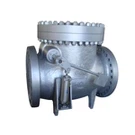
Hey there! As a supplier of Swing Type Check Valves, I've been in the thick of the water treatment game for quite some time. I've seen firsthand the crucial role these valves play in keeping water treatment systems running smoothly. So, let's dive into what it takes for a Swing Type Check Valve to shine in a water treatment system.
1. Material Quality
First off, the material of the valve is super important. In a water treatment system, the valve is constantly in contact with water, which might contain all sorts of chemicals and impurities. For instance, in a municipal water treatment plant, the water could have chlorine, fluorine, and other disinfectants. These substances can be corrosive over time.
We usually use high - quality cast iron, stainless steel, or bronze for our Swing Type Check Valve. Cast iron is a cost - effective option. It's strong and can withstand high pressures. But it might not be the best choice if the water is highly corrosive. Stainless steel, on the other hand, is extremely resistant to corrosion. It can handle aggressive chemicals and is great for long - term use. Bronze is also a good option, especially for smaller water treatment systems. It has good corrosion resistance and is relatively easy to machine.

2. Sealing Performance
A good seal is non - negotiable for a Swing Type Check Valve in a water treatment system. When the valve closes, it needs to prevent backflow completely. Even a tiny leak can cause big problems. For example, in a reverse osmosis water treatment unit, backflow can contaminate the purified water, undoing all the hard work of the treatment process.
We design our valves with precision - engineered sealing surfaces. The disc of the valve and the seat are machined to a very high tolerance. This ensures a tight fit when the valve closes. We also use high - quality sealing materials like rubber or PTFE (polytetrafluoroethylene). Rubber is flexible and can conform to the shape of the sealing surfaces, providing an excellent seal. PTFE is known for its chemical resistance and low friction, which helps in smooth operation of the valve.
3. Flow Capacity
The flow capacity of the valve is another key factor. In a water treatment system, there are different flow rates depending on the size and type of the system. A valve with low flow capacity can cause a bottleneck, reducing the overall efficiency of the system.
Our Swing Type Check Valves are designed to have a large flow area. The disc is shaped in a way that it offers minimal resistance to the flow of water when it's open. We also offer a range of valve sizes to match different flow requirements. Whether it's a small domestic water treatment system or a large industrial one, we have the right valve for the job.

4. Pressure Rating
Water treatment systems operate at different pressures. For example, in a high - pressure filtration system, the pressure can be quite high. The valve needs to be able to handle these pressures without failing.
We test our Swing Type Check Valve to ensure they meet high - pressure ratings. We use advanced manufacturing techniques and high - strength materials to make sure the valve body can withstand the pressure. The hinge and other moving parts are also designed to work smoothly under pressure.

5. Durability and Longevity
In a water treatment system, you don't want to be replacing valves every few months. Durability is essential. The valve should be able to withstand constant use, water flow, and any mechanical stresses.
We build our valves to last. We use high - quality materials and advanced manufacturing processes. The surface of the valve is often treated to prevent rust and corrosion. For example, we might apply a special coating to the valve body. This not only protects the valve but also extends its lifespan.
6. Ease of Maintenance
Maintenance is a fact of life in any water treatment system. A valve that's difficult to maintain can be a real headache. Our Swing Type Check Valves are designed with ease of maintenance in mind.
The disc and other internal parts are easily accessible. You can remove the cover and inspect or replace the parts without too much hassle. This reduces downtime in the water treatment system and saves you money in the long run.
7. Compatibility with Other Components
A water treatment system is made up of many different components, like pumps, filters, and pipes. The Swing Type Check Valve needs to be compatible with these other components.
We ensure that our valves have standard connection sizes and types. Whether it's a flange connection or a threaded connection, our valves can be easily integrated into existing water treatment systems. This makes it easier for you to upgrade or expand your system.
8. Performance in Different Water Conditions
Water can vary greatly in terms of temperature, pH level, and turbidity. A good Swing Type Check Valve should be able to perform well in different water conditions.
For example, in a hot water treatment system, the valve needs to be able to withstand high temperatures without losing its sealing performance. In water with a high pH level, the valve material should be resistant to alkaline corrosion. Our valves are tested in various water conditions to ensure they can handle whatever comes their way.
Comparing with Other Check Valves
There are other types of check valves out there, like Dual Plate Check Valve and Steam Extraction Check Valve. While these valves have their own advantages, the Swing Type Check Valve has some unique features.
Dual Plate Check Valves are known for their quick closing time, which can prevent water hammer. But they might not be as suitable for applications where a large flow area is required. Steam Extraction Check Valves are designed specifically for steam applications and might not be the best fit for a regular water treatment system.
The Swing Type Check Valve offers a good balance of flow capacity, sealing performance, and durability. It's a reliable choice for most water treatment systems.
If you're in the market for a high - quality Swing Type Check Valve for your water treatment system, I'd love to talk to you. Whether you need help choosing the right valve or have questions about installation and maintenance, I'm here to assist. Reach out to start a conversation about your specific requirements, and let's find the perfect valve solution for you.
References
- "Valve Handbook" by J. S. S. Raghavan
- "Water Treatment Systems: Design and Operation" by David W. Hendricks