

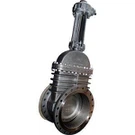
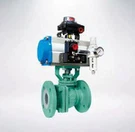
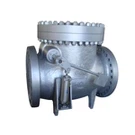
When it comes to high - pressure applications, flat or slab gate valves are often the preferred choice in many industries. As a supplier of flat or slab gate valves, I have in - depth knowledge of their design features that make them suitable for these challenging environments.
1. Sealing Mechanism
One of the most critical design features of flat or slab gate valves for high - pressure applications is their sealing mechanism. These valves typically use a resilient or metal - to - metal sealing system.
In a resilient sealing system, elastomeric materials such as rubber are used. This type of seal provides excellent sealing performance at relatively lower pressures. The elastomer can conform to the surface irregularities of the valve seat and gate, creating a tight seal. However, for high - pressure applications, metal - to - metal sealing is more commonly used.
Metal - to - metal seals can withstand extreme pressures and temperatures. The gate and seat are machined to very precise tolerances. When the valve is closed, the gate is forced against the seat under high pressure, creating a tight and reliable seal. This design ensures that there is minimal leakage even under high - pressure conditions. For example, in oil and gas pipelines where pressures can reach several thousand psi, metal - to - metal sealed flat or slab gate valves are essential to prevent any loss of valuable resources.
2. Gate Design
The gate of a flat or slab gate valve is another key design aspect. The gate is usually a flat plate, which gives the valve its name. In high - pressure applications, the gate needs to be thick and sturdy to withstand the forces exerted on it.
The gate is often made from high - strength materials such as carbon steel, stainless steel, or alloy steel. Stainless steel gates, like the ones we offer in our Stainless Steel Gate Valve series, are highly resistant to corrosion, making them suitable for applications in corrosive environments such as chemical processing plants.
Some gates are also designed with a double - disc or parallel - disc configuration. This design allows for better distribution of the pressure across the gate, reducing the stress on any single point. As a result, the valve can operate more reliably under high - pressure conditions.
3. Body Construction
The body of the flat or slab gate valve is designed to contain the high - pressure fluid within the pipeline. It is typically a heavy - walled structure made from materials that can withstand high pressures.
The body is often forged or cast, depending on the size and application requirements. Forged bodies are generally stronger and more reliable, as the forging process aligns the grain structure of the metal, increasing its strength and toughness. Cast bodies, on the other hand, are more cost - effective for larger valves.
The body also has flanged or welded ends for easy installation in the pipeline. Flanged ends provide a detachable connection, which is convenient for maintenance and replacement. Welded ends, however, offer a more permanent and leak - proof connection, which is preferred in high - pressure applications where any leakage can be extremely dangerous.
4. Bonnet Design
The bonnet is an important part of the valve that covers the stem and provides a seal to prevent the fluid from leaking out of the valve body. In high - pressure applications, the bonnet needs to be securely attached to the body.
There are different types of bonnet designs, such as bolted bonnets and pressure - seal bonnets. Bolted bonnets are the most common type. They are attached to the body using bolts, which can be tightened to ensure a good seal. Pressure - seal bonnets, on the other hand, use the pressure of the fluid inside the valve to create a tighter seal as the pressure increases. This design is particularly suitable for very high - pressure applications.
5. Stem Design
The stem is responsible for operating the gate, either opening or closing the valve. In high - pressure applications, the stem needs to be strong enough to withstand the force required to move the gate against the high - pressure fluid.
The stem is usually made from a high - strength material and is designed with a suitable thread pitch. A coarse thread pitch allows for faster operation of the valve, while a fine thread pitch provides more precise control. Some stems are also designed with a backseat feature. The backseat provides a secondary seal when the valve is fully open, protecting the stem packing from the high - pressure fluid and extending its service life.


6. Trim Materials
The trim of a flat or slab gate valve includes the parts that come into direct contact with the fluid, such as the gate, seat, and stem. The choice of trim materials is crucial in high - pressure applications.
For abrasive fluids, ceramic - lined gate valves, like our Ceramic Lined Gate Valve, are an excellent option. The ceramic lining provides high wear resistance, ensuring that the valve can operate for a long time without significant damage from the abrasive particles in the fluid.
In applications where the fluid is corrosive, materials such as stainless steel or special alloys are used for the trim. These materials can resist the chemical attack of the fluid, preventing corrosion and ensuring the long - term performance of the valve.
7. Actuation Options
Flat or slab gate valves can be actuated manually, electrically, pneumatically, or hydraulically. In high - pressure applications, the choice of actuation method depends on several factors.
Manual actuation is simple and reliable, but it may not be suitable for large - sized valves or applications where frequent operation is required. Electric actuators are convenient and can be easily integrated into automated control systems. They provide precise control over the valve operation. Pneumatic actuators are fast - acting and can provide high torque, making them suitable for high - pressure applications where quick valve operation is necessary. Hydraulic actuators can generate very high forces, which are ideal for large - scale high - pressure valves.
8. Flow Characteristics
The flow characteristics of flat or slab gate valves are also important in high - pressure applications. These valves offer a straight - through flow path when fully open, which results in low pressure drop. This is beneficial in high - pressure systems as it reduces the energy consumption required to pump the fluid through the pipeline.
The flat gate design also allows for a large flow area, enabling a high flow rate of the fluid. This is particularly important in applications such as power plants and refineries where large volumes of fluid need to be transported under high pressure.
Contact for Procurement
If you are in need of high - quality flat or slab gate valves for your high - pressure applications, we are here to help. Our valves are designed and manufactured to the highest standards, ensuring reliable performance and long - term durability. We can provide customized solutions based on your specific requirements. Please feel free to contact us to start the procurement and negotiation process.
References
- ASME B16.34 - Valves - Flanged, Threaded, and Welding End
- API 600 - Steel Gate Valves - Flanged and Butt - Welding Ends, Bolted Bonnet
- ISO 10434 - Petroleum and natural gas industries - Steel gate, globe and check valves