

Hey there! As a diaphragm valve supplier, I often get asked about the types of actuators that can be used with diaphragm valves. Well, you're in the right place because I'm gonna break it down for you.
First off, let's understand what diaphragm valves are. They're super useful in a bunch of industries, like chemical processing, water treatment, and food and beverage. Diaphragm valves come in different types, mainly Weir Type Diaphragm Valve and Straight Type Diaphragm Valve. The weir type has a weir or saddle in the flow path, which the diaphragm presses against to shut off the flow. The straight type, on the other hand, has a straight-through design, making it great for applications where you need a full bore flow.
Now, let's talk about the actuators. Actuators are what make the diaphragm valve open and close. They're like the muscle behind the valve's operation. There are several types of actuators that can be used with diaphragm valves, and each has its own pros and cons.
Pneumatic Actuators
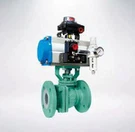
Pneumatic actuators are probably the most common type used with diaphragm valves. They use compressed air to operate the valve. When air is supplied to the actuator, it moves a piston or a diaphragm inside the actuator, which in turn moves the valve stem and opens or closes the valve.
One of the biggest advantages of pneumatic actuators is their speed. They can open and close the valve really quickly, which is great for applications where you need a fast response time. They're also relatively simple in design, which means they're easy to install and maintain. Plus, they're pretty reliable and can handle a wide range of pressures and temperatures.


Pneumatic diaphragm valve are widely used in industries where safety is a major concern. Since they use compressed air, there's no risk of electrical sparks, which makes them suitable for use in hazardous environments.
However, pneumatic actuators do have some drawbacks. They require a source of compressed air, which means you need to have an air compressor and a piping system. This can add to the cost and complexity of the installation. Also, they can be affected by changes in air pressure, which can lead to inconsistent valve operation.
Electric Actuators
Electric actuators use an electric motor to operate the valve. They're becoming more and more popular, especially in applications where you need precise control over the valve position.
One of the main advantages of electric actuators is their accuracy. They can be programmed to open and close the valve to a specific position, which is great for applications where you need to control the flow rate precisely. They also don't require a source of compressed air, which simplifies the installation and reduces the cost.
Another advantage of electric actuators is their flexibility. They can be easily integrated with a control system, which allows you to automate the valve operation. You can also monitor the valve position and status remotely, which is very convenient.
However, electric actuators also have some limitations. They're generally more expensive than pneumatic actuators, especially for larger valve sizes. They also generate heat during operation, which can be a problem in some applications. And if there's a power outage, the valve may not be able to operate.
Manual Actuators
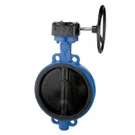
Manual actuators are the simplest type of actuators. They're operated by hand, usually using a handwheel or a lever. Manual actuators are often used in applications where the valve doesn't need to be opened and closed frequently, or where you don't need a high level of automation.
The main advantage of manual actuators is their simplicity. They're easy to install and operate, and they don't require any external power source. They're also very reliable, since there are no electronic or pneumatic components that can fail.
However, manual actuators are not suitable for applications where you need a fast or precise response. They also require someone to be present to operate the valve, which can be a problem in some situations.
Hydraulic Actuators
Hydraulic actuators use hydraulic fluid to operate the valve. They're similar to pneumatic actuators, but they use a liquid instead of air. Hydraulic actuators are known for their high force and torque capabilities, which makes them suitable for use with large and heavy-duty diaphragm valves.
One of the main advantages of hydraulic actuators is their power. They can generate a lot of force, which allows them to operate valves that are too large or heavy for pneumatic or electric actuators. They're also very reliable and can handle high pressures and temperatures.
However, hydraulic actuators are more complex and expensive than other types of actuators. They require a hydraulic pump, a reservoir, and a piping system, which adds to the cost and complexity of the installation. They also need to be maintained regularly to prevent leaks and ensure proper operation.
So, which type of actuator should you choose for your diaphragm valve? Well, it depends on several factors, such as the application requirements, the size and type of the valve, the budget, and the level of automation you need.
If you need a fast response time and you're working in a hazardous environment, pneumatic actuators are probably the best choice. If you need precise control over the valve position and you don't mind the higher cost, electric actuators are a good option. If you don't need a high level of automation and you want a simple and reliable solution, manual actuators may be the way to go. And if you're dealing with large and heavy-duty valves, hydraulic actuators may be the most suitable.
As a diaphragm valve supplier, I can help you choose the right actuator for your application. I have a wide range of diaphragm valves and actuators in stock, and I can provide you with expert advice and support. Whether you're a small business or a large industrial company, I can work with you to find the best solution for your needs.
If you're interested in learning more about diaphragm valves and actuators, or if you have any questions or need a quote, please don't hesitate to get in touch. I'm always happy to help you with your valve requirements and discuss potential procurement opportunities. Let's work together to find the perfect valve solution for your project!
References
- "Valve Handbook" by J. H. Perry
- "Industrial Valves: Selection and Sizing" by R. W. Miller