

Hey there! As a supplier of Slurry Gate Valves, I often get asked about the best type of lubricant to use for these valves. It's a crucial question because the right lubricant can significantly extend the valve's lifespan, improve its performance, and reduce maintenance costs. So, let's dive into this topic and figure out what lubricant is the most suitable for your Slurry Gate Valve.
First off, let's understand why lubrication is so important for Slurry Gate Valves. These valves are designed to handle abrasive and corrosive slurries, which can cause a lot of wear and tear on the valve components. Lubrication helps to reduce friction between moving parts, prevent corrosion, and seal the valve to prevent leakage. Without proper lubrication, the valve can become difficult to operate, leading to premature failure and costly repairs.
Now, let's talk about the different types of lubricants available and their suitability for Slurry Gate Valves.
Greases
Greases are a popular choice for lubricating Slurry Gate Valves. They are thick, semi - solid lubricants that can stay in place and provide long - term lubrication. Greases typically consist of a base oil (such as mineral oil, synthetic oil, or vegetable oil) and a thickening agent (like lithium, calcium, or aluminum soap).
One of the main advantages of using greases is their ability to resist wash - out. In a slurry application, the valve is constantly exposed to the flowing slurry, and a lubricant that can stay put is essential. Greases also have good sealing properties, which can help prevent the slurry from entering the valve's internal components.
However, not all greases are suitable for Slurry Gate Valves. You need to choose a grease that is resistant to abrasion and corrosion. For example, a grease with a high - quality synthetic base oil and a thickening agent that can withstand high pressures and temperatures is a good option. Some greases also contain additives like anti - wear agents, corrosion inhibitors, and extreme - pressure additives, which can enhance their performance in a slurry environment.
Oils
Oils are another option for lubricating Slurry Gate Valves. They are thinner than greases and can provide excellent lubrication in high - speed applications. Oils can also penetrate into small gaps and crevices more easily than greases, ensuring that all moving parts are properly lubricated.
Mineral oils are commonly used as lubricants, but they may not be the best choice for slurry applications. They can be prone to oxidation and may not provide sufficient protection against abrasion and corrosion. Synthetic oils, on the other hand, offer better performance in harsh environments. They have better thermal stability, oxidation resistance, and can provide superior lubrication under high pressures.
When using oils for Slurry Gate Valves, you need to ensure that the oil has a proper viscosity. If the oil is too thin, it may not provide enough lubrication, and if it's too thick, it can make the valve difficult to operate.
Specialized Lubricants
There are also specialized lubricants available in the market that are specifically designed for slurry applications. These lubricants are formulated to resist abrasion, corrosion, and the effects of the slurry.
Some specialized lubricants contain solid lubricants like graphite or molybdenum disulfide. These solid particles can provide additional lubrication and protection against wear. They can also help to reduce friction and prevent the valve from seizing up.
Another type of specialized lubricant is a food - grade lubricant. If your Slurry Gate Valve is used in the food or beverage industry, you need to use a lubricant that is safe for contact with food. These lubricants are typically made from non - toxic materials and meet strict regulatory standards.
Factors to Consider When Choosing a Lubricant
When choosing a lubricant for your Slurry Gate Valve, there are several factors you need to consider:
- Slurry Characteristics: The type of slurry the valve is handling is a crucial factor. If the slurry is highly abrasive, you need a lubricant that can resist wear. If it's corrosive, the lubricant should have good corrosion - resistance properties.
- Operating Conditions: The temperature, pressure, and speed at which the valve operates also affect the choice of lubricant. For high - temperature applications, you need a lubricant with good thermal stability. For high - pressure applications, a lubricant with high - pressure additives is necessary.
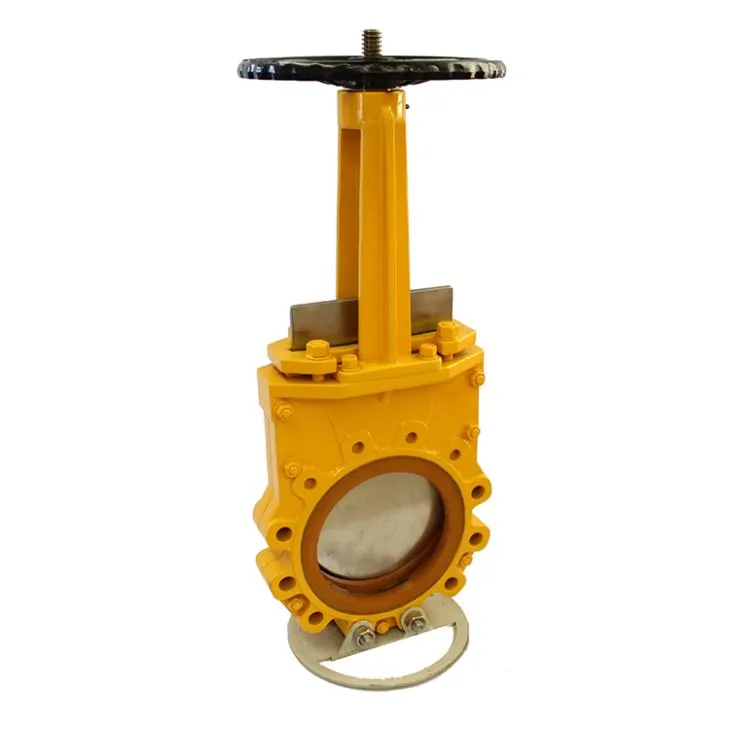
- Valve Design: Different valve designs may require different types of lubricants. For example, a Metal Seated Knife Gate Valve may have different lubrication requirements compared to a Ceramic knife gate valve or a Urethan knife gate valve.
Maintenance and Lubrication Schedule
Once you've chosen the right lubricant for your Slurry Gate Valve, it's important to have a proper maintenance and lubrication schedule. Regular lubrication is essential to keep the valve in good working condition.
You should follow the manufacturer's recommendations for lubrication intervals. In some cases, the valve may need to be lubricated after a certain number of cycles or at regular time intervals. It's also important to clean the valve before applying new lubricant to remove any dirt, debris, or old lubricant.
In conclusion, choosing the right lubricant for your Slurry Gate Valve is a critical decision that can have a significant impact on the valve's performance and lifespan. Whether you choose a grease, an oil, or a specialized lubricant, make sure it is suitable for the slurry characteristics, operating conditions, and valve design.
If you're still not sure which lubricant is the best for your Slurry Gate Valve, or if you're interested in purchasing high - quality Slurry Gate Valves, don't hesitate to reach out. We're here to help you make the right choice and ensure that your valves operate smoothly and efficiently.

References
- "Valve Handbook" by Edward E. Ludwig
- "Lubrication Fundamentals" by John W. Harris