

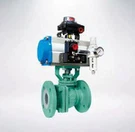
Hey there! As a supplier of Ceramic Lined Ball Valves, I'm super excited to break down the working principle of these nifty devices for you. So, let's dive right in!
The Basics of a Ceramic Lined Ball Valve
First off, let's get a general idea of what a ceramic lined ball valve is. It's a type of valve that uses a ball with a hole in the middle to control the flow of fluid. The "ceramic lined" part means that the internal surface of the valve, which comes into contact with the fluid, is coated or lined with ceramic material. This ceramic lining offers some awesome benefits like excellent wear resistance, corrosion resistance, and high-temperature tolerance.
How Does It Work?
The working principle of a ceramic lined ball valve is actually quite straightforward. It's all about the movement of that ball inside the valve body.
Open Position
When you want to allow fluid to flow through the valve, you turn the valve handle or actuator. This rotates the ball inside the valve body. In the open position, the hole in the ball aligns with the inlet and outlet ports of the valve. It's like opening a door for the fluid. The fluid can then pass through the valve with minimal resistance, just flowing freely from the inlet, through the hole in the ball, and out of the outlet.
Closed Position
Now, if you want to stop the flow of fluid, you turn the handle or actuator in the opposite direction. This rotates the ball so that the solid part of the ball blocks the inlet and outlet ports. It's like closing a door, preventing the fluid from passing through. The tight seal created by the ceramic lining and the ball ensures that there's no leakage, even under high pressure.
Intermediate Positions
Some ceramic lined ball valves also allow for intermediate positions. By partially rotating the ball, you can control the amount of fluid that flows through the valve. This is useful when you need to regulate the flow rate, like in a process where you need to maintain a specific flow of liquid or gas.
Why the Ceramic Lining Matters
You might be wondering, "Why use ceramic lining in a ball valve?" Well, there are several reasons.
Wear Resistance
Ceramic is extremely hard and durable. In applications where the fluid contains abrasive particles, like in mining or chemical processing, a regular valve would wear out quickly. But the ceramic lining can withstand the constant abrasion from these particles, ensuring a longer lifespan for the valve.
Corrosion Resistance
Many fluids, especially chemicals, can be highly corrosive. The ceramic lining acts as a protective barrier between the fluid and the valve body. It resists corrosion, preventing the valve from being damaged and ensuring that it continues to function properly over time.
High-Temperature Tolerance
In some industrial processes, the fluid can be very hot. Ceramic has excellent high-temperature resistance, allowing the valve to operate reliably even in high-temperature environments without deforming or losing its sealing properties.
Different Types of Ceramic Lined Ball Valves
There are a few different types of ceramic lined ball valves, each with its own features and applications.
V Port Ball Valve
A V port ball valve has a V-shaped opening in the ball. This design allows for more precise flow control, especially in applications where you need to throttle the flow. The V shape creates a more linear flow characteristic, making it easier to regulate the flow rate accurately.
Ball Valve Floating Type
In a floating type ball valve, the ball is not fixed in place. It's free to move slightly within the valve body. When the valve is closed, the fluid pressure pushes the ball against the seat, creating a tight seal. This type of valve is relatively simple in design and is commonly used in low to medium-pressure applications.


Top Entry Ball Valve
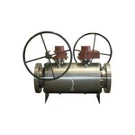
A top entry ball valve allows for easy maintenance. The valve body is designed in such a way that you can access the internal components, like the ball and seats, from the top. This makes it convenient to replace or repair parts without having to remove the entire valve from the pipeline.
Applications of Ceramic Lined Ball Valves
Ceramic lined ball valves are used in a wide range of industries due to their excellent performance.
Mining
In the mining industry, the fluid often contains abrasive particles. Ceramic lined ball valves can handle the harsh conditions and ensure reliable operation in processes like slurry transportation.
Chemical Processing
Chemical plants deal with corrosive chemicals. The corrosion resistance of the ceramic lining makes these valves ideal for controlling the flow of various chemicals in different processes.
Power Generation
In power plants, especially those using coal or other fuels, the high-temperature and abrasive nature of the fluids require valves that can withstand these conditions. Ceramic lined ball valves are a great choice for controlling the flow of steam, water, and other fluids in power generation processes.
Conclusion
So, there you have it! The working principle of a ceramic lined ball valve is all about using a ball with a hole to control the flow of fluid, and the ceramic lining adds some amazing properties like wear resistance, corrosion resistance, and high-temperature tolerance. Whether you need precise flow control, reliable sealing, or a valve that can handle tough conditions, a ceramic lined ball valve is a great option.
If you're in the market for a high-quality ceramic lined ball valve, I'd love to chat with you. We've got a wide range of options to suit different applications and requirements. Don't hesitate to reach out for more information or to start a procurement discussion. Let's find the perfect valve solution for your needs!
References
- "Valve Handbook" by A. J. Stepanoff
- "Industrial Valves: Selection and Sizing" by J. S. Dickenson