

The response time of a diaphragm valve is a critical parameter that significantly impacts its performance in various industrial applications. As a trusted diaphragm valve supplier, I understand the importance of this characteristic and its implications for our customers. In this blog, we will delve into what response time means for diaphragm valves, the factors that affect it, and why it matters in different scenarios.
Understanding Diaphragm Valve Response Time
The response time of a diaphragm valve refers to the time it takes for the valve to move from one position (usually fully closed or fully open) to another in response to a control signal. It is typically measured in milliseconds or seconds, depending on the valve's size, design, and the type of actuator used. A fast response time is often desirable in applications where precise flow control or rapid shut - off is required.
Let's take a closer look at the different types of diaphragm valves and how their response times can vary.
Weir Type Diaphragm Valve
The Weir Type Diaphragm Valve is a common type of diaphragm valve. It features a weir or a raised ridge in the valve body. When the diaphragm is in the closed position, it seals against the weir to stop the flow. The response time of a weir type diaphragm valve can be influenced by several factors.
The flexibility of the diaphragm material plays a crucial role. A more flexible diaphragm can move more quickly in response to the actuator's force, resulting in a shorter response time. Additionally, the size of the valve affects the response time. Smaller weir type diaphragm valves generally have faster response times compared to larger ones because there is less mass to move.
Pneumatic Diaphragm Valve
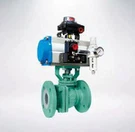
The pneumatic diaphragm valve uses compressed air as the actuator to control the movement of the diaphragm. Pneumatic actuators can provide relatively fast response times, especially when the air pressure is properly regulated.
The response time of a pneumatic diaphragm valve depends on the air supply pressure, the volume of the actuator chamber, and the design of the valve's internal components. Higher air pressure can generate more force to move the diaphragm quickly, but it also needs to be balanced to avoid excessive wear on the diaphragm. The volume of the actuator chamber affects how quickly the air can fill or empty to move the diaphragm. A smaller chamber volume generally leads to a faster response.
Teflon Lined Diaphragm
The Teflon liend diaphragm offers excellent chemical resistance, making it suitable for applications involving corrosive fluids. However, the properties of Teflon can impact the response time. Teflon is a relatively stiff material compared to some rubber - based diaphragm materials.
This stiffness can result in a slightly longer response time as more force is required to deform the diaphragm. Nevertheless, modern designs of Teflon - lined diaphragm valves have been optimized to minimize this effect. For example, the shape and thickness of the Teflon lining are carefully engineered to ensure a reasonable response time while maintaining chemical resistance.
Factors Affecting Diaphragm Valve Response Time
Actuator Type
As mentioned earlier, the type of actuator used in a diaphragm valve has a significant impact on its response time. Besides pneumatic actuators, electric actuators are also commonly used. Electric actuators can provide precise control and can have very fast response times, especially in high - performance models. However, they may be more expensive and require a reliable power supply.
Diaphragm Material
The diaphragm material is another key factor. Different materials have different mechanical properties such as elasticity, stiffness, and durability. Rubber - based materials are generally more flexible and can offer fast response times. But they may not be suitable for applications with aggressive chemicals. On the other hand, materials like Teflon provide chemical resistance but may sacrifice some response time due to their stiffness.
Valve Size
The physical size of the diaphragm valve is an important consideration. Larger valves have larger diaphragms and more mass to move, which can increase the response time. In applications where fast response is critical, smaller valves may be preferred, even if multiple valves need to be used to achieve the required flow rate.
Fluid Properties
The properties of the fluid flowing through the valve can also affect the response time. Viscous fluids can create more resistance to the movement of the diaphragm, slowing down the valve's response. Additionally, fluids with high pressures or temperatures can change the mechanical properties of the diaphragm and the valve components, potentially affecting the response time.
Importance of Response Time in Different Applications
Process Control
In industrial process control systems, accurate and rapid flow control is essential. For example, in a chemical manufacturing process, a diaphragm valve with a fast response time can quickly adjust the flow of reactants to maintain the correct stoichiometry. This ensures the quality and consistency of the final product.
Safety Systems
In safety - critical applications, such as emergency shut - off systems, a fast response time is vital. A diaphragm valve that can quickly close in the event of a leak or an over - pressure situation can prevent accidents and protect personnel and equipment.
Laboratory Applications
In laboratory settings, where precise control of small volumes of fluids is required, a diaphragm valve with a short response time can provide accurate and repeatable results. For example, in chromatography or other analytical instruments, fast - acting diaphragm valves are used to control the flow of solvents and samples.
How We Ensure Optimal Response Time
As a diaphragm valve supplier, we take several measures to ensure that our valves have optimal response times.
We carefully select diaphragm materials based on the application requirements. For applications where fast response is crucial, we may recommend rubber - based diaphragms. For applications with corrosive fluids, we offer Teflon - lined diaphragms with optimized designs to balance chemical resistance and response time.
We also conduct extensive testing on our valves during the manufacturing process. We measure the response times of each valve and make adjustments to the actuator settings, diaphragm tension, and other parameters to ensure consistent performance.
In addition, our engineering team is constantly researching and developing new valve designs to improve response times. We collaborate with our customers to understand their specific needs and provide customized solutions.
Conclusion
The response time of a diaphragm valve is a complex characteristic that is influenced by multiple factors, including the actuator type, diaphragm material, valve size, and fluid properties. Understanding these factors is crucial for selecting the right diaphragm valve for different applications.


As a reliable diaphragm valve supplier, we are committed to providing high - quality valves with optimal response times. Whether you need a Weir Type Diaphragm Valve, a pneumatic diaphragm valve, or a Teflon liend diaphragm, we have the expertise and products to meet your requirements.
If you are interested in learning more about our diaphragm valves or would like to discuss your specific application needs, please contact us. We look forward to the opportunity to work with you and provide the best diaphragm valve solutions for your business.
References
- "Valve Handbook" by J. S. Holman
- "Industrial Process Control Systems" by D. E. Seborg