

Hey there! As a check valve supplier, I've seen firsthand how different factors can affect the performance of these crucial components. One of the most significant factors that often gets overlooked is the impact of particulate matter in the fluid flowing through a check valve. In this blog, I'll break down what particulate matter is, how it can mess with a check valve, and what you can do about it.
First off, let's talk about what particulate matter is. Particulate matter, often referred to as PM, is basically any solid or liquid particles that are suspended in a fluid. This can include things like dirt, sand, rust, and even tiny bits of debris from the pipes or equipment the fluid is flowing through. These particles can vary in size, from large chunks that you can see with the naked eye to microscopic specks that are only visible under a microscope.
Now, you might be wondering, "So what? A few little particles can't do much damage, right?" Well, think again. Particulate matter can have a pretty significant impact on the performance and lifespan of a check valve.
1. Wear and Tear
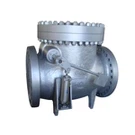
One of the most obvious impacts of particulate matter on a check valve is wear and tear. When particles flow through the valve, they can scrape against the internal components, like the disc, seat, and hinge. Over time, this constant abrasion can cause the surfaces to become rough and pitted. As a result, the valve may not seal properly, leading to leaks. For example, in a Swing Type Check Valve, the disc needs to close tightly against the seat to prevent backflow. If the seat is damaged by particulate matter, the valve won't be able to create a proper seal, and fluid may start to leak back through the valve.


2. Jamming
Another problem that particulate matter can cause is jamming. Large particles or clusters of smaller particles can get stuck in the valve, preventing it from opening or closing properly. This can be a major issue, especially in systems where the check valve is responsible for preventing backflow or controlling the flow direction. For instance, if a particle gets lodged between the disc and the hinge of a swing check valve, the disc may not be able to swing freely, and the valve may remain in an open or closed position when it shouldn't be.
3. Erosion
Erosion is also a concern when it comes to particulate matter in a check valve. High-velocity fluid carrying particles can act like sandpaper, gradually wearing away the metal surfaces of the valve. This is particularly true in areas where the fluid flow is turbulent, such as near the valve inlet or outlet. In a pressure seal check valve, erosion can weaken the valve body and reduce its ability to withstand high pressures. Over time, this can lead to valve failure and potentially dangerous situations.
4. Reduced Flow Capacity
Particulate matter can also reduce the flow capacity of a check valve. As particles accumulate inside the valve, they can restrict the flow path, causing the valve to become less efficient. This means that the fluid may not be able to pass through the valve as quickly or easily as it should, which can lead to increased pressure drop and reduced system performance.
How to Mitigate the Impact
So, what can you do to protect your check valves from the harmful effects of particulate matter? Here are a few tips:
- Filtration: Installing filters upstream of the check valve is one of the most effective ways to remove particulate matter from the fluid. Filters can trap particles of various sizes, preventing them from reaching the valve and causing damage. Make sure to choose a filter with the appropriate pore size for your application.
- Regular Maintenance: Regular maintenance is crucial for keeping check valves in good working condition. This includes inspecting the valve for signs of wear and tear, cleaning it to remove any accumulated particles, and replacing any damaged components. For example, if you notice that the disc of a swing check valve is starting to show signs of erosion, it's important to replace it before it causes further problems.
- Proper Valve Selection: Choosing the right type of check valve for your application is also important. Some valves are more resistant to particulate matter than others. For example, a Damping Device check valve may be a better choice in applications where there is a high risk of particulate matter, as it can help reduce the impact of particles on the valve components.
As a check valve supplier, I understand the importance of providing high-quality valves that can withstand the challenges of different operating conditions. That's why we offer a wide range of check valves, including swing type check valves, pressure seal check valves, and damping device check valves, all designed to provide reliable performance even in the presence of particulate matter.
If you're in the market for a check valve or need help selecting the right one for your application, I'd love to chat with you. Our team of experts can provide you with personalized advice and recommendations based on your specific needs. So, don't hesitate to reach out and start a conversation about your check valve requirements.
References
- Smith, J. (2020). "The Effects of Particulate Matter on Industrial Valves." Journal of Fluid Control, 15(2), 45 - 52.
- Johnson, A. (2019). "Mitigating Valve Wear Caused by Particulate Matter." Valve Technology Today, 22(3), 67 - 74.