

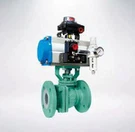
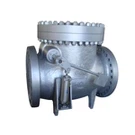
Hey there! As a supplier of top entry ball valves, I've seen firsthand how different factors can affect the performance of these valves. One of the most crucial factors that often gets overlooked is fluid viscosity. In this blog post, I'm going to break down what fluid viscosity is, and how it impacts the operation of a top entry ball valve.
Let's start with the basics. Fluid viscosity is essentially a measure of a fluid's resistance to flow. You can think of it as how "thick" or "thin" a fluid is. For example, water has a relatively low viscosity, which means it flows easily. On the other hand, honey has a high viscosity and flows much more slowly. When it comes to top entry ball valves, the viscosity of the fluid passing through them can have a significant impact on their operation.
Impact on Valve Actuation
One of the primary areas where fluid viscosity affects top entry ball valves is in valve actuation. Actuation refers to the process of opening and closing the valve. In a top entry ball valve, this is typically done by rotating the ball inside the valve body. When the fluid has a low viscosity, it offers less resistance to the movement of the ball. This means that less force is required to actuate the valve, and the valve can open and close more quickly.
However, when dealing with high - viscosity fluids, the situation is quite different. High - viscosity fluids create more drag on the ball as it rotates. This requires more force to actuate the valve. If the actuator is not properly sized for the high - viscosity application, it may struggle to open or close the valve fully. In some cases, it might even lead to premature wear and tear on the actuator components.
Sealing Performance
Another critical aspect is the sealing performance of the top entry ball valve. A good seal is essential to prevent leakage of the fluid. When the fluid has a low viscosity, it can easily seep through small gaps or imperfections in the valve seat. This can compromise the sealing integrity of the valve.
For high - viscosity fluids, the increased thickness can actually work in favor of the sealing performance. The high - viscosity fluid tends to fill in small gaps more effectively, providing a better seal. However, it's important to note that if the valve is not designed to handle high - viscosity fluids, the force exerted by the fluid on the seat can cause deformation over time, which may eventually lead to leakage.
Flow Characteristics
Fluid viscosity also has a big impact on the flow characteristics through the top entry ball valve. In a low - viscosity fluid system, the flow is relatively smooth and laminar. The valve can control the flow rate accurately because the fluid responds quickly to changes in the valve opening.
In contrast, high - viscosity fluids often exhibit turbulent flow. Turbulent flow can cause uneven pressure distribution inside the valve, leading to increased wear on the valve components. It can also make it more challenging to control the flow rate precisely. The valve may need to be adjusted more frequently to maintain the desired flow rate.
Wear and Tear
The viscosity of the fluid can significantly affect the wear and tear of the top entry ball valve. Low - viscosity fluids generally cause less wear on the valve components. Since they offer less resistance, there is less friction between the moving parts of the valve. This means that the valve can last longer without significant maintenance.


High - viscosity fluids, however, can cause more wear. The increased drag and pressure exerted by the fluid can lead to abrasion of the ball and seat surfaces. Over time, this can cause the valve to lose its sealing ability and may require more frequent replacement of parts.
Compatibility with Different Valve Types
It's also important to consider how fluid viscosity impacts different types of top entry ball valves. For instance, a V Port Ball Valve is often used for applications where precise flow control is required. In low - viscosity fluid systems, a V port ball valve can provide excellent flow control due to its unique design. However, in high - viscosity applications, the thick fluid may not flow smoothly through the V - shaped port, which can affect the valve's performance.
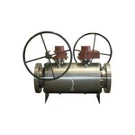
A Trunnion Mounted Ball Valve is designed to handle high - pressure and high - flow applications. In high - viscosity fluid systems, the trunnion design can help to support the ball against the increased force exerted by the fluid. This can improve the valve's durability and performance.
A Soft Seated Ball Valve is known for its excellent sealing performance. In low - viscosity applications, the soft seat can help prevent leakage. But in high - viscosity applications, the soft seat may be more prone to deformation due to the high - pressure exerted by the thick fluid.
Selecting the Right Valve for the Viscosity
As a top entry ball valve supplier, I know that selecting the right valve for the fluid viscosity is crucial. For low - viscosity fluids, a valve with a simple design and a smaller actuator may be sufficient. You also need to pay close attention to the sealing material to ensure that it can prevent leakage of the thin fluid.
For high - viscosity fluids, you need a valve that is designed to handle the extra force and drag. This may include a larger actuator, a more robust valve body, and seat materials that can withstand the pressure. It's also important to consider the flow path design to ensure that the high - viscosity fluid can flow through the valve smoothly.
Conclusion
In conclusion, fluid viscosity plays a vital role in the operation of a top entry ball valve. Whether it's valve actuation, sealing performance, flow characteristics, or wear and tear, the viscosity of the fluid can have a profound impact. As a supplier, I always recommend that customers carefully consider the fluid viscosity when selecting a top entry ball valve.
If you're in the market for a top entry ball valve and need help in choosing the right one for your specific fluid viscosity application, don't hesitate to reach out. We have a team of experts who can guide you through the selection process and ensure that you get a valve that will perform optimally in your system.
References
- "Valve Handbook: Principles and Applications" by E. S. Pearson
- "Fluid Mechanics" by Frank M. White
- Industry research reports on ball valve performance in different fluid viscosity applications.