

In the intricate landscape of fuel systems, every component plays a crucial role in ensuring safety and efficiency. Among these components, check valves stand out as essential devices that prevent the reverse flow of fluids. However, like any part in a fuel system, check valves carry certain ignition risks that need to be thoroughly understood. As a seasoned check valve supplier, I've witnessed firsthand the importance of addressing these risks to guarantee the smooth and safe operation of fuel systems.
Understanding Check Valves in Fuel Systems
Before delving into the ignition risks, it's essential to understand what check valves are and how they function in fuel systems. Check valves are mechanical devices that allow fluid to flow in one direction only. They consist of a valve body, a disc or other closing mechanism, and a seat. When the fluid flows in the forward direction, the pressure of the fluid pushes the disc off the seat, allowing the fluid to pass through. When the flow reverses, the disc is forced back onto the seat, preventing the backflow of the fluid.
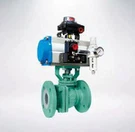
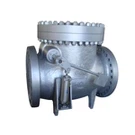
There are several types of check valves commonly used in fuel systems, each with its own unique design and application. For instance, the Swing Type Check Valve features a disc that swings on a hinge. This type of valve is suitable for applications where the flow rate is relatively high and the pressure drop needs to be minimized. On the other hand, the Ball Float Pattern Rubber Lined Check Valve uses a ball float as the closing mechanism. It is often used in applications where there is a risk of solids or debris in the fluid, as the ball float can prevent the valve from getting clogged. Another type is the Steam Extraction Check Valve, which is specifically designed for steam extraction applications in power plants and other industrial settings.
Ignition Risks Associated with Check Valves
1. Friction and Heat Generation
One of the primary ignition risks associated with check valves is friction and heat generation. When the fluid flows through the check valve, there is friction between the disc and the seat, as well as between the fluid and the valve body. Over time, this friction can cause the temperature of the valve to rise. If the temperature reaches the auto - ignition temperature of the fuel in the system, it can lead to ignition.
In high - pressure fuel systems, the force of the fluid flowing through the valve can be significant, increasing the friction and heat generation. Additionally, if the valve is not properly lubricated or if there is debris or wear on the valve components, the friction can be exacerbated, further increasing the risk of overheating and ignition.
2. Leakage
Leakage is another significant ignition risk. A check valve that is not properly sealed can allow fuel to leak out of the system. Fuel leaks can create a flammable atmosphere, especially in confined spaces or areas with poor ventilation. Even a small leak can accumulate over time, increasing the concentration of fuel vapors in the air. If there is an ignition source nearby, such as a spark or an open flame, it can ignite the fuel vapors, leading to a fire or explosion.
There are several reasons why a check valve may leak. It could be due to wear and tear on the valve components, improper installation, or damage to the valve seat. For example, if the valve is installed with incorrect torque, it may not seal properly, allowing fuel to leak. Similarly, if the valve seat is damaged by corrosion or abrasion, the disc may not be able to form a tight seal, resulting in leakage.
3. Static Electricity
Static electricity can also pose an ignition risk in fuel systems with check valves. As fuel flows through the valve, it can generate static electricity due to friction between the fuel and the valve surfaces. If the static charge builds up and is not properly dissipated, it can create a spark. This spark can ignite the fuel vapors in the system, especially if the fuel is volatile.
The risk of static electricity is higher in systems where the fuel has a low conductivity. In such cases, the static charge is less likely to be dissipated, increasing the likelihood of a spark. Additionally, in dry environments, the build - up of static electricity is more prevalent, further increasing the ignition risk.
Mitigating Ignition Risks
1. Proper Selection of Check Valves
Selecting the right check valve for the specific fuel system is crucial in mitigating ignition risks. The valve should be designed to handle the pressure, temperature, and flow rate of the fuel in the system. It should also be made of materials that are compatible with the fuel and resistant to corrosion and wear.


For example, in a high - temperature fuel system, a valve made of heat - resistant materials should be selected. Similarly, in a system with abrasive fuel or debris, a valve with a robust design and a self - cleaning mechanism may be more appropriate.
2. Regular Maintenance and Inspection
Regular maintenance and inspection of check valves are essential to ensure their proper functioning and to detect any potential ignition risks. Maintenance should include cleaning the valve components, checking for wear and tear, and lubricating the moving parts if necessary.
Inspection should be carried out at regular intervals to check for leakage, damage to the valve seat, and proper alignment of the valve components. Any signs of wear or damage should be addressed immediately to prevent further problems. For example, if the valve seat is worn, it should be replaced to ensure a proper seal.
3. Grounding
To prevent static electricity from causing ignition, proper grounding of the check valve and the fuel system is necessary. Grounding provides a path for the static charge to dissipate safely into the ground. This can be achieved by connecting the valve and other components of the fuel system to a grounding rod or a common grounding point.
In addition to grounding the valve, it's also important to ensure that the fuel storage and transfer equipment are properly grounded. This helps to minimize the build - up of static electricity throughout the entire fuel system.
4. Installation by Qualified Personnel
Proper installation of check valves is critical in preventing ignition risks. Qualified personnel should install the valves according to the manufacturer's instructions. This includes ensuring the correct alignment of the valve, using the proper gaskets and seals, and tightening the bolts to the correct torque.
During installation, care should be taken to avoid damaging the valve components. Any damage during installation can compromise the performance of the valve and increase the risk of leakage or other problems.
Conclusion
As a check valve supplier, I understand the importance of providing high - quality valves that minimize ignition risks in fuel systems. By understanding the ignition risks associated with check valves, such as friction and heat generation, leakage, and static electricity, and by taking appropriate measures to mitigate these risks, we can ensure the safety and reliability of fuel systems.
Proper selection, regular maintenance, grounding, and installation by qualified personnel are all key factors in reducing the ignition risks. If you are in the market for check valves for your fuel system, we are here to help. Our team of experts can assist you in selecting the right valve for your specific application and provide you with comprehensive support throughout the installation and maintenance process. Contact us to discuss your requirements and start a fruitful procurement negotiation.
References
- API RP 581, "Risk - Based Inspection Technology," American Petroleum Institute.
- NFPA 30, "Flammable and Combustible Liquids Code," National Fire Protection Association.
- ASME B16.34, "Valves - Flanged, Threaded, and Welded End," American Society of Mechanical Engineers.