

Hey there! As a plug valve supplier, I often get asked about the flow coefficient of a plug valve. So, let's dive right into it and break down what this flow coefficient is all about.
First off, what's a plug valve? Well, it's a type of valve that uses a tapered or cylindrical plug to control the flow of fluid through a pipe. These valves are pretty popular because they're simple in design, easy to operate, and can handle a wide range of fluids, from water and oil to gas.
Now, onto the flow coefficient. The flow coefficient, often denoted as Cv, is a measure of a valve's capacity to pass fluid. It tells you how much fluid (usually in gallons per minute of water at 60°F) can flow through the valve with a pressure drop of 1 psi across it. In simpler terms, it's like a score that shows how well a valve can let stuff flow through.
Why is the flow coefficient important? Well, if you're in charge of a system where fluid flow matters - say, a water treatment plant or an oil refinery - you need to know how much fluid can pass through a valve. If you pick a valve with a too-low Cv, it might restrict the flow and cause problems like low pressure or slow production. On the other hand, if you go for a valve with a Cv that's way too high, you might end up with excessive flow and waste resources.
Let's talk about how the design of a plug valve affects its flow coefficient. The shape of the plug is a big factor. A full-port plug valve, where the opening in the plug is the same size as the pipe, generally has a higher Cv. That's because there's less resistance to the flow of fluid. In contrast, a reduced-port plug valve has a smaller opening in the plug, which restricts the flow and lowers the Cv.
The material of the plug and the seat also plays a role. For example, a Soft Seat Plug Valve typically has a soft material for the seat, which can provide a tight seal. But this soft material might also create a bit more friction for the fluid flowing through, potentially affecting the Cv.
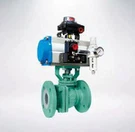
Another type is the PFA Lined Plug Valve. The PFA lining is smooth and resistant to corrosion. This smooth surface can reduce the friction between the fluid and the valve, allowing for a better flow and potentially a higher Cv.
Then there's the Twin Seal Orbit Plug Valve. This valve has a unique design where the plug orbits as it opens and closes. This design can minimize the contact between the plug and the seat during operation, reducing wear and tear. And from a flow perspective, it can maintain a relatively stable Cv over time.
Calculating the flow coefficient isn't always a walk in the park. It usually involves some complex equations that take into account things like the pressure drop across the valve, the density of the fluid, and the valve's geometry. But most valve manufacturers, including us as a plug valve supplier, provide Cv values in their product catalogs. So, when you're looking for a plug valve, you can easily compare the Cv values of different models.
It's also important to note that the flow coefficient can change depending on the conditions. For instance, if the fluid is more viscous than water, the Cv might be lower because the thicker fluid has more resistance to flow. Temperature can also have an impact. Higher temperatures can change the viscosity of the fluid and the properties of the valve materials, which in turn can affect the Cv.
When you're choosing a plug valve based on the flow coefficient, you need to consider your specific application. If you're dealing with a high-flow system, you'll want a valve with a high Cv. But if you need precise control over a small amount of fluid, a valve with a lower Cv might be more suitable.
As a plug valve supplier, we understand that getting the right valve for your needs is crucial. That's why we offer a wide range of plug valves with different flow coefficients. Whether you're looking for a Soft Seat Plug Valve for a tight seal, a PFA Lined Plug Valve for corrosion resistance, or a Twin Seal Orbit Plug Valve for long-lasting performance, we've got you covered.


If you're in the market for a plug valve and need help figuring out the right flow coefficient for your application, don't hesitate to reach out. We're here to assist you in making the best choice. Whether you're a small business or a large industrial operation, we can provide the expertise and the products you need.
In conclusion, the flow coefficient of a plug valve is a key factor in determining its performance. By understanding how it works and what affects it, you can make an informed decision when choosing a plug valve for your system. And if you have any questions or need further information, just let us know. We're always happy to help you find the perfect plug valve for your specific requirements.
References:
- Valve Handbook, various editions
- Industry standards on valve flow coefficients
So, if you're interested in discussing your plug valve needs and getting the right product with the appropriate flow coefficient, feel free to start a conversation with us. We're eager to assist you in your procurement process.