

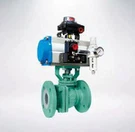
Fluid viscosity is a crucial physical property that describes a fluid's resistance to flow. It significantly impacts the performance and operation of various types of valves, including the PFA Lined Ball Valve. As a trusted PFA Lined Ball Valve supplier, I've witnessed firsthand how different fluid viscosities can affect the functionality and longevity of these valves. In this blog post, I'll delve into the effects of fluid viscosity on a PFA lined ball valve and explore the considerations that come with it.
Understanding Fluid Viscosity
Before we discuss the impact of fluid viscosity on PFA lined ball valves, it's essential to understand what viscosity is. Viscosity is a measure of a fluid's internal friction or resistance to deformation. Fluids with high viscosity, such as honey or molasses, flow slowly because their molecules have strong intermolecular forces that resist movement. In contrast, fluids with low viscosity, like water or gasoline, flow more easily as their molecules can move past each other with less resistance.
Viscosity can be influenced by several factors, including temperature, pressure, and the chemical composition of the fluid. Generally, as the temperature of a fluid increases, its viscosity decreases because the increased thermal energy allows the molecules to move more freely. Conversely, an increase in pressure can sometimes increase the viscosity of a fluid, especially for non - Newtonian fluids.
Impact on Flow Characteristics
One of the most immediate effects of fluid viscosity on a PFA lined ball valve is on the flow characteristics. In a low - viscosity fluid system, the valve can operate relatively smoothly. The fluid can easily pass through the valve opening, and the pressure drop across the valve is typically low. This means that the valve can control the flow rate with high precision, and the energy required to pump the fluid through the valve is minimal.
However, when dealing with high - viscosity fluids, the situation changes significantly. High - viscosity fluids have a greater resistance to flow, which can lead to a higher pressure drop across the valve. This increased pressure drop means that more energy is required to pump the fluid through the valve. In some cases, the high pressure drop can cause the valve to experience higher stress levels, potentially leading to premature wear and tear.
Moreover, the flow of high - viscosity fluids through the valve may not be as uniform as that of low - viscosity fluids. This non - uniform flow can cause uneven pressure distribution within the valve, which may affect the sealing performance of the valve. For example, in a Soft Seated Ball Valve, the non - uniform pressure can cause the soft seat to deform unevenly, leading to leakage over time.
Effect on Valve Operation
Fluid viscosity also has a notable impact on the operation of a PFA lined ball valve. In low - viscosity fluid applications, the valve can be opened and closed quickly and easily. The actuator, whether it is a manual, electric, or pneumatic actuator, requires less force to turn the ball and control the flow.
In contrast, high - viscosity fluids can make valve operation more challenging. The increased resistance of the fluid can cause the actuator to work harder to open or close the valve. For instance, in a Floating Type Ball Valve, the floating ball is designed to move slightly to achieve a tight seal. However, in a high - viscosity fluid system, the drag force exerted by the fluid on the ball can make it more difficult for the ball to move, potentially affecting the sealing performance.
Additionally, the time required to open or close the valve may increase when dealing with high - viscosity fluids. This is because the actuator needs more time to overcome the resistance of the fluid and move the ball to the desired position. In some industrial processes where rapid valve operation is required, this delay can be a significant issue.
Sealing Performance
The sealing performance of a PFA lined ball valve is critical for preventing leakage and ensuring the safe and efficient operation of the fluid system. Fluid viscosity plays an important role in determining the sealing performance of the valve.
For low - viscosity fluids, the valve's sealing mechanism can generally maintain a good seal. The smooth flow of the fluid does not put excessive stress on the sealing surfaces, and the PFA lining provides a good chemical barrier and a smooth surface for sealing.
However, high - viscosity fluids can pose challenges to the sealing performance. The non - uniform flow and high pressure drop associated with high - viscosity fluids can cause the sealing surfaces to experience uneven wear. The high - viscosity fluid may also have a greater tendency to adhere to the sealing surfaces, which can interfere with the proper seating of the ball and the seat. Over time, this can lead to leakage, which not only wastes the fluid but can also pose safety hazards in some applications.


Wear and Corrosion
Fluid viscosity can also influence the wear and corrosion of a PFA lined ball valve. In a low - viscosity fluid system, the valve experiences less wear because the fluid does not exert excessive force on the valve components. The PFA lining provides good protection against corrosion, and the smooth flow of the fluid helps to keep the valve clean.
In high - viscosity fluid systems, the situation is different. The high - viscosity fluid can cause more abrasion on the valve components as it flows through the valve. The increased pressure drop and non - uniform flow can also lead to areas of high - stress concentration within the valve, which can accelerate wear.
Moreover, high - viscosity fluids may contain more impurities or solids that can cause additional wear and corrosion. These solids can get trapped in the valve, especially in the small gaps between the ball and the seat, causing abrasion and potentially damaging the PFA lining. If the fluid is also chemically aggressive, the combination of high - viscosity flow and chemical corrosion can significantly reduce the lifespan of the valve.
Considerations for Valve Selection
As a PFA lined ball valve supplier, I often advise customers to consider the fluid viscosity when selecting a valve. For low - viscosity fluid applications, a standard PFA lined ball valve with a suitable actuator can usually meet the requirements. However, for high - viscosity fluid applications, some special considerations are necessary.
Firstly, the valve size may need to be larger to reduce the pressure drop across the valve. A larger valve opening allows the high - viscosity fluid to flow more easily, reducing the energy required to pump the fluid and the stress on the valve.
Secondly, the actuator should be more powerful to overcome the resistance of the high - viscosity fluid. A pneumatic or electric actuator with a higher torque rating may be required to ensure smooth valve operation.
Finally, the valve design may need to be optimized for high - viscosity fluids. For example, the valve may need to have a smoother internal surface to reduce the adhesion of the high - viscosity fluid and a more robust sealing mechanism to withstand the higher stress levels.
Conclusion
In conclusion, fluid viscosity has a profound impact on the performance, operation, sealing, wear, and corrosion of a PFA lined ball valve. As a PFA lined ball valve supplier, I understand the importance of considering fluid viscosity when designing and selecting valves for different applications.
Whether you are dealing with low - viscosity or high - viscosity fluids, it is crucial to choose the right valve to ensure the safe and efficient operation of your fluid system. If you have any questions about PFA lined ball valves or need help in selecting the appropriate valve for your specific fluid viscosity and application, please feel free to contact us for further discussion and procurement. We are committed to providing you with high - quality valves and professional technical support.
References
- "Valve Handbook", edited by Robert W. Yeaple. This comprehensive handbook provides in - depth information on valve design, operation, and performance, including the effects of fluid properties such as viscosity.
- "Fluid Mechanics", by Frank M. White. This textbook offers a detailed explanation of fluid properties, including viscosity, and how they affect fluid flow in various systems.
- Industry research reports on PFA lined ball valves, which provide real - world case studies and data on the performance of these valves in different fluid viscosity conditions.