

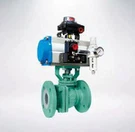
Hey there! As a ball valve supplier, I often get asked about the differences between full - port and standard - port ball valves. It's a pretty common question, and understanding these differences can really help you make the right choice for your specific needs. So, let's dive right in!
What Are Ball Valves Anyway?
Before we start comparing full - port and standard - port ball valves, let's quickly go over what ball valves are. A ball valve is a type of valve that uses a spherical disc to control the flow of fluid through a pipe. The ball has a hole (or port) in the middle. When the hole is in line with the pipe, the valve is open, and fluid can flow through. When the ball is turned 90 degrees, the hole is perpendicular to the pipe, and the valve is closed, stopping the flow.
Ball valves come in different types and designs. Some popular ones include the Soft Seated Ball Valve, Trunnion Mounted Ball Valve, and Seated Ball Valve. But for now, we're focusing on the difference between full - port and standard - port.
Full - Port Ball Valves
A full - port ball valve, also known as a full - bore ball valve, has a port that is the same size as the inside diameter of the pipe it's connected to. This means that when the valve is open, there's no significant reduction in the flow area. The fluid can flow through the valve almost as if the valve wasn't even there.


Advantages of Full - Port Ball Valves
- Low Pressure Drop: Since the flow area remains constant, there's very little resistance to the flow of fluid. This results in a low pressure drop across the valve. In applications where maintaining a consistent pressure is crucial, like in high - flow pipelines, full - port ball valves are a great choice.
- Less Clogging: The large opening of the full - port ball valve reduces the chances of debris or solids in the fluid getting stuck in the valve. This is especially important in systems that handle dirty or viscous fluids. For example, in a wastewater treatment plant, a full - port ball valve can prevent blockages and keep the system running smoothly.
Disadvantages of Full - Port Ball Valves
- Higher Cost: Full - port ball valves are generally more expensive than standard - port ball valves. The larger ball and body size require more material, which drives up the manufacturing cost.
- Bigger Size: They also tend to be larger and heavier than standard - port ball valves. This can be a problem in applications where space is limited, such as in some compact industrial machinery.
Standard - Port Ball Valves
A standard - port ball valve, on the other hand, has a port that is smaller than the inside diameter of the pipe. When the valve is open, the flow area is reduced, which creates some resistance to the flow of fluid.
Advantages of Standard - Port Ball Valves
- Lower Cost: Standard - port ball valves are more affordable. The smaller ball and body size mean less material is used in manufacturing, resulting in a lower price tag. This makes them a popular choice for budget - conscious projects.
- Smaller Size: They are more compact and lighter than full - port ball valves. This makes them easier to install in tight spaces and can also reduce the overall weight of the piping system.
Disadvantages of Standard - Port Ball Valves
- Higher Pressure Drop: The reduced flow area causes a higher pressure drop across the valve. This means that more energy is required to maintain the same flow rate compared to a full - port ball valve. In systems where energy efficiency is a priority, this can be a significant drawback.
- Greater Risk of Clogging: The smaller port is more likely to get clogged by debris or solids in the fluid. This can lead to operational issues and may require more frequent maintenance.
Applications of Full - Port and Standard - Port Ball Valves
Full - Port Ball Valve Applications
- High - Flow Systems: As mentioned earlier, full - port ball valves are ideal for high - flow applications where a low pressure drop is essential. This includes large - scale water distribution systems, oil and gas pipelines, and some chemical processing plants.
- Systems with Solid Particles: In industries where the fluid contains solid particles, like mining or pulp and paper, full - port ball valves can prevent blockages and ensure continuous operation.
Standard - Port Ball Valve Applications
- General Plumbing: In residential and commercial plumbing systems, standard - port ball valves are commonly used. They are cost - effective and suitable for applications where the flow rate is not extremely high.
- Low - Pressure Systems: For systems with low pressure requirements, such as some small - scale irrigation systems, standard - port ball valves can provide a reliable and affordable solution.
How to Choose Between Full - Port and Standard - Port Ball Valves
When deciding between a full - port and a standard - port ball valve, you need to consider several factors:
- Flow Requirements: If you need a high flow rate with minimal pressure drop, a full - port ball valve is the way to go. But if the flow rate is relatively low, a standard - port ball valve may be sufficient.
- Fluid Characteristics: If the fluid contains solids or debris, a full - port ball valve can prevent clogging. For clean fluids, a standard - port ball valve may be adequate.
- Budget and Space Constraints: If you're on a tight budget or have limited space, a standard - port ball valve might be the better choice. However, if cost is not a major concern and you need optimal performance, a full - port ball valve is worth the investment.
Conclusion
In summary, the main difference between full - port and standard - port ball valves lies in the size of the port and its impact on flow characteristics. Full - port ball valves offer low pressure drop and less clogging but come at a higher cost and larger size. Standard - port ball valves are more affordable and compact but have a higher pressure drop and a greater risk of clogging.
As a ball valve supplier, I'm here to help you make the right choice for your specific application. Whether you need a full - port or standard - port ball valve, or any of the other types like Soft Seated Ball Valve, Trunnion Mounted Ball Valve, or Seated Ball Valve, I can provide you with high - quality products.
If you're interested in purchasing ball valves or have any questions about which type is best for you, don't hesitate to reach out. We can discuss your requirements in detail and find the perfect solution for your project.
References
- "Valve Handbook: Principles and Applications" by J. Paul Tullis
- "Industrial Valves: Selection and Sizing" by James R. Wachel