

Hey there! As a supplier of Automatic Control Valves, I often get asked about the burst pressure rating of these valves. It's a super important topic, so I thought I'd break it down for you in this blog post.
Let's start with the basics. What exactly is the burst pressure rating? Well, the burst pressure rating of an Automatic Control Valve is the maximum pressure that the valve can withstand before it fails catastrophically. In simpler terms, it's the point at which the valve will burst open, and all that fluid or gas that it's supposed to control will come rushing out.
Now, why is this important? Think about it. If you're using an Automatic Control Valve in a high - pressure system, like in an industrial pipeline or a hydraulic system, and the valve doesn't have a high enough burst pressure rating, it could lead to some serious problems. There could be leaks, which can be dangerous and costly, or in the worst - case scenario, a sudden and violent failure that could cause damage to the surrounding equipment and even pose a risk to human safety.
So, how do we determine the burst pressure rating of an Automatic Control Valve? There are a few factors that come into play.
Material of the Valve
The material that the valve is made of is a huge factor. For example, valves made of stainless steel are generally stronger and can handle higher pressures compared to those made of plastic. Stainless steel has high tensile strength and can resist deformation under pressure. On the other hand, plastic valves are more lightweight and cheaper, but they usually have a lower burst pressure rating. They're more suitable for low - pressure applications like in some home plumbing systems.
Design and Construction
The design of the valve also matters a great deal. Valves with a well - engineered design, like those with thick walls and proper reinforcement, can withstand higher pressures. A valve that has been designed with a uniform wall thickness and no weak points will have a better burst pressure rating. For instance, some valves have a spherical design, which distributes the pressure evenly across the surface, reducing the chances of a single point failure.
Manufacturing Quality
The quality of the manufacturing process is crucial. If the valve is poorly manufactured, with defects like cracks or voids in the material, it will have a lower burst pressure rating. At our company, we use state - of - the - art manufacturing techniques to ensure that every valve we produce meets the highest quality standards. We perform rigorous quality control checks at every stage of the manufacturing process to make sure that there are no hidden defects that could compromise the burst pressure rating.
Now, let's talk about some of the different types of Automatic Control Valves and their typical burst pressure ratings.
Slow Close Check Valve
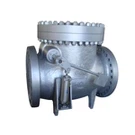
A Slow Close Check Valve is designed to prevent backflow in a system. These valves are commonly used in water supply systems, sewage treatment plants, and industrial pipelines. The burst pressure rating of a slow - close check valve can vary depending on its size and material. Smaller valves made of plastic might have a burst pressure rating of around 100 - 200 psi (pounds per square inch), while larger stainless - steel valves can have a burst pressure rating of over 1000 psi.
Control Valve Pressure Reducing Valve
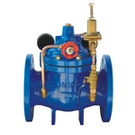
The Control Valve Pressure Reducing Valve is used to reduce the pressure in a system to a safe and manageable level. These valves are often found in industrial processes where precise pressure control is required. The burst pressure rating of a pressure - reducing valve can be quite high, especially if it's made of high - strength materials. Some industrial - grade pressure - reducing valves can have a burst pressure rating of 2000 psi or more.
Pump Control Valve
Pump Control Valves are used to control the flow and pressure in a pumping system. They're essential for protecting pumps from damage due to over - pressure. The burst pressure rating of a pump control valve depends on the size of the valve and the type of pump it's designed to work with. Smaller valves for domestic pumps might have a burst pressure rating of 300 - 500 psi, while larger valves for industrial pumps can handle pressures of 1500 psi or higher.
It's important to note that the burst pressure rating is just one aspect to consider when choosing an Automatic Control Valve. You also need to think about the operating pressure, flow rate, temperature, and the type of fluid or gas that the valve will be handling.
For example, if you're dealing with a corrosive fluid, you'll need a valve made of a material that can resist corrosion. And if the system operates at high temperatures, the valve needs to be able to withstand the heat without losing its structural integrity.


At our company, we understand that every customer has unique requirements. That's why we offer a wide range of Automatic Control Valves with different burst pressure ratings, materials, and designs. Whether you're looking for a valve for a small - scale project or a large - scale industrial application, we've got you covered.
If you're in the market for an Automatic Control Valve and want to learn more about the burst pressure rating or any other aspect of our products, don't hesitate to reach out to us. We're here to help you make the right choice for your specific needs. We can provide you with detailed technical specifications, answer all your questions, and even offer customized solutions if required.
So, if you're ready to take the next step and find the perfect Automatic Control Valve for your system, start a conversation with us today. Let's work together to ensure that your system operates safely and efficiently.
References
- "Valve Handbook" by W. Powell
- "Control Valve Engineering" by R. W. Miller