

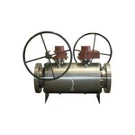
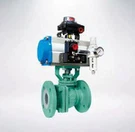
A top entry ball valve is a critical component within a pipeline system, offering reliable shut - off and flow control. As a top entry ball valve supplier, I am well - versed in the installation requirements for these valves, which are crucial for ensuring their proper functioning and longevity.
1. Pipeline Preparation
Before installing a top entry ball valve, the pipeline must be thoroughly prepared. First, the pipeline should be cleaned to remove any debris, dirt, or welding slag. These contaminants can cause damage to the valve seats and ball, leading to leakage or reduced performance. For instance, if welding slag is left in the pipeline, it may scratch the smooth surface of the ball valve, preventing a tight seal.
The pipeline ends where the valve will be installed should be properly machined. The flange faces must be flat and smooth, with no nicks or gouges. Any irregularities on the flange can result in an uneven seal between the valve and the pipeline, increasing the risk of leaks. The bolt holes in the pipeline flanges and the valve flanges should be accurately aligned. Misaligned bolt holes can cause stress on the valve body during installation, which may lead to cracking or deformation over time.
2. Valve Inspection
As a supplier, I always recommend a comprehensive inspection of the top entry ball valve before installation. Check the valve body for any visible damage, such as cracks or dents. The ball and seats should be carefully examined for scratches, pits, or signs of corrosion. Even minor damage to these critical components can significantly impact the valve's performance.
Verify the valve size and rating to ensure compatibility with the pipeline system. The valve's pressure rating, temperature range, and nominal diameter should match the requirements of the pipeline. Using an undersized or under - rated valve can lead to valve failure under high - pressure or high - temperature conditions.
3. Installation Location
The selection of the installation location is of utmost importance. The valve should be installed in an easily accessible area to facilitate maintenance and inspection. This allows for quick replacement of parts if necessary. Avoid installing the valve in areas where it may be subjected to physical damage, such as near heavy machinery or in traffic - prone zones.
The valve should also be installed in a location where the pipeline is well - supported. Unstable pipelines can cause stress on the valve, which may lead to premature failure. If the pipeline is overhead, proper supports and hangers should be used to ensure the stability of the valve and the pipeline.
4. Alignment and Installation
Align the valve with the pipeline flanges carefully. Use a straightedge and a level to ensure that the valve is properly aligned. The valve should be in the same plane as the pipeline to prevent any misalignment - related issues. When tightening the bolts, follow the proper torque sequence. Start with the bolts at opposite ends and gradually work your way around the flange to ensure even compression.


Over - tightening the bolts can damage the gasket and the flange, while under - tightening can result in leaks. It is often recommended to refer to the valve manufacturer's torque specification chart to ensure the correct torque is applied.
5. Gasket Selection and Installation
The gasket is a key component in preventing leaks between the valve and the pipeline. Select a gasket that is compatible with the fluid in the pipeline and the operating conditions. For example, if the pipeline carries a corrosive fluid, a gasket made of a corrosion - resistant material such as PTFE should be used.
The gasket should be installed properly, centered on the flange faces. Ensure that the gasket is not damaged or distorted during installation. A damaged gasket may not provide an effective seal, leading to leaks.
6. Orientation and Operating Conditions
The orientation of the top entry ball valve is important. In most cases, the valve can be installed in a horizontal or vertical position, but some valves may have specific orientation requirements. For example, in some applications where the valve is used to control a viscous fluid, a certain orientation may be necessary to ensure proper flow through the valve.
Consider the operating conditions of the pipeline, such as temperature, pressure, and fluid flow rate. High - temperature applications may require special insulation for the valve to prevent heat damage. High - pressure applications may necessitate additional support or reinforcement for the valve and the pipeline.
7. Testing and Commissioning
Once the valve is installed, it should be thoroughly tested before being put into full operation. Conduct a pressure test to check for leaks. The test pressure should be within the valve's specified test range. Use a pressure gauge to monitor the pressure during the test.
Check the valve's operation by opening and closing it several times. Ensure that the valve operates smoothly and that the ball rotates freely. Any abnormal noises or resistance during operation may indicate a problem with the valve installation.
V Port Ball Valve and Seated Ball Valve
In addition to top entry ball valves, we also supply a range of related products such as V Port Ball Valve and Seated Ball Valve. These valves offer different features and are suitable for various applications. For example, a V port ball valve is often used for applications requiring accurate flow control, while a seated ball valve provides a tight seal for shut - off applications.
If you are in need of a high - quality Top Entry Ball Valve or any of our other valve products, we are here to assist you. Our team of experts can provide detailed technical support and guidance on installation and operation. Whether you are working on a small - scale project or a large - scale industrial pipeline system, we have the right valve solutions for you. Feel free to contact us for procurement and further discussions.
References
- "Valve Handbook: Principles and Guidelines for Selection and Sizing"
- Manufacturer's installation and maintenance manuals for top entry ball valves