

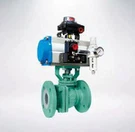
As a ball valve supplier, I understand the paramount importance of delivering high - quality products to our customers. A ball valve's quality can significantly impact its performance, durability, and reliability in various applications. Here, I will share some effective ways to check the quality of a ball valve.


1. Material Inspection
The first step in assessing the quality of a ball valve is to examine its materials. The body, ball, stem, and seats of the valve are the key components, and each should be made of appropriate materials.
- Body Material: The valve body is the main structure that houses all other components. Common materials include stainless steel, carbon steel, and cast iron. For applications in corrosive environments, stainless steel is an ideal choice. We can check the quality of the body material by looking for signs of porosity, cracks, or uneven surfaces. A high - quality body should have a smooth finish and uniform thickness. Porosity can lead to leaks and structural weaknesses over time.
- Ball Material: The ball is the most critical part of the ball valve as it controls the flow of fluid. It is often made of stainless steel, brass, or other corrosion - resistant alloys. The ball should have a high - precision spherical shape and a smooth surface. Any surface defects, like scratches or pits, can cause leakage when the valve is closed. We can use a microscope or a precision measuring tool to check the surface roughness and roundness of the ball.
- Stem Material: The stem is responsible for transmitting the rotational force to the ball. It should be made of a strong and corrosion - resistant material, such as stainless steel. The stem should fit snugly into the ball and the valve body. Loose fitting can result in improper valve operation and potential leakage.
- Seat Material: There are different types of valve seats, including Soft Seated Ball Valve, Fully Welded Ball Valve, and Metal Seated Ball Valve. Soft seats are usually made of materials like PTFE (polytetrafluoroethylene), which provide excellent sealing performance but may have limitations in high - temperature or high - pressure applications. Metal seats, on the other hand, are more suitable for harsh environments. The seat should be firmly attached to the valve body, and there should be no signs of deformation or damage.
2. Dimensional Accuracy
Accurate dimensions are crucial for the proper functioning of a ball valve. Incorrect dimensions can lead to installation issues, leakage, and reduced valve performance.
- Overall Dimensions: The overall length, width, and height of the valve should conform to the specified standards. This ensures that the valve can be easily installed in the pipeline system. We can use a caliper or a measuring tape to check these dimensions. Deviations from the standard dimensions may indicate poor manufacturing quality.
- Connection Dimensions: The valve's connection ends, whether they are flanged, threaded, or welded, must have the correct dimensions. Flange dimensions, such as bolt hole diameter, bolt circle diameter, and flange thickness, should match the corresponding pipeline flange. For threaded connections, the thread size, pitch, and thread depth should be accurate. Any mismatch in connection dimensions can make it difficult to install the valve and may result in leakage.
- Internal Dimensions: The internal diameter of the valve body and the ball's size should be precisely controlled. The clearances between the ball and the seats and between the ball and the valve body are also critical. If the clearances are too large, there may be excessive leakage; if they are too small, the valve may be difficult to operate. Measuring tools like bore gauges can be used to check the internal dimensions.
3. Surface Finish
A good surface finish not only enhances the appearance of the ball valve but also has a significant impact on its performance.
- Exterior Finish: The exterior surface of the valve should be smooth and free from rust, scale, or paint defects. A rough exterior surface may indicate poor manufacturing processes or improper storage. In addition, a proper surface treatment, such as painting or coating, can improve the valve's corrosion resistance.
- Interior Finish: The interior surface of the valve, especially the flow path, should be smooth to minimize fluid resistance and prevent the accumulation of debris. A rough interior surface can cause turbulence in the fluid flow, leading to energy losses and potential damage to the valve components over time.
4. Pressure Testing
Pressure testing is an essential part of checking the quality of a ball valve. It helps to ensure that the valve can withstand the specified operating pressure without leakage.
- Hydrostatic Testing: In hydrostatic testing, the valve is filled with water, and pressure is gradually increased to a specified level. The valve is then held at this pressure for a certain period, usually several minutes. During this time, we carefully check for any signs of leakage, such as water drops or wet spots on the valve surface. The test pressure is typically higher than the normal operating pressure to ensure a safety margin.
- Gas Testing: Gas testing is similar to hydrostatic testing, but instead of water, a gas such as air or nitrogen is used. Gas testing is often more sensitive than hydrostatic testing in detecting small leaks. The valve is pressurized with gas, and the pressure is monitored. Any pressure drop indicates a leak.
5. Operational Testing
Operational testing evaluates the valve's ability to open and close smoothly and its sealing performance.
- Torque Testing: Torque testing measures the force required to operate the valve. The operating torque should be within the specified range. Excessive torque may indicate problems such as misalignment, friction between components, or damage to the seats. A torque wrench can be used to measure the torque during valve operation.
- Sealing Performance: The sealing performance of the valve is crucial. We can test the valve's sealing ability by closing the valve and applying pressure to one side. Then, we check for any leakage on the other side. A high - quality ball valve should have a tight seal, with minimal or no leakage.
6. Certification and Documentation
Finally, it is important to check the valve's certification and documentation. Reputable manufacturers provide certificates such as ISO 9001 (Quality Management System), API 6D (Pipeline Valves), and CE (Conformité Européene). These certificates indicate that the valve has been manufactured and tested according to international standards. Additionally, the valve should come with an instruction manual, test reports, and warranty information.
In conclusion, checking the quality of a ball valve involves a comprehensive assessment of its materials, dimensions, surface finish, pressure - bearing capacity, and operational performance. By following these steps, customers can ensure that they are purchasing high - quality ball valves that meet their specific needs.
If you are in the market for ball valves and want to discuss your requirements in detail, feel free to contact us for a dedicated procurement consultation. We are committed to providing you with the best - quality products and professional services.
References
- Valve Handbook, 4th Edition, by Daniel A. Strock
- API 6D: Specification for Pipeline Valves
- ISO 9001:2015 Quality management systems - Requirements