

Hey there! As a supplier of Pressure Seal Gate Valves, I've had my fair share of experiences dealing with these amazing pieces of equipment. Today, I'm gonna dive into the flow characteristics of Pressure Seal Gate Valves.
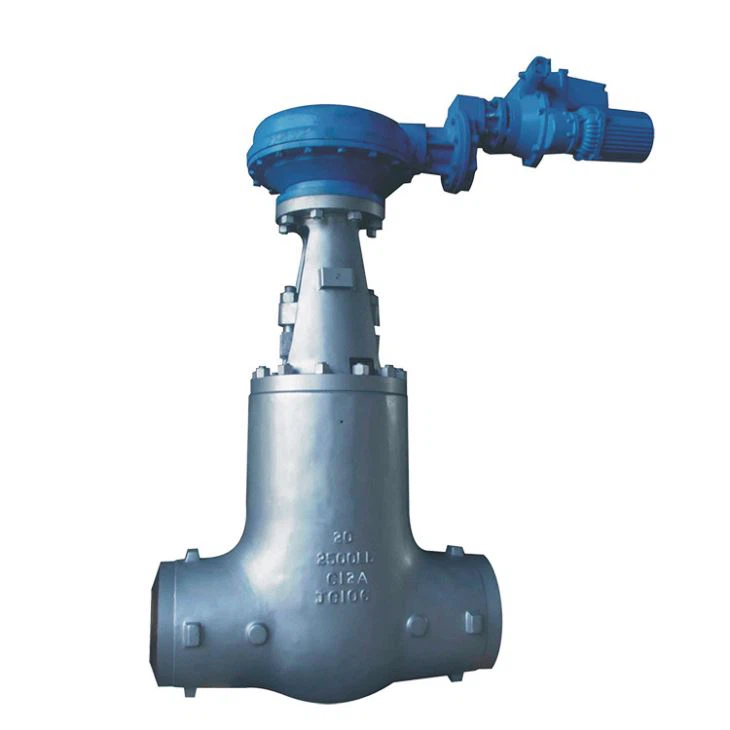
First off, let's understand what a Pressure Seal Gate Valve is. A Pressure Seal Gate Valve is a type of valve that uses pressure to enhance the sealing performance. It's commonly used in high - pressure applications, such as power plants, refineries, and chemical processing industries.
Flow Direction
One of the key aspects of the flow characteristics of a Pressure Seal Gate Valve is the flow direction. Unlike some other valves, a Pressure Seal Gate Valve is typically designed for bidirectional flow. This means that the fluid can flow through the valve in either direction. This bidirectional flow capability is a huge advantage in many industrial settings. For example, in a piping system where the flow direction might change due to process requirements or maintenance activities, a bidirectional valve like the Pressure Seal Gate Valve can be a real lifesaver. You don't have to worry about installing the valve in a specific orientation, which simplifies the installation process and reduces the chances of installation errors.
Full - Port Flow
Another important flow characteristic is the full - port flow. Most Pressure Seal Gate Valves are designed with a full - port opening. What does this mean? Well, it means that the internal diameter of the valve is the same as the internal diameter of the connected piping. This results in a straight - through flow path with minimal flow restrictions. When fluid flows through a full - port Pressure Seal Gate Valve, there's very little pressure drop. Pressure drop is the reduction in pressure as the fluid moves through the valve. A low pressure drop is crucial in many applications because it helps to maintain the efficiency of the system. For instance, in a pipeline transporting oil or gas, a high pressure drop would require more energy to pump the fluid, which would increase operating costs. With a full - port Pressure Seal Gate Valve, you can keep those pressure drops to a minimum and save on energy costs.
Flow Turbulence
Flow turbulence is also an important factor to consider when it comes to the flow characteristics of a Pressure Seal Gate Valve. When the valve is fully open, the full - port design ensures a smooth and laminar flow. Laminar flow is a type of flow where the fluid moves in parallel layers with little or no mixing between the layers. This is ideal because it reduces the chances of erosion and cavitation. Erosion occurs when the high - velocity fluid wears away the internal surfaces of the valve, while cavitation is the formation and collapse of vapor bubbles in the fluid, which can also cause damage to the valve. By minimizing turbulence and promoting laminar flow, a Pressure Seal Gate Valve can have a longer service life and require less maintenance.
Flow Control
While Pressure Seal Gate Valves are often used in on - off applications, they can also provide some degree of flow control. When the valve is partially open, the gate of the valve restricts the flow path. However, it's important to note that Pressure Seal Gate Valves are not as precise as some other types of valves, like globe valves, when it comes to flow control. Globe valves are designed specifically for fine - tuning the flow rate. But in applications where a rough adjustment of the flow is sufficient, a Pressure Seal Gate Valve can do the job. For example, in a system where you need to reduce the flow rate slightly during a maintenance operation, you can partially close the Pressure Seal Gate Valve to achieve the desired effect.

Comparison with Other Gate Valves
Let's compare the flow characteristics of Pressure Seal Gate Valves with other types of gate valves, such as flat gate valve and API Gate Valve. Flat gate valves are also known for their full - port flow and bidirectional capabilities. However, Pressure Seal Gate Valves are better suited for high - pressure applications. The pressure - sealing mechanism of Pressure Seal Gate Valves ensures a tight seal even under extremely high pressures, which is not always the case with flat gate valves.
API Gate Valves are designed to meet the standards set by the American Petroleum Institute. They are commonly used in the oil and gas industry. While API Gate Valves have similar flow characteristics to Pressure Seal Gate Valves in terms of full - port flow and bidirectional flow, Pressure Seal Gate Valves offer better sealing performance in high - pressure and high - temperature environments.
Impact of Valve Size and Design
The size and design of a Pressure Seal Gate Valve can also have a significant impact on its flow characteristics. Larger valves generally have a higher flow capacity because they can accommodate more fluid. However, the design of the valve, such as the shape of the gate and the internal passage, also plays a role. A well - designed valve will have a more efficient flow path, which means less pressure drop and better flow characteristics. For example, a valve with a streamlined gate design will allow the fluid to flow more smoothly through the valve compared to a valve with a poorly designed gate.
Real - World Applications
In real - world applications, the flow characteristics of Pressure Seal Gate Valves are put to the test. In a power plant, for example, these valves are used to control the flow of steam in the high - pressure sections of the boiler and turbine systems. The bidirectional flow and full - port design ensure that the steam can flow efficiently through the system, while the excellent sealing performance of the Pressure Seal Gate Valve prevents any steam leakage, which is crucial for safety and efficiency.
In a refinery, Pressure Seal Gate Valves are used to handle various fluids, such as crude oil, refined products, and chemical compounds. The ability to handle bidirectional flow and provide low - pressure - drop flow is essential in these complex processing environments.
Conclusion
In conclusion, the flow characteristics of Pressure Seal Gate Valves make them a top choice for high - pressure applications. Their bidirectional flow, full - port design, low pressure drop, and smooth flow characteristics offer many advantages in terms of efficiency, reliability, and longevity. Whether you're in the power generation, oil and gas, or chemical processing industry, a Pressure Seal Gate Valve can meet your flow control needs.
If you're interested in learning more about our Pressure Seal Gate Valves or are looking to make a purchase, feel free to reach out. We're always here to answer your questions and help you find the right valve for your application. Let's start a conversation about how our Pressure Seal Gate Valves can benefit your business!
References
- Valve Handbook: A Guide to Valve Technology and Applications
- Industrial Valves: Selection, Sizing, and Installation Manual