

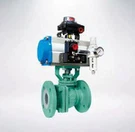
As a plug valve supplier, I've had my fair share of experiences with these valves, and while they have their perks, it's important to be upfront about their disadvantages. So, let's dive right in and talk about what might not be so great about plug valves.
Limited Flow Capacity
One of the most significant drawbacks of plug valves is their limited flow capacity. Unlike some other types of valves, plug valves have a relatively small flow passage. This means that they can't handle large volumes of fluid or gas as efficiently. For industries that require high - flow rates, like large - scale chemical processing plants or high - capacity water treatment facilities, plug valves might not be the best choice.
Let's say you're running a factory that needs to transfer a massive amount of liquid from one tank to another in a short period. A plug valve's restricted flow path could slow down the process, leading to inefficiencies and potentially increased production costs. You'd end up having to install multiple plug valves in parallel to achieve the desired flow rate, which not only adds to the initial investment but also increases the complexity of the system.
High Torque Requirement
Operating a plug valve often requires a relatively high amount of torque, especially when the valve is large or when it's been in service for a long time. The tight fit between the plug and the valve body, which is necessary for a good seal, also means that there's a lot of friction when you try to turn the plug. This high - torque requirement can be a real pain in the neck, especially in applications where the valve needs to be opened and closed frequently.
For manual operation, it can be physically demanding for the operator. Imagine having to use a large wrench to turn a stubborn plug valve multiple times a day. It's not only tiring but also increases the risk of operator injury. In automated systems, you need more powerful actuators to handle the high torque, which can add to the cost of the valve installation.
Sealing Issues
While plug valves are designed to provide a tight seal, they can encounter sealing problems over time. The sealing surfaces of the plug and the valve body are subject to wear and tear, especially when the fluid or gas flowing through the valve contains abrasive particles. These particles can scratch the sealing surfaces, causing leaks.
In addition, temperature and pressure fluctuations can also affect the sealing performance of plug valves. For example, if the temperature changes significantly, the materials of the plug and the valve body may expand or contract at different rates, leading to a loss of the seal. And in high - pressure applications, the pressure can sometimes force the plug out of its proper position, compromising the seal.
Maintenance Challenges
Maintaining plug valves can be quite challenging. The internal components of a plug valve are often difficult to access for inspection and repair. Unlike some other types of valves, where you can easily remove a cover or a bonnet to get to the internal parts, plug valves usually require more disassembly.
Replacing the sealing components, such as the seats, can be a time - consuming and skill - intensive process. You need to make sure that the new seats are installed correctly to ensure a proper seal. And if the plug itself is damaged, it may need to be machined or replaced, which can be costly and time - consuming.
Cost Considerations
When it comes to cost, plug valves can be relatively expensive, especially if you need high - quality materials or special features. The manufacturing process of plug valves is more complex compared to some other types of valves, which drives up the cost.
For example, if you need a Type Plug Valve with a corrosion - resistant coating or a Soft Seat Plug Valve for a specific application, the price can be significantly higher than a standard valve. And as we mentioned earlier, the need for more powerful actuators in automated systems also adds to the overall cost.
Limited Temperature and Pressure Range
Plug valves generally have a limited temperature and pressure range compared to some other types of valves. The materials used in the construction of plug valves may not be able to withstand extremely high or low temperatures or pressures.
For instance, in applications where the temperature is very high, the lubricants used in the valve may break down, leading to increased friction and potential damage to the valve components. And in high - pressure applications, the valve may not be able to maintain its structural integrity, increasing the risk of failure.
Compatibility Issues
Another disadvantage is the potential for compatibility issues with different fluids and gases. The materials used in the plug valve, such as the plug and the seats, need to be compatible with the fluid or gas flowing through the valve. If there's a compatibility problem, the valve can be damaged, and the fluid or gas can be contaminated.


For example, if you use a plug valve with a standard rubber seat in a chemical application where the chemical is corrosive to rubber, the seat will quickly deteriorate, leading to leaks. You may need to use a PFA Lined Plug Valve in such cases, but this again adds to the cost.
Despite these disadvantages, plug valves still have their place in many industries. They're simple in design, reliable in some applications, and can provide a good seal when properly maintained. If you're considering using plug valves for your project, it's important to weigh the pros and cons carefully.
If you're still interested in plug valves and want to discuss how we can work together to find the best solution for your needs, feel free to reach out. We can have a detailed discussion about your specific requirements and see if plug valves are the right choice for you. Our team of experts is always ready to help you make an informed decision.
References
- Valve Handbook, 4th Edition, by J. Paul Tullis
- Industrial Valves: Selection and Sizing, by J. S. M. Pahl