

Hey there! As a gate valve supplier, I often get asked about the different flange standards for gate valves. It's a pretty important topic, especially for those in the industrial and plumbing sectors. So, I thought I'd share some insights on this to help anyone who's looking to understand the various flange standards out there.
What are Flange Standards Anyway?
Flanges are crucial parts of gate valves. They're used to connect the valve to pipes, pumps, and other equipment. Flange standards are a set of rules and dimensions that ensure these connections are safe, reliable, and compatible. Different regions and industries have developed their own standards over time, and understanding them can save a lot of headaches in the long run.


Major Flange Standards for Gate Valves
1. American National Standards Institute (ANSI) / American Society of Mechanical Engineers (ASME) Standards
These are widely used in North America and many other parts of the world. ANSI/ASME standards, such as B16.5 and B16.47, cover a wide range of flange sizes, pressure ratings, and facing types. For example, the B16.5 standard is for pipe flanges and flanged fittings from NPS 1/2 through NPS 24. It specifies different pressure classes, like 150, 300, 600, 900, 1500, and 2500. The higher the pressure class, the thicker the flange and the more it can handle high - pressure applications.
If you're in an industry that deals with oil and gas in the United States, you'll likely come across ANSI/ASME flanges quite often. They offer a good balance between strength and cost - effectiveness, making them a popular choice for many applications.
2. DIN Standards
DIN (Deutsches Institut für Normung) standards are the German national standards. They're widely used in Europe and other parts of the world, especially in industries like chemical processing and water treatment. DIN flanges are known for their precision and high - quality manufacturing.
DIN standards have different pressure ratings, such as PN6, PN10, PN16, PN25, PN40, etc. The "PN" stands for Pressure Nominal, and the number indicates the maximum pressure the flange can handle in bar. For example, a PN16 flange can handle a maximum pressure of 16 bar. DIN flanges also have specific dimensions and facing types, which are important for ensuring a proper seal when connecting gate valves.
3. JIS Standards
JIS (Japanese Industrial Standards) are used primarily in Japan and some Asian countries. These standards are designed to meet the specific requirements of Japanese industries, which often have high - tech and high - precision needs.
JIS flanges have their own set of pressure ratings and dimensions. For example, the JIS B2220 standard covers steel pipe flanges, and it has different classes like 5K, 10K, 16K, etc. The "K" value is related to the pressure rating, and it's important to choose the right one for your application. JIS flanges often have unique features in terms of their design and materials, which can be beneficial in certain applications.
How These Standards Affect Gate Valve Selection
When you're choosing a gate valve, the flange standard is a critical factor. You need to make sure that the flange of the valve is compatible with the pipes and other equipment it will be connected to. If you mix and match different flange standards, you may end up with a leaky connection or a valve that doesn't function properly.
For example, if you have a pipeline with ANSI/ASME flanges, you should choose a gate valve with ANSI/ASME - compliant flanges. Using a valve with DIN flanges in this situation could lead to problems with the connection, such as improper bolt hole alignment or a mismatch in the flange facing.
Our Gate Valve Offerings
As a gate valve supplier, we offer a wide range of gate valves that comply with different flange standards. Whether you need a valve with ANSI/ASME, DIN, or JIS flanges, we've got you covered.
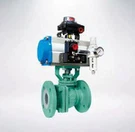
We have Ceramic Lined Gate Valve which are great for applications where there's a lot of wear and tear. The ceramic lining provides excellent resistance to abrasion and corrosion, making them suitable for industries like mining and power generation.
Our Stainless Steel Gate Valve are another popular choice. They're made from high - quality stainless steel, which offers good corrosion resistance and is suitable for a wide range of applications, including water treatment and food processing.
If you're in the oil and gas industry, our API Gate Valve are designed to meet the strict standards of the American Petroleum Institute (API). These valves are built to handle high - pressure and high - temperature applications and are commonly used in oil refineries and pipelines.
Why Choose the Right Flange Standard?
Choosing the right flange standard is not just about compatibility. It can also affect the performance, safety, and cost of your project. A valve with the wrong flange standard may not be able to handle the pressure or flow requirements of your system, leading to frequent maintenance or even system failure.
On the other hand, using the correct flange standard ensures a proper seal, reduces the risk of leaks, and extends the lifespan of your gate valve. It can also save you money in the long run by avoiding costly repairs and replacements.
Contact Us for Your Gate Valve Needs
So, if you're in the market for a gate valve and need help understanding which flange standard is right for your application, don't hesitate to reach out to us. We have a team of experts who can guide you through the selection process and provide you with the best solutions for your needs. Whether you're working on a small plumbing project or a large industrial installation, we've got the knowledge and the products to support you. Contact us today to start the conversation about your gate valve requirements!
References
- "Pipe Flanges and Flanged Fittings: Steel, Nickel, and Nickel - Alloy" by ASME B16.5
- "Steel Pipe Flanges" by DIN EN 1092
- "Steel Pipe Flanges and Flanged Fittings" by JIS B2220