

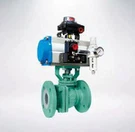
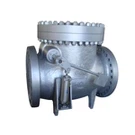
When it comes to ensuring the efficient and reliable operation of fluid systems, the performance of check valves is of utmost importance. As a trusted Dual Plate Check Valve supplier, I understand the significance of rigorous testing to guarantee that our products meet the highest standards. In this blog post, I will share valuable insights on how to test the performance of a dual plate check valve, providing you with a comprehensive guide to ensure optimal functionality.
Understanding the Dual Plate Check Valve
Before delving into the testing process, it's essential to have a clear understanding of what a dual plate check valve is and how it operates. A Dual Plate Check Valve is a type of non-return valve that allows fluid to flow in one direction while preventing backflow. It consists of two semi-circular plates that are hinged at the center of the valve body. When the fluid flows in the forward direction, the plates open, allowing the fluid to pass through. Conversely, when the flow reverses, the plates close, preventing backflow.
Importance of Performance Testing
Performance testing is crucial for several reasons. Firstly, it ensures that the valve meets the specified design requirements and performance criteria. This includes factors such as flow capacity, pressure drop, leakage rate, and response time. Secondly, testing helps to identify any potential issues or defects in the valve before it is installed in the system. This can prevent costly downtime, repairs, and safety hazards. Finally, performance testing provides valuable data that can be used to optimize the valve's design and improve its overall performance.
Testing Procedures
There are several testing procedures that can be used to evaluate the performance of a dual plate check valve. These include:
1. Hydrostatic Testing
Hydrostatic testing is a common method used to test the valve's pressure integrity. It involves filling the valve with a liquid, typically water, and applying a specified pressure for a predetermined period. The valve is then inspected for any signs of leakage or deformation. Hydrostatic testing is typically performed at the factory before the valve is shipped to the customer.
2. Flow Testing
Flow testing is used to measure the valve's flow capacity and pressure drop. It involves passing a known volume of fluid through the valve at a specified flow rate and measuring the pressure difference across the valve. The results of the flow testing can be used to determine the valve's Cv (flow coefficient) value, which is a measure of its flow capacity.
3. Leakage Testing
Leakage testing is used to measure the valve's ability to prevent backflow. It involves applying a specified pressure to the valve in the reverse flow direction and measuring the leakage rate. The leakage rate is typically expressed in terms of volume per unit time. Leakage testing is an important test to ensure the valve's reliability and safety.
4. Dynamic Testing
Dynamic testing is used to evaluate the valve's response time and performance under actual operating conditions. It involves subjecting the valve to a series of rapid flow reversals and measuring its response time and performance. Dynamic testing can provide valuable insights into the valve's behavior under real-world conditions and help to identify any potential issues or limitations.
5. Material Testing
Material testing is used to ensure that the valve's materials meet the specified requirements and standards. It involves performing various tests on the valve's components, such as hardness testing, chemical analysis, and metallurgical examination. Material testing can help to identify any potential issues or defects in the valve's materials and ensure its long-term reliability and performance.
Testing Equipment
To perform the above testing procedures, specialized testing equipment is required. This includes:
1. Pressure Gauges
Pressure gauges are used to measure the pressure in the valve during testing. They are available in various types and ranges, depending on the specific testing requirements.


2. Flow Meters
Flow meters are used to measure the flow rate of the fluid through the valve. They are available in various types, such as turbine flow meters, electromagnetic flow meters, and ultrasonic flow meters.
3. Leak Detectors
Leak detectors are used to detect and measure the leakage rate of the valve. They are available in various types, such as bubble leak detectors, helium leak detectors, and mass spectrometers.
4. Test Benches
Test benches are used to hold the valve in place during testing and provide a controlled environment for the testing procedures. They are typically equipped with all the necessary testing equipment and instrumentation.
Testing Standards
There are several international standards and codes that govern the testing of check valves. These include:
1. API 594
API 594 is a standard developed by the American Petroleum Institute (API) that specifies the requirements for check valves used in the petroleum and natural gas industries. It includes requirements for design, materials, manufacturing, testing, and inspection.
2. ASME B16.34
ASME B16.34 is a standard developed by the American Society of Mechanical Engineers (ASME) that specifies the requirements for valves, flanges, and fittings. It includes requirements for design, materials, manufacturing, testing, and inspection.
3. ISO 5208
ISO 5208 is an international standard that specifies the requirements for industrial valves - pressure testing. It includes requirements for hydrostatic testing, pneumatic testing, and leakage testing.
It is important to ensure that the testing procedures and equipment used comply with these standards to ensure the accuracy and reliability of the test results.
Conclusion
Testing the performance of a dual plate check valve is an essential step in ensuring its reliability and safety. By following the testing procedures outlined in this blog post and using the appropriate testing equipment and standards, you can ensure that the valve meets the specified design requirements and performance criteria. As a Dual Plate Check Valve supplier, we are committed to providing our customers with high-quality valves that are thoroughly tested and certified. If you have any questions or need further information about our products or testing services, please do not hesitate to contact us. We look forward to working with you to meet your valve needs.
References
- API 594: Check Valves - Flanged, Lug, Wafer, and Butt - Welding
- ASME B16.34: Valves - Flanged, Threaded, and Welding End
- ISO 5208: Industrial Valves - Pressure Testing