

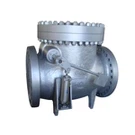
Selecting the right size of a Swing Type Check Valve is a crucial decision that can significantly impact the efficiency, safety, and longevity of your piping system. As a trusted Swing Type Check Valve supplier, we understand the intricacies involved in this process and are here to guide you through it.
Understanding the Basics of Swing Type Check Valves
Before delving into the sizing process, it's essential to have a clear understanding of what a Swing Type Check Valve is. A Swing Type Check Valve is a type of valve that allows fluid to flow in one direction only. It consists of a disc that swings on a hinge or trunnion, opening when the fluid flows in the forward direction and closing when the flow reverses. This mechanism prevents backflow, which can cause damage to pumps, turbines, and other equipment in the piping system.
Our Swing Type Check Valve is designed with precision and quality in mind. It is made from high - quality materials that can withstand various operating conditions, including high pressures and temperatures. The swing disc design ensures a tight seal when closed, minimizing leakage and ensuring optimal performance.
Factors to Consider When Selecting the Size
Flow Rate
One of the primary factors to consider when selecting the size of a Swing Type Check Valve is the flow rate of the fluid in the piping system. The flow rate is typically measured in gallons per minute (GPM) or cubic meters per hour (m³/h). To determine the appropriate valve size, you need to know the maximum and minimum flow rates that the system will experience.
A valve that is too small for the flow rate will cause excessive pressure drop, which can lead to reduced system efficiency and increased energy consumption. On the other hand, a valve that is too large may not close properly, allowing backflow to occur. You can use flow rate calculation charts or software provided by valve manufacturers to match the flow rate with the appropriate valve size.
Pressure
The pressure in the piping system is another critical factor. There are two types of pressure to consider: the operating pressure and the differential pressure. The operating pressure is the normal pressure in the system during operation, while the differential pressure is the difference in pressure between the inlet and the outlet of the valve.
High - pressure applications require valves that can withstand the force exerted by the fluid. If the valve is not sized correctly for the pressure, it may fail prematurely, leading to leaks or even catastrophic failure. Our pressure seal check valve is specifically designed for high - pressure applications, providing a reliable and long - lasting solution.


Pipe Size
The size of the pipe in the system also plays a significant role in valve sizing. In most cases, the valve size should match the pipe size to ensure a proper fit and minimize pressure drop. However, there are situations where a valve of a different size may be required. For example, if the flow rate is very low, a smaller valve may be sufficient, even if the pipe is larger.
It's important to note that reducing the valve size relative to the pipe size should be done carefully, as it can increase the velocity of the fluid and cause erosion or cavitation.
Fluid Characteristics
The characteristics of the fluid being transported, such as viscosity, density, and temperature, can affect the valve sizing. Viscous fluids, for example, require a larger valve size to ensure proper flow. High - temperature fluids may require special materials for the valve to prevent thermal expansion and damage.
If the fluid contains solid particles or debris, you may need to consider a valve with a more robust design, such as our Ball Float Pattern Rubber Lined Check Valve, which is more resistant to wear and tear.
Sizing Calculations
Once you have gathered all the necessary information about the flow rate, pressure, pipe size, and fluid characteristics, you can start the sizing calculations. These calculations can be complex and may require the use of engineering formulas or specialized software.
The first step is to determine the valve's flow coefficient (Cv). The Cv value represents the flow capacity of the valve and is used to select the appropriate valve size. The formula for calculating Cv is:
[Cv=\frac{Q}{\sqrt{\Delta P}}]
Where:
- (Q) is the flow rate in GPM
- (\Delta P) is the differential pressure in psi
After calculating the Cv value, you can refer to the valve manufacturer's Cv tables to find the valve size that corresponds to the calculated Cv.
Manufacturer's Recommendations
While the sizing calculations provide a good starting point, it's always advisable to consult the manufacturer's recommendations. Valve manufacturers have extensive experience and knowledge in valve sizing and can provide valuable insights based on their products' specifications.
As a Swing Type Check Valve supplier, we offer technical support to help you select the right size for your application. Our team of experts can review your system requirements and provide personalized recommendations to ensure that you get the most suitable valve for your needs.
Installation and Maintenance Considerations
Proper installation and maintenance are also crucial for the optimal performance of the Swing Type Check Valve. During installation, make sure that the valve is installed in the correct orientation, with the arrow on the valve body indicating the direction of flow.
Regular maintenance, such as inspection for wear and tear, cleaning, and lubrication, can extend the life of the valve. If you notice any signs of leakage, abnormal noise, or reduced performance, it's important to address the issue promptly to prevent further damage.
Conclusion
Selecting the right size of a Swing Type Check Valve is a complex process that requires careful consideration of multiple factors. By taking into account the flow rate, pressure, pipe size, and fluid characteristics, and by following the manufacturer's recommendations, you can ensure that your valve operates efficiently and reliably.
If you are in the process of selecting a Swing Type Check Valve for your piping system, we invite you to contact us for more information. Our team of experts is ready to assist you in making the right decision and providing you with a high - quality valve that meets your specific requirements. Whether you need a valve for a small - scale application or a large industrial project, we have the expertise and products to serve you.
References
- Crane Co., "Flow of Fluids Through Valves, Fittings, and Pipe," Technical Paper No. 410.
- Valves Handbook, Edited by J. Paul Tullis.