

Viscosity is a fundamental property of fluids that measures their resistance to flow. In the context of pressure relief valves, viscosity can have a significant impact on their performance, sizing, and overall effectiveness. As a pressure relief valve supplier, understanding how viscosity affects these critical safety devices is essential for providing accurate solutions to our customers.
The Basics of Pressure Relief Valves
Pressure relief valves are designed to protect equipment and systems from over - pressurization. They automatically open when the pressure in a system exceeds a pre - set limit, allowing excess fluid to escape and preventing damage to the system. There are different types of pressure relief valves, such as Jacket Relief Valve, Pressure Vacuum Relief Valve, and pilot operated relief valve. Each type has its own operating principle and is suitable for different applications.
How Viscosity Affects Valve Operation
Flow Resistance
One of the most direct ways viscosity affects a pressure relief valve is through increased flow resistance. High - viscosity fluids, like heavy oils or some polymers, flow more slowly than low - viscosity fluids such as water or gasoline. When a pressure relief valve opens to release a high - viscosity fluid, the valve must overcome the greater resistance to flow. This means that for the same pressure differential, a valve discharging a high - viscosity fluid will have a lower flow rate compared to when it is discharging a low - viscosity fluid.
Mathematically, the flow rate through a valve can be estimated using the orifice flow equation:
[Q = C_dA\sqrt{\frac{2\Delta P}{\rho}}]
where (Q) is the flow rate, (C_d) is the discharge coefficient, (A) is the orifice area, (\Delta P) is the pressure differential across the valve, and (\rho) is the density of the fluid. However, this equation is a simplification and does not fully account for viscosity. In reality, the discharge coefficient (C_d) is affected by viscosity. As viscosity increases, (C_d) decreases, leading to a reduction in the flow rate (Q).
Valve Sizing
Proper valve sizing is crucial for ensuring that a pressure relief valve can safely and effectively relieve excess pressure. Viscosity plays a vital role in this process. When sizing a valve for a high - viscosity fluid, a larger valve may be required compared to a valve used for a low - viscosity fluid. This is because a larger orifice area is needed to achieve the required flow rate.
For example, if a system requires a certain flow rate of a high - viscosity fluid to relieve excess pressure, a valve with a larger diameter orifice will be necessary to overcome the increased flow resistance. Incorrect valve sizing due to neglecting viscosity can result in the valve not being able to relieve pressure quickly enough, which may lead to over - pressurization and potential system failure.
Response Time
Viscosity can also impact the response time of a pressure relief valve. The response time is the time it takes for the valve to open and start relieving pressure once the set pressure is reached. High - viscosity fluids can slow down this process. When the pressure in the system rises to the set point of the valve, the valve disc or element must move to allow the fluid to flow. In a high - viscosity fluid, the resistance to movement of the valve components is greater, which can delay the opening of the valve.
This delay in response time can be critical in situations where rapid pressure relief is required. For instance, in a chemical process where a sudden pressure spike can occur, a slow - responding pressure relief valve may not be able to prevent an over - pressurization event, leading to safety hazards and equipment damage.
Special Considerations for Different Valve Types
Spring - Loaded Relief Valves
Spring - loaded relief valves are one of the most common types of pressure relief valves. In these valves, a spring holds the valve disc closed until the pressure in the system exceeds the spring force. Viscosity can affect the performance of spring - loaded relief valves in several ways.
The increased flow resistance due to viscosity can cause the valve to open at a higher pressure than the set pressure. This is because the additional force required to push the high - viscosity fluid through the valve adds to the pressure needed to overcome the spring force. Additionally, the movement of the valve disc may be more erratic in a high - viscosity fluid, which can lead to chattering or instability in the valve operation.
Pilot Operated Relief Valve
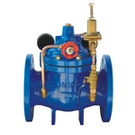
Pilot operated relief valves use a pilot valve to control the opening and closing of the main valve. These valves are often used in applications where precise pressure control and high flow rates are required. Viscosity can have a different impact on pilot operated relief valves compared to spring - loaded valves.
In a pilot operated relief valve, the pilot valve senses the pressure in the system and sends a signal to the main valve. High - viscosity fluids can affect the operation of the pilot valve by causing blockages or reducing the accuracy of the pressure sensing. If the pilot valve is not functioning correctly due to viscosity issues, the main valve may not open or close at the appropriate times, leading to improper pressure relief.
Mitigating the Effects of Viscosity
Valve Design Modifications
To mitigate the effects of viscosity on pressure relief valves, certain design modifications can be made. For example, valves can be designed with streamlined internal passages to reduce flow resistance. Special coatings can also be applied to the valve components to reduce friction and improve the flow of high - viscosity fluids.
In some cases, the valve seat and disc materials can be selected to be more resistant to the effects of high - viscosity fluids. For instance, materials with low - friction surfaces can help the valve components move more easily in a high - viscosity environment.


Heating or Dilution
Another approach to dealing with high - viscosity fluids is to reduce their viscosity. Heating the fluid is a common method. As the temperature of a fluid increases, its viscosity generally decreases. By heating the fluid in the system, the flow resistance through the pressure relief valve can be reduced, improving the valve's performance.
Dilution is another option. Mixing a high - viscosity fluid with a lower - viscosity fluid can reduce the overall viscosity of the mixture. However, this method may not be suitable for all applications, as it can change the properties of the fluid and may have other implications for the system.
Conclusion
Viscosity is a critical factor that significantly affects the performance of pressure relief valves. As a pressure relief valve supplier, it is our responsibility to educate our customers about the impact of viscosity and to provide them with the appropriate valve solutions. Whether it is proper valve sizing, considering the effects on response time, or recommending design modifications or fluid treatment methods, we must ensure that our customers' systems are protected from over - pressurization.
If you are facing challenges related to pressure relief valve selection for high - viscosity fluids or any other applications, we are here to help. Our team of experts can provide detailed technical advice and customized solutions to meet your specific needs. Contact us to discuss your requirements and start a procurement conversation today.
References
- "Pressure Relief Valve Handbook" by David A. Crowl and Joseph F. Louvar
- "Fluid Mechanics" by Frank M. White
- Industry standards and guidelines related to pressure relief valve sizing and performance.