

Backflow in piping systems can lead to a variety of issues, from minor performance degradation to severe equipment damage and safety hazards. As a trusted supplier of Swing Type Check Valve, I understand the critical role these valves play in preventing backflow. In this blog, we'll delve into the mechanics of how a Swing Type Check Valve operates to safeguard your piping systems.
Understanding Backflow and Its Consequences
Before we explore the functionality of Swing Type Check Valves, it's essential to understand what backflow is and why it's a concern. Backflow occurs when the direction of fluid flow in a piping system reverses. This can happen due to a sudden drop in pressure, a pump failure, or other operational anomalies. The consequences of backflow can be far - reaching.
In industrial settings, backflow can contaminate clean water supplies, damage pumps and other equipment, and disrupt production processes. For example, in a chemical processing plant, backflow could cause the mixing of incompatible chemicals, leading to dangerous reactions. In a water treatment facility, it could reintroduce treated water into the untreated water supply, compromising the quality of the final product.
How a Swing Type Check Valve Works
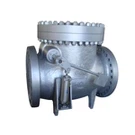
A Swing Type Check Valve is a simple yet effective device designed to allow fluid to flow in one direction only. It consists of a valve body, a disc, and a hinge. The disc is connected to the hinge, which allows it to swing open and closed.
Forward Flow
When the fluid flows in the normal (forward) direction, the pressure of the fluid pushes the disc open. The disc swings on its hinge, creating an unobstructed path for the fluid to pass through the valve. The design of the valve body is such that it minimizes resistance to the forward flow, ensuring efficient operation of the piping system.
For instance, in a water supply system, when the pump is operating and pushing water through the pipes, the pressure of the water causes the disc of the Swing Type Check Valve to swing open. This allows the water to flow freely towards its destination, whether it's a storage tank or a distribution network.
Backflow Prevention
When the flow of fluid starts to reverse, the pressure of the backflowing fluid acts on the disc. The disc is pushed back towards its closed position by the backflow pressure. As the disc closes, it seals against the valve seat, preventing the backflow of fluid.
The sealing mechanism of a Swing Type Check Valve is crucial for its effectiveness. The disc and the valve seat are designed to provide a tight seal. In many cases, the valve seat is made of a soft material, such as rubber, which can conform to the shape of the disc and create a leak - free seal.
Let's consider a scenario in a heating system. When the boiler stops operating, the pressure in the pipes may drop, causing the water to start flowing back towards the boiler. The Swing Type Check Valve installed in the system senses this backflow and closes the disc, preventing the water from returning to the boiler. This protects the boiler from potential damage caused by backflow, such as water hammer or corrosion.
Advantages of Swing Type Check Valves
Swing Type Check Valves offer several advantages over other types of check valves, which makes them a popular choice in many applications.
Low Resistance to Forward Flow
As mentioned earlier, the design of Swing Type Check Valves allows for a relatively unobstructed path for the fluid during forward flow. This results in low pressure drop across the valve, which means less energy is required to pump the fluid through the system. This is particularly important in large - scale industrial applications where energy efficiency is a major concern.
Reliable Sealing
The swing - type design provides a reliable sealing mechanism. The disc is able to fully close and seal against the valve seat, even under high backflow pressures. This ensures that the valve can effectively prevent backflow in a wide range of operating conditions.
Easy Maintenance
Swing Type Check Valves are relatively easy to maintain. The disc and the hinge are simple components that can be easily accessed and replaced if necessary. This reduces downtime and maintenance costs for the piping system.
Applications of Swing Type Check Valves
Swing Type Check Valves are used in a wide variety of industries and applications.
Water and Wastewater Treatment
In water treatment plants, Swing Type Check Valves are used to prevent the backflow of treated water into the untreated water supply. They are also used in wastewater treatment systems to prevent the reverse flow of sewage, which could contaminate the treatment process.
Oil and Gas Industry
In the oil and gas industry, Swing Type Check Valves are used in pipelines to prevent the backflow of oil or gas. They are also used in refineries and petrochemical plants to protect equipment from damage caused by backflow.
Power Generation
In power plants, Swing Type Check Valves are used in steam and water systems. For example, Steam Extraction Check Valve is a type of Swing Type Check Valve used to prevent the backflow of steam into the turbine. This protects the turbine from damage and ensures the safe and efficient operation of the power plant.
Our Product Range
As a supplier of Swing Type Check Valves, we offer a wide range of products to meet the diverse needs of our customers. Our valves are available in different sizes, materials, and pressure ratings.
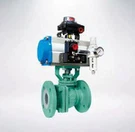
We also offer Ball Float Pattern Rubber Lined Check Valve, which is another type of check valve suitable for specific applications. These valves are designed with a ball float mechanism and a rubber lining, which provides excellent sealing performance and corrosion resistance.
Contact Us for Purchase and Consultation
If you are looking for reliable check valves to prevent backflow in your piping system, we are here to help. Our team of experts can provide you with professional advice on the selection and installation of the right check valve for your application.
We understand that every project is unique, and we are committed to providing customized solutions to meet your specific requirements. Whether you need a small - scale valve for a domestic application or a large - scale industrial valve, we have the products and the expertise to serve you.
Don't let backflow cause problems in your piping system. Contact us today to discuss your needs and start the procurement process. We look forward to working with you to ensure the safe and efficient operation of your piping systems.


References
- Crane Co., "Flow of Fluids Through Valves, Fittings, and Pipe," Technical Paper No. 410.
- American Petroleum Institute (API), "API 594: Check Valves - Flanged, Lug, Wafer, and Butt - Welding," API Standard.
- Valve Manufacturers Association of America (VMAA), "Valve Handbook: A Guide to Valve Selection, Sizing, and Application."