

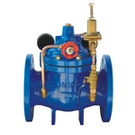
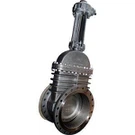
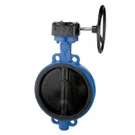
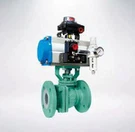
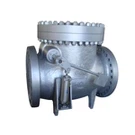
Globe valves are a type of valve used for regulating flow in a pipeline. They are named for their spherical body shape, which contains an internal baffle that divides the body into two halves. The flow path through a globe valve is S-shaped, which gives it excellent throttling characteristics. As a globe valve supplier, I have seen firsthand the diverse applications of these valves across various industries. In this blog post, I will explore the common uses of globe valves and highlight some of the specific types that are often employed.
1. Power Generation Industry
The power generation sector is one of the major consumers of globe valves. In thermal power plants, globe valves are used in boiler feedwater systems. These systems require precise control of water flow to ensure efficient and safe operation of the boilers. The throttling ability of globe valves allows operators to adjust the amount of water entering the boiler according to the steam demand.


For example, in a coal-fired power plant, the feedwater globe valve regulates the flow of water from the condensate system to the boiler. This is crucial because too much or too little water can affect the boiler's performance and potentially lead to equipment damage. Additionally, globe valves are used in the steam extraction lines for turbine bypass systems. These valves help in controlling the steam flow during start - up, shutdown, and load changes of the turbine.
In nuclear power plants, the reliability and tight shut - off capabilities of globe valves are of utmost importance. They are used in reactor coolant systems, where they control the flow of the coolant that removes heat from the nuclear reactor core. Pressure Seal Globe Valve is often preferred in high - pressure applications in power plants due to its ability to maintain a tight seal under extreme pressure conditions.
2. Oil and Gas Industry
The oil and gas industry is another area where globe valves are widely used. In upstream operations, such as oil and gas wells, globe valves are used in wellhead control systems. These valves regulate the flow of oil, gas, or water from the wellbore. They can be used to isolate the well during maintenance or in case of an emergency.
For instance, in offshore oil platforms, globe valves are installed in the production manifolds. These manifolds collect the fluids from multiple wells and distribute them to the processing facilities. The globe valves in the manifolds can be adjusted to balance the flow from different wells and ensure optimal production.
In mid - stream operations, which involve the transportation of oil and gas through pipelines, globe valves are used at pumping stations and compressor stations. They control the flow of the fluids through the pumps and compressors, and also help in isolating sections of the pipeline for maintenance or repair.
In downstream operations, such as refineries, globe valves are used in various process units. They are used to control the flow of crude oil, refined products, and chemical additives. For example, in a distillation unit, globe valves regulate the flow of the feedstock into the distillation column and the flow of the separated products out of the column. Straight Globe Valve is commonly used in these applications due to its relatively simple design and good flow control characteristics.
3. Chemical and Petrochemical Industry
The chemical and petrochemical industry requires precise control of fluid flow in its processes. Globe valves are used extensively in chemical plants for handling a wide range of chemicals, including corrosive and toxic substances.
In chemical reactors, globe valves are used to control the flow of reactants into the reactor and the flow of products out of it. They can be adjusted to maintain the correct stoichiometry of the reaction and ensure the quality of the final product. For example, in a polymerization process, the globe valve controls the flow of monomers into the reactor to produce polymers with the desired properties.
In storage and handling systems for chemicals, globe valves are used to isolate storage tanks and control the transfer of chemicals between different vessels. They are also used in waste treatment systems in chemical plants to control the flow of waste streams for proper disposal or recycling.
When dealing with hazardous chemicals, Bellow Sealed Globe Valve is often used. The bellows seal provides an additional layer of protection against leakage, preventing the release of toxic or flammable chemicals into the environment.
4. Water and Wastewater Treatment Industry
In water treatment plants, globe valves are used in various processes. They are used to control the flow of raw water from the source, such as a river or a reservoir, into the treatment plant. In the filtration process, globe valves regulate the flow of water through the filters to ensure proper removal of impurities.
For example, in a sand filtration unit, the globe valve controls the flow rate of water through the sand bed. This helps in maintaining the efficiency of the filtration process and preventing clogging of the filters.
In the disinfection process, globe valves are used to control the flow of disinfectants, such as chlorine or ozone, into the water. They ensure that the correct amount of disinfectant is added to the water to meet the required water quality standards.
In wastewater treatment plants, globe valves are used to control the flow of wastewater through different treatment stages, such as primary sedimentation, biological treatment, and secondary sedimentation. They also help in the sludge handling process, controlling the flow of sludge between different tanks and treatment units.
5. HVAC (Heating, Ventilation, and Air Conditioning) Systems
Globe valves play an important role in HVAC systems. In heating systems, they are used to control the flow of hot water or steam through the radiators or heat exchangers. By adjusting the globe valve, the amount of heat transferred to the indoor space can be regulated, providing a comfortable temperature for the occupants.
In cooling systems, such as chilled water systems, globe valves control the flow of chilled water through the air - handling units and cooling coils. This helps in maintaining the desired temperature and humidity levels in the building.
In ventilation systems, globe valves can be used to control the flow of air - conditioning refrigerant. They ensure that the refrigerant is circulated at the correct rate through the compressor, condenser, and evaporator, which are the main components of the refrigeration cycle.
Contact for Procurement
If you are in need of high - quality globe valves for your specific application, I invite you to reach out to us. As a reliable globe valve supplier, we have a wide range of globe valves, including Straight Globe Valve, Pressure Seal Globe Valve, and Bellow Sealed Globe Valve. Our valves are designed and manufactured to meet the highest industry standards, ensuring reliable performance and long - term durability. Whether you are in the power generation, oil and gas, chemical, water treatment, or HVAC industry, we can provide you with the right valve solution. Contact us to start a discussion about your procurement needs.
References
- "Valve Handbook" by J. E. Oland
- "The Oil and Gas Handbook" by John Clark
- "Power Plant Engineering" by P. K. Nag