

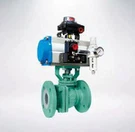
In the realm of industrial fluid control systems, ceramic lined ball valves have emerged as a reliable solution, especially in harsh environments where corrosion, erosion, and high - temperature resistance are crucial. These valves are widely used in industries such as chemical processing, power generation, and mining. To ensure the optimal performance of ceramic lined ball valves, the selection of suitable actuators is of great significance.
Understanding Ceramic Lined Ball Valves
Ceramic lined ball valves are designed with a ceramic inner lining. The ceramic material, known for its excellent hardness, chemical inertness, and abrasion resistance, protects the valve body from the corrosive and erosive effects of the media flowing through it. This lining enhances the valve's lifespan and reduces maintenance costs in applications involving abrasive slurries, acids, and alkalis.
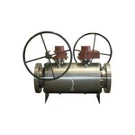
There are different types of ceramic lined ball valves available, such as Floating Type Ball Valve, Top Entry Ball Valve, and Fully Welded Ball Valve. Each type has its own set of characteristics and is suitable for various applications.
Key Factors in Actuator Selection for Ceramic Lined Ball Valves
When selecting an actuator for a ceramic lined ball valve, several factors need to be considered:
- Torque Requirements: The actuator must be capable of providing sufficient torque to open and close the ball valve smoothly, especially when the valve is dealing with high - pressure or high - viscosity media. The torque requirement is affected by the valve size, pressure differential across the valve, and the friction between the ball and the seats.
- Environmental Conditions: The operating environment can have a significant impact on the actuator's performance. For example, in outdoor applications or areas with extreme temperatures, the actuator should be able to withstand environmental stressors such as heat, cold, humidity, and dust.
- Control Requirements: Depending on the process, different control capabilities may be needed. Some applications require precise control of the valve position, such as in flow rate regulation, while others may only need on - off control.
- Safety and Reliability: Given the critical role of valves in many industrial processes, the actuator should offer a high level of safety and reliability. Redundancy and fail - safe features may be necessary in certain applications to prevent system failures.
Suitable Actuator Types for Ceramic Lined Ball Valves
Pneumatic Actuators
Pneumatic actuators are one of the most commonly used actuators for ceramic lined ball valves. They work by using compressed air to generate the force required to operate the valve.
Advantages
- Fast Operation: Pneumatic actuators can open and close the valve quickly, making them suitable for applications where rapid response is required, such as emergency shutdown systems.
- Simple and Reliable: They have a relatively simple construction with fewer moving parts, which results in low maintenance requirements and high reliability.
- Cost - Effective: Pneumatic actuators are generally more affordable compared to other types, especially for small - to - medium - sized valves.
Disadvantages


- Limited Control Precision: While pneumatic actuators can provide on - off control effectively, achieving precise positioning can be challenging due to the compressibility of air.
- Dependency on Air Supply: A reliable and clean air supply is necessary for proper operation. Any issues with the air supply, such as leaks or contamination, can affect the actuator's performance.
Pneumatic actuators are suitable for a wide range of applications, including general industrial processes with on - off control requirements and where cost is a major consideration.
Electric Actuators
Electric actuators use an electric motor to drive the valve's operation.
Advantages
- Precise Control: Electric actuators can provide excellent positioning accuracy, making them ideal for applications that require fine - tuned control, such as flow modulation and pressure regulation.
- No Dependency on Air Supply: They do not require an external air supply, which simplifies the installation and operation, especially in areas where a reliable air source is not available.
- High Torque Capability: Electric actuators can generate high torque, enabling them to operate large - sized valves or valves in high - pressure applications.
Disadvantages
- Higher Cost: Electric actuators are generally more expensive than pneumatic actuators, both in terms of upfront cost and long - term maintenance.
- Slower Operation: In some cases, the operation speed of electric actuators may be slower compared to pneumatic actuators, which may not be suitable for applications requiring rapid valve movement.
Electric actuators are often used in applications such as chemical processing, where precise control of the valve position is essential, and in processes with a stable power supply.
Hydraulic Actuators
Hydraulic actuators operate using hydraulic fluid to generate force.
Advantages
- High Force and Torque Capability: Hydraulic actuators can provide extremely high torque, making them suitable for very large or high - pressure ceramic lined ball valves.
- Smooth and Precise Operation: They offer smooth and precise control due to the non - compressibility of hydraulic fluid, which is beneficial in applications where accurate valve positioning is required.
Disadvantages
- Complex System: Hydraulic actuators require a hydraulic power unit, which adds complexity to the system and increases the installation and maintenance costs.
- Potential for Leaks: Hydraulic fluid leaks can be a concern, which may lead to environmental contamination and system performance issues.
Hydraulic actuators are mainly used in heavy - duty applications, such as large - scale power plants and oil and gas refineries, where high torque and precise control are needed.
Specific Applications and Actuator Recommendations
Chemical Processing Industry
In the chemical processing industry, corrosion resistance and precise control are key requirements. Electric actuators are often a good choice for ceramic lined ball valves in this industry. They can provide accurate control of the valve position for chemical dosing processes, and their relatively clean operation makes them suitable for areas where chemical contamination is a concern.
For applications where rapid on - off control is needed, like emergency shut - off systems, pneumatic actuators can be used. Their fast operation and cost - effectiveness make them a practical option.
Power Generation
Power generation plants, especially those burning coal or using abrasive fuels, require reliable and high - torque actuators for ceramic lined ball valves. Hydraulic actuators are well - suited for large - sized valves in high - pressure steam and water systems. Their ability to provide high force ensures smooth and reliable valve operation, reducing the risk of system failures.
In areas where precise control of the flow rate, such as in turbine control systems, electric actuators are preferred for their accurate positioning capabilities.
Mining Industry
The mining industry often deals with abrasive slurries and high - pressure systems. Pneumatic actuators are commonly used for on - off control in slurry pipelines due to their fast operation and cost - effectiveness. However, for applications where precise flow control is necessary, such as in the dosing of chemicals in ore processing, electric actuators can offer better performance.
Why Choose Our Ceramic Lined Ball Valves and Actuators
As a reputable ceramic lined ball valve supplier, we have in - depth knowledge and experience in matching the right actuators with our valves. Our comprehensive range of products ensures that we can meet the diverse needs of different industries.
We understand the importance of providing high - quality actuators that are specifically designed to work with our ceramic lined ball valves. Our actuators are carefully selected and tested to ensure they can withstand the demanding conditions of industrial applications. They offer reliable performance, precise control, and long - lasting durability.
If you are in the market for ceramic lined ball valves and suitable actuators, we invite you to contact us for a detailed discussion. Our team of experts is ready to provide you with professional advice and customized solutions based on your specific requirements. Whether you need a small - sized valve for a laboratory setup or a large - scale valve for an industrial plant, we can meet your needs.
Conclusion
Selecting the appropriate actuator for a ceramic lined ball valve is a critical decision in industrial fluid control systems. By carefully considering factors such as torque requirements, environmental conditions, control requirements, and safety, and understanding the characteristics of different actuator types, we can ensure the optimal performance of the valve and the overall efficiency of the industrial process.
Our company, as a leading ceramic lined ball valve supplier, is committed to providing high - quality valves and corresponding actuators that meet the highest standards of reliability, safety, and performance. Contact us today to start a discussion about your valve and actuator needs, and let us help you find the best solutions for your applications.
References
- Farmer, R., & Gerrard, T. (2007). Valve Handbook (4th ed.). Elsevier.
- Singh, R. P. (2016). Industrial Valves: Selection, Operation, and Maintenance. CRC Press.
- American Society of Mechanical Engineers. (2019). ASME Standards for Valves and Fittings.