

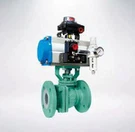
Hey there! As a supplier of Metal Seated Ball Valves, I often get asked about how these nifty devices work. So, I thought I'd take a few minutes to break down the working principle of a metal seated ball valve for you.
First off, let's talk about what a ball valve is in general. A ball valve is a type of valve that uses a spherical disc (the ball) to control the flow of fluid through a pipe. The ball has a hole (the port) through the middle, and when the valve is open, the port aligns with the pipe, allowing fluid to flow through. When the valve is closed, the ball is rotated 90 degrees so that the port is perpendicular to the pipe, blocking the flow of fluid.
Now, a metal seated ball valve is a special type of ball valve that uses metal seats instead of traditional elastomeric (rubber) seats. Metal seats offer several advantages over elastomeric seats, such as better resistance to high temperatures, pressures, and abrasive fluids. This makes metal seated ball valves ideal for use in harsh industrial environments, like oil and gas, power generation, and chemical processing.
So, how does a metal seated ball valve actually work? Well, it all starts with the ball itself. The ball is typically made of a hard, durable material like stainless steel or alloy steel, and it's precision-machined to ensure a tight seal against the metal seats. The seats are also made of a hard material, and they're designed to fit snugly against the ball to prevent any leakage.
When the valve is in the open position, the ball is rotated so that the port aligns with the pipe. This allows fluid to flow through the valve with minimal resistance. The metal seats are designed to provide a smooth, low-friction surface for the ball to rotate on, which helps to reduce wear and tear and ensure long-term reliability.
When it's time to close the valve, the operator simply turns the valve handle or actuator 90 degrees. This rotates the ball so that the port is perpendicular to the pipe, blocking the flow of fluid. As the ball rotates, it presses against the metal seats, creating a tight seal that prevents any leakage. The metal seats are designed to be self-lubricating, which helps to ensure a smooth, reliable operation even after many cycles of opening and closing.


One of the key features of a metal seated ball valve is its ability to handle high pressures and temperatures. The metal seats are designed to withstand the extreme conditions found in many industrial applications, and they're often reinforced with additional materials like tungsten carbide or ceramic to provide even greater durability. This makes metal seated ball valves a popular choice for use in applications where traditional elastomeric-seated ball valves would not be able to withstand the pressure or temperature.
Another advantage of metal seated ball valves is their resistance to abrasive fluids. The hard, durable materials used in the ball and seats are able to withstand the wear and tear caused by abrasive particles in the fluid, which helps to extend the life of the valve and reduce maintenance costs. This makes metal seated ball valves a great choice for use in applications where the fluid contains sand, gravel, or other abrasive materials.
In addition to their high-pressure and temperature capabilities and resistance to abrasion, metal seated ball valves also offer excellent sealing performance. The tight seal created by the metal seats and ball helps to prevent any leakage, which is important for maintaining the integrity of the fluid system and preventing environmental contamination. This makes metal seated ball valves a popular choice for use in applications where leakage is not acceptable, such as in the oil and gas industry.
Now, let's talk about some of the different types of metal seated ball valves that are available. There are several different designs and configurations to choose from, depending on the specific application and requirements. Some of the most common types of metal seated ball valves include:
- Floating Ball Valves: In a floating ball valve, the ball is not fixed in place, but rather floats between the seats. This allows the ball to move slightly under the pressure of the fluid, which helps to ensure a tight seal against the seats. Floating ball valves are typically used in applications where the pressure is relatively low to medium. You can check out Ball Valve Floating Type for more details.
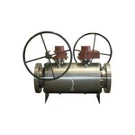
- Trunnion Mounted Ball Valves: In a trunnion mounted ball valve, the ball is fixed in place by a shaft (the trunnion) at the top and bottom. This provides additional support for the ball and helps to prevent it from moving under high pressure. Trunnion mounted ball valves are typically used in applications where the pressure is high.
- V Port Ball Valves: A V port ball valve has a V-shaped port in the ball, which allows for more precise control of the flow rate. V port ball valves are often used in applications where throttling or flow control is required. You can learn more about V Port Ball Valve.
- DBB Ball Valves: A DBB (Double Block and Bleed) ball valve is a type of valve that provides two separate seals and a bleed port between them. This allows for isolation of the pipeline and venting of any trapped fluid. DBB ball valves are commonly used in applications where safety and reliability are critical. Check out DBB ball valve for more information.
So, there you have it! That's a basic overview of the working principle of a metal seated ball valve. As you can see, these valves are a reliable and efficient way to control the flow of fluid in a wide range of industrial applications. If you're in the market for a metal seated ball valve, or if you have any questions about how these valves work, please don't hesitate to contact me. I'd be happy to help you find the right valve for your specific needs.
Thanks for reading, and I hope this blog post has been helpful to you!
References
- Valve Handbook: A Guide to Valve Selection, Sizing, and Application.
- Industrial Valves: Types, Applications, and Maintenance.