

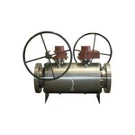
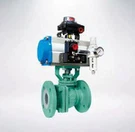
Fully welded ball valves are critical components in many industrial fluid control systems. As a leading supplier of fully welded ball valves, I am well - versed in their working principles and can provide in - depth insights into their functionality.
Basic Structure of a Fully Welded Ball Valve
A fully welded ball valve consists of several key parts. The main body is formed by welding, which provides a strong and leak - proof structure. At the core of the valve is the ball. The ball has a through - hole in the center. When the valve is in the open position, the through - hole of the ball aligns with the pipeline, allowing the fluid to flow freely. The ball is typically made of high - quality materials such as stainless steel or alloy steel to withstand high pressure and harsh environments.
The seats are also vital parts of the valve. They form a seal around the ball to prevent leakage when the valve is in the closed position. There are different types of seats available, including soft seats and hard seats. Soft Seated Ball Valves, which you can learn more about here, use materials like PTFE (polytetrafluoroethylene) that can provide excellent sealing performance even at low pressures. These soft seats can conform to the surface of the ball, creating a tight seal.
Hard - seated ball valves, on the other hand, use more durable materials like metal alloys. They are often used in applications where the valve will be exposed to high - temperature fluids, abrasive particles, or high pressures.
The Working Process of a Fully Welded Ball Valve
The operation of a fully welded ball valve is based on a simple yet effective principle. It has two main states: open and closed.
Open State
When the valve needs to allow fluid flow, the actuator (either manual, electric, pneumatic, or hydraulic) is used to turn the ball. A 90 - degree rotation is typically required to move the valve from the closed to the open position. In the open position, the through - hole in the ball aligns perfectly with the pipeline. This creates an unobstructed path for the fluid to pass through. The smooth inner surface of the ball and the valve body minimizes flow resistance, ensuring efficient fluid transfer.
The design of the fully welded ball valve also allows for a full - bore or reduced - bore configuration. In a full - bore valve, the diameter of the through - hole in the ball is the same as the inner diameter of the pipeline. This results in very low pressure drop across the valve, making it ideal for applications where maintaining a high flow rate is crucial, such as in oil and gas pipelines. Reduced - bore valves, however, have a smaller through - hole diameter. They are more compact and cost - effective, but they do cause a relatively higher pressure drop.
Closed State
To stop the fluid flow, the actuator rotates the ball by 90 degrees. In the closed position, the solid part of the ball blocks the pipeline, and the seats form a tight seal around the ball. This prevents the fluid from leaking through the valve. The sealing performance of a fully welded ball valve is highly dependent on the quality of the seats and the precision of the ball - seat contact.
The force exerted by the fluid pressure on the ball also helps to enhance the sealing effect. As the fluid pressure increases, it pushes the ball against the downstream seat, creating a more secure seal. This self - energizing sealing mechanism is one of the advantages of fully welded ball valves, especially in high - pressure applications.
Applications and Advantages of Fully Welded Ball Valves
Fully welded ball valves are widely used in various industries due to their unique features.
Oil and Gas Industry
In the oil and gas sector, these valves are used in pipelines for transporting crude oil, natural gas, and refined products. Their ability to handle high pressures, high temperatures, and corrosive fluids makes them an ideal choice. For example, in offshore oil platforms, fully welded ball valves are used to control the flow of oil and gas from the wellhead to the processing facilities. The welded structure of these valves provides excellent resistance to the harsh marine environment, reducing the risk of leakage and ensuring long - term reliability.
Chemical Industry
The chemical industry also relies heavily on fully welded ball valves. They are used to control the flow of various chemicals, including acids, alkalis, and solvents. The high - quality materials used in the valve construction can resist corrosion from these chemicals, ensuring the safe and efficient operation of chemical processing plants.


Power Generation
In power plants, whether it is a thermal power plant, a nuclear power plant, or a hydro - power plant, fully welded ball valves are used to control the flow of steam, water, and other working fluids. Their reliable sealing performance and ability to withstand high - temperature and high - pressure conditions are essential for the safe and efficient operation of power generation systems.
The advantages of fully welded ball valves are numerous. Firstly, the welded structure eliminates the need for flange connections, which reduces the risk of external leakage. This is especially important in applications where leakage can cause environmental pollution or safety hazards. Secondly, the simple and robust design of the valve ensures long - term reliability and low maintenance requirements. The ball and seat are designed to be wear - resistant, which extends the service life of the valve.
Related Types of Ball Valves
In addition to fully welded ball valves, there are other types of ball valves that can be suitable for different applications. For instance, Ceramic Lined Ball Valves are used in applications where high - wear resistance is required. The ceramic lining can protect the valve from abrasive particles in the fluid, such as in mining and cement industries.
Top Entry Ball Valves are another type of ball valve. They are designed in such a way that the internal components can be easily accessed and maintained from the top of the valve. This makes them convenient for applications where quick maintenance is necessary, such as in some industrial plants.
Conclusion
Understanding the working principle of a fully welded ball valve is crucial for anyone involved in fluid control systems. As a supplier of fully welded ball valves, I can provide high - quality products that meet the diverse needs of different industries. Whether you are looking for a valve for a high - pressure pipeline in the oil and gas industry or a corrosion - resistant valve for the chemical industry, our fully welded ball valves are designed to deliver reliable performance.
If you are interested in our fully welded ball valves or need more information about their applications and specifications, please contact us for a detailed discussion. We are ready to work with you to select the most suitable valve solutions for your projects.
References
- "Valve Handbook" - A comprehensive guide on various types of valves and their working principles, published by a leading valve industry association.
- Technical papers on ball valve design and performance from international engineering conferences.