

What is the torque requirement for operating a Diaphragm Valve?
As a diaphragm valve supplier, I often get asked about the torque requirements for operating these valves. Understanding the torque requirements is crucial for ensuring the proper functioning, longevity, and safety of diaphragm valves in various applications. In this blog post, I'll delve into the factors that influence the torque requirements of diaphragm valves and provide some insights to help you make informed decisions.
Factors Affecting Torque Requirements
Valve Size
One of the most significant factors influencing the torque requirement is the size of the diaphragm valve. Larger valves generally require more torque to operate because they have a larger diaphragm area and may need to overcome greater fluid forces. For instance, a 6 - inch diaphragm valve will typically demand more torque to open and close compared to a 2 - inch valve. This is because the larger valve has a larger cross - sectional area through which the fluid flows, and the diaphragm has to cover a greater distance to fully open or close the valve.
Fluid Pressure
The pressure of the fluid passing through the valve is another critical factor. Higher fluid pressures create more force against the diaphragm, making it more difficult to move the diaphragm and operate the valve. When the fluid pressure is high, the torque required to open the valve against the pressure can be substantial. For example, in a high - pressure industrial process where the fluid pressure is several hundred psi, the valve actuator needs to generate enough torque to overcome this pressure and move the diaphragm.
Diaphragm Material and Design
The material and design of the diaphragm play a vital role in determining the torque requirement. Different diaphragm materials have different levels of flexibility and resistance. A stiffer diaphragm material will require more torque to deform and move, while a more flexible material will need less. Additionally, the design of the diaphragm, such as its thickness and shape, can also affect the torque. A thicker diaphragm may be more resistant to deformation and thus require more torque to operate, while a well - designed diaphragm with an optimized shape can reduce the torque requirements.
Valve Type
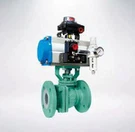
There are different types of diaphragm valves, such as pneumatic diaphragm valve, Pneumatic Teflon lined diaphragm valve, and Straight Type Diaphragm Valve. Each type has its own characteristics that can influence the torque requirement. For example, a weir - pattern diaphragm valve has a raised weir in the valve body, which can cause the diaphragm to experience different forces compared to a straight - through type. This difference in the valve design can result in different torque requirements for opening and closing the valve.
Calculating Torque Requirements
Calculating the exact torque requirement for a diaphragm valve can be a complex process. It often involves considering multiple factors simultaneously. In general, valve manufacturers use engineering formulas and testing to determine the torque requirements for their specific valve models. These calculations take into account the valve size, fluid pressure, diaphragm material properties, and valve design.
However, as a rule of thumb, you can estimate the torque requirement based on the valve size and the fluid pressure. For small - sized valves in low - pressure applications, the torque requirements may be relatively low, often in the range of a few inch - pounds. In contrast, large - sized valves in high - pressure applications can require torque values in the hundreds or even thousands of inch - pounds.
Importance of Meeting Torque Requirements
Meeting the appropriate torque requirements is essential for several reasons. Firstly, if the torque is insufficient, the valve may not open or close fully. This can lead to leakage, reduced flow control, and inefficient operation of the system. For example, in a chemical processing plant, a leaking diaphragm valve can result in the loss of valuable chemicals and pose a safety hazard.


Secondly, over - torquing the valve can also cause problems. Excessive torque can damage the diaphragm, the valve body, or the actuator. A damaged diaphragm may need to be replaced frequently, increasing maintenance costs and downtime. Moreover, a damaged valve body or actuator can lead to more severe system failures and costly repairs.
Selecting the Right Actuator
To ensure that the diaphragm valve operates correctly, it is crucial to select the right actuator that can provide the necessary torque. Actuators come in different types, such as pneumatic, electric, and hydraulic. Each type has its own advantages and disadvantages in terms of torque output, control, and cost.
Pneumatic actuators are commonly used in diaphragm valve applications because they are relatively simple, reliable, and cost - effective. They can provide a wide range of torque outputs depending on the size and design of the actuator. Electric actuators offer precise control and are suitable for applications where accurate positioning of the valve is required. Hydraulic actuators can generate very high torque values and are often used in high - pressure and heavy - duty applications.
When selecting an actuator, it is important to consider the torque requirements of the valve, the operating environment, and the control requirements of the system. A well - matched actuator will ensure smooth and efficient operation of the diaphragm valve.
Conclusion
In conclusion, the torque requirement for operating a diaphragm valve is influenced by several factors, including valve size, fluid pressure, diaphragm material and design, and valve type. Understanding these factors and calculating the appropriate torque is crucial for the proper selection of actuators and the efficient operation of the valve. As a diaphragm valve supplier, we are committed to providing our customers with high - quality valves and accurate information about torque requirements.
If you are in the market for diaphragm valves and need assistance in determining the torque requirements for your specific application, we are here to help. Our team of experts can provide you with detailed technical advice and guidance to ensure that you select the right valve and actuator for your needs. Contact us today to start a discussion about your diaphragm valve requirements and let's work together to find the best solution for your system.
References
- Valve Handbook, 4th Edition, by J. S. Tuzson
- Engineering Principles of Piping Systems, by George A. Antaki
- Fluid Mechanics and Machinery, by Dr. R. K. Bansal