

What is the installation orientation of a ball valve?
As a trusted ball valve supplier, I often encounter inquiries from customers regarding the proper installation orientation of ball valves. Understanding the correct installation orientation is crucial for ensuring optimal performance, longevity, and safety of the valve in various applications. In this blog post, I will delve into the factors that influence the installation orientation of ball valves and provide guidelines to help you make informed decisions.
Understanding Ball Valve Basics
Before discussing the installation orientation, let's briefly review the basic components and operation of a ball valve. A ball valve consists of a spherical disc (the ball) with a hole (the bore) in the center. The ball is connected to a stem, which is used to rotate the ball within the valve body. When the bore of the ball is aligned with the flow path of the pipeline, the valve is in the open position, allowing fluid to pass through. When the ball is rotated 90 degrees, the bore is perpendicular to the flow path, and the valve is in the closed position, blocking the flow of fluid.
Factors Affecting Installation Orientation
Several factors need to be considered when determining the installation orientation of a ball valve. These factors include the type of fluid being handled, the flow direction, the pressure and temperature conditions, and the specific application requirements.
Fluid Type
The type of fluid being handled can have a significant impact on the installation orientation of the ball valve. For example, if the fluid is a corrosive or abrasive substance, it is important to ensure that the valve is installed in a way that minimizes the exposure of the valve components to the fluid. In some cases, it may be necessary to use a valve with a special lining or coating to protect against corrosion or abrasion.
Flow Direction
The flow direction of the fluid is another important factor to consider. Most ball valves are designed to be bi-directional, meaning they can be installed in either direction. However, some ball valves are designed for uni-directional flow only. In these cases, it is essential to install the valve in the correct direction to ensure proper operation. The flow direction is usually indicated by an arrow on the valve body.
Pressure and Temperature Conditions
The pressure and temperature conditions of the application can also affect the installation orientation of the ball valve. High-pressure applications may require the valve to be installed in a specific orientation to prevent leakage or damage to the valve components. Similarly, high-temperature applications may require the valve to be installed in a way that allows for proper heat dissipation.
Application Requirements
The specific application requirements can also influence the installation orientation of the ball valve. For example, in some applications, it may be necessary to install the valve in a horizontal position to ensure proper drainage or to prevent the accumulation of debris. In other applications, it may be necessary to install the valve in a vertical position to allow for easy access and maintenance.


Installation Orientation Guidelines
Based on the factors discussed above, here are some general guidelines for the installation orientation of ball valves:
Horizontal Installation
In most cases, ball valves can be installed horizontally. When installing a ball valve horizontally, it is important to ensure that the valve is level and that the stem is in a vertical position. This will help to prevent the accumulation of debris in the valve and ensure proper operation.
Vertical Installation
Ball valves can also be installed vertically. When installing a ball valve vertically, it is important to ensure that the stem is in an accessible position for easy operation and maintenance. In addition, it is important to ensure that the valve is installed in a way that allows for proper drainage to prevent the accumulation of fluid in the valve.
Bi-Directional vs. Uni-Directional Valves
As mentioned earlier, most ball valves are designed to be bi-directional. However, some ball valves are designed for uni-directional flow only. When installing a uni-directional ball valve, it is essential to install the valve in the correct direction to ensure proper operation. The flow direction is usually indicated by an arrow on the valve body.
Special Applications
In some special applications, such as high-pressure or high-temperature applications, it may be necessary to install the ball valve in a specific orientation to ensure proper operation and safety. In these cases, it is important to consult the valve manufacturer's installation instructions or seek the advice of a qualified engineer.
Our Ball Valve Products
At our company, we offer a wide range of ball valves to meet the diverse needs of our customers. Our ball valves are available in various materials, sizes, and configurations to ensure compatibility with different applications. Some of our popular ball valve products include:
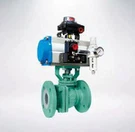
- PFA Lined Ball Valve: Our PFA lined ball valves are designed to provide excellent corrosion resistance in a wide range of chemical applications. The PFA lining protects the valve components from the corrosive effects of the fluid, ensuring long-term performance and reliability.
- Fully Welded Ball Valve: Our fully welded ball valves are designed for high-pressure and high-temperature applications. The fully welded construction provides a leak-proof seal and eliminates the need for external bolting, making the valve more reliable and durable.
- Soft Seated Ball Valve: Our soft seated ball valves are designed for applications where a tight shut-off is required. The soft seat provides a reliable seal, even at low pressures, and is suitable for a wide range of fluids.
Conclusion
In conclusion, the installation orientation of a ball valve is an important consideration that can have a significant impact on the performance, longevity, and safety of the valve. By considering the factors discussed in this blog post and following the installation guidelines provided, you can ensure that your ball valve is installed correctly and operates efficiently in your application.
If you have any questions or need further information about our ball valve products or installation orientation, please do not hesitate to contact us. We are here to help you find the right solution for your specific needs.