

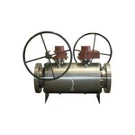
Hey there! As a supplier of top entry ball valves, I've seen firsthand how pressure fluctuations can throw a real wrench into things. In this blog, I'm gonna break down the impact of these pesky pressure changes on top entry ball valves and why it's super important to understand them.
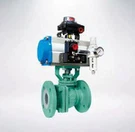
Let's start with the basics. A top entry ball valve is a type of valve that allows or restricts the flow of fluid through a pipeline. It consists of a spherical disc (the ball) with a hole in the middle. When the ball is turned so that the hole aligns with the pipeline, fluid can flow through. When it's turned 90 degrees, the flow is blocked. These valves are commonly used in a variety of industries, including oil and gas, chemical processing, and water treatment.
Now, pressure fluctuations are a common occurrence in many fluid systems. They can be caused by a number of factors, such as changes in flow rate, pump operation, or even temperature variations. When these fluctuations happen, they can have a significant impact on the performance and lifespan of a top entry ball valve.
One of the most immediate effects of pressure fluctuations is on the valve's sealing performance. A good seal is crucial for preventing leaks and ensuring the efficient operation of the valve. When the pressure suddenly increases, it can put extra stress on the valve's seals. Over time, this can cause the seals to wear out more quickly, leading to leaks. For example, if you're using a Soft Seated Ball Valve, the soft material of the seat is more susceptible to damage from high - pressure spikes. The increased pressure can deform the seat, making it less effective at sealing.


Another issue is the impact on the ball and stem assembly. Pressure fluctuations can cause vibrations within the valve. These vibrations can lead to mechanical wear and tear on the ball and stem. The constant movement and stress can cause the surfaces to become pitted or scored. This not only affects the valve's ability to open and close smoothly but can also reduce its overall durability. In extreme cases, the stem could even break, rendering the valve completely inoperable.
Pressure fluctuations can also affect the valve's actuation system. If the valve is automated, the actuator needs to be able to respond accurately to the control signals. Sudden pressure changes can make it difficult for the actuator to maintain the correct position of the ball. For instance, if the pressure suddenly drops, the actuator might not be able to hold the ball in place, leading to an unintended change in the flow rate.
In addition to the mechanical impacts, pressure fluctuations can also have an effect on the valve's internal components. The high - pressure areas can cause cavitation. Cavitation occurs when the pressure drops below the vapor pressure of the fluid, causing vapor bubbles to form. When these bubbles collapse, they create shockwaves that can erode the internal surfaces of the valve. This is especially a concern in applications where the fluid contains abrasive particles, as the combination of cavitation and abrasion can accelerate the damage to the valve.
Now, let's talk about how we can mitigate these impacts. One of the first steps is to select the right type of valve for the application. For systems with significant pressure fluctuations, a Fully Welded Ball Valve might be a better choice. These valves are more robust and can better withstand the stresses caused by pressure changes. They have a welded body that provides extra strength and reduces the risk of leakage.
Proper maintenance is also key. Regular inspections can help detect early signs of wear and damage. This includes checking the seals, the ball and stem, and the actuator. Replacing worn - out parts in a timely manner can prevent more serious problems down the road.
Another strategy is to install pressure - regulating devices in the system. These devices can help smooth out the pressure fluctuations, reducing the stress on the valve. For example, a pressure relief valve can be set to open when the pressure exceeds a certain limit, preventing excessive pressure from reaching the ball valve.
If you're dealing with a system that requires precise flow control, a V Port Ball Valve can be a great option. The V - shaped port in these valves allows for more accurate throttling, even in the presence of pressure fluctuations. This can help maintain a stable flow rate and reduce the impact of the pressure changes on the overall system.
In conclusion, pressure fluctuations can have a wide range of impacts on top entry ball valves. From affecting the sealing performance to causing mechanical wear and cavitation, these changes can significantly reduce the valve's lifespan and efficiency. As a supplier, I know how important it is to choose the right valve and implement proper maintenance and mitigation strategies.
If you're in the market for a top entry ball valve or need advice on dealing with pressure fluctuations in your system, don't hesitate to reach out. We're here to help you find the best solution for your specific needs. Whether it's selecting the right type of valve or coming up with a maintenance plan, we've got the expertise to support you.
References
- Valve Handbook: A Guide to Valve Technology and Applications
- Fluid Mechanics and Hydraulic Engineering Textbooks