

What is the flow capacity of a Pressure Relief Valve?
Hey there! I'm a supplier of pressure relief valves, and today I want to talk about one of the most crucial aspects of these valves: flow capacity. You might be wondering, "What on earth is flow capacity, and why does it matter?" Well, stick around, and I'll break it down for you.
First things first, let's define what a pressure relief valve is. Simply put, it's a safety device designed to protect a system from over - pressurization. When the pressure in a system exceeds a pre - set limit, the relief valve opens and releases the excess pressure to prevent damage to the equipment and ensure the safety of the operators.
Now, the flow capacity of a pressure relief valve is the amount of fluid (it could be gas, steam, or liquid) that the valve can discharge per unit of time under specific conditions. It's usually measured in units like cubic feet per minute (CFM) for gases or gallons per minute (GPM) for liquids.
Why is flow capacity so important? Imagine you have a boiler system. If the pressure relief valve on that boiler doesn't have enough flow capacity, it won't be able to release the excess pressure quickly enough. This can lead to a dangerous build - up of pressure, which could result in an explosion or other serious damage to the boiler and the surrounding area. On the other hand, if the valve has too much flow capacity, it might open too easily and cause unnecessary releases, which can waste resources and increase operating costs.
So, how do we determine the right flow capacity for a pressure relief valve? There are several factors to consider.


System Pressure
The operating pressure of the system is a major factor. A valve needs to be able to handle the maximum pressure that the system can reach. For example, in a high - pressure steam system, the relief valve has to be designed to open and release steam at a high pressure. If the valve is rated for a lower pressure, it might not open when it should, or it could fail under the high - pressure conditions.
Fluid Properties
The type of fluid in the system also matters. Different fluids have different densities, viscosities, and compressibilities. For instance, steam is a compressible fluid, while water is relatively incompressible. A valve designed for steam will have different flow characteristics compared to a valve for water. When dealing with steam, we often use a steam relief valve which is specifically engineered to handle the unique properties of steam, such as its high temperature and compressibility.
Pipe Size and Configuration
The size of the pipes connected to the pressure relief valve and their configuration can affect the flow capacity. If the pipes are too small, they can create a restriction in the flow, reducing the effective flow capacity of the valve. Similarly, if the pipes have a lot of bends or fittings, it can also increase the resistance to flow.
Set Pressure and Overpressure
The set pressure of the valve is the pressure at which it starts to open, and the overpressure is the additional pressure above the set pressure at which the valve reaches its full - open position. The relationship between set pressure and overpressure is important in determining the flow capacity. A valve with a lower overpressure might have a lower flow capacity compared to a valve with a higher overpressure, all other things being equal.
Let's take a look at some different types of pressure relief valves and their flow capacity considerations.
Spring - Loaded Relief Valves
These are the most common type of pressure relief valves. They use a spring to hold the valve closed until the pressure in the system exceeds the set pressure of the spring. The flow capacity of a spring - loaded relief valve depends on the size of the valve orifice, the strength of the spring, and the pressure differential across the valve. A larger orifice generally means a higher flow capacity, but it also requires a stronger spring to keep the valve closed at the set pressure.
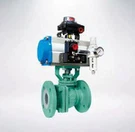
Jacket Relief Valve
Jacket relief valves are often used in applications where the fluid needs to be kept at a certain temperature. The jacket around the valve can be used to heat or cool the fluid, which can affect its properties and, in turn, the flow capacity. For example, if the fluid is a viscous liquid that needs to be heated to reduce its viscosity, the jacket can help maintain the right temperature for proper flow through the valve.
Pilot Operated Vacuum Relief Valve
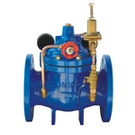
Pilot - operated relief valves use a small pilot valve to control the opening and closing of the main valve. These valves can offer high flow capacity with relatively low overpressure. The pilot valve senses the pressure in the system and sends a signal to the main valve to open when the set pressure is reached. This type of valve is often used in large - scale industrial applications where high flow rates are required.
Calculating the flow capacity of a pressure relief valve is not a simple task. It usually involves complex equations and engineering calculations. There are also standards and codes, such as the ASME (American Society of Mechanical Engineers) Boiler and Pressure Vessel Code, that provide guidelines for sizing and selecting pressure relief valves based on the flow capacity requirements.
In practice, we often work closely with our customers to understand their specific system requirements. We ask them about the type of fluid, the operating pressure, the temperature, and the pipe configuration. Based on this information, we can recommend the right pressure relief valve with the appropriate flow capacity.
If you're in the market for a pressure relief valve, don't just go for the cheapest option or the one with the highest - sounding flow capacity. It's essential to get a valve that is properly sized and designed for your specific application. A valve with the wrong flow capacity can lead to safety issues, equipment damage, and increased operating costs.
So, if you're looking for a reliable pressure relief valve supplier who can help you find the right valve with the right flow capacity, we're here to assist. We have a wide range of pressure relief valves, including steam relief valves, jacket relief valves, and pilot - operated vacuum relief valves. Our team of experts can work with you to understand your needs and provide you with the best solution. Whether you're in a small - scale manufacturing plant or a large - scale industrial facility, we've got you covered.
If you want to discuss your pressure relief valve requirements further, don't hesitate to reach out. We're always happy to have a chat and help you make the right choice for your system.
References
- ASME Boiler and Pressure Vessel Code
- Engineering textbooks on fluid mechanics and pressure relief valve design