

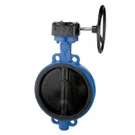
As a seasoned supplier of butterfly valves, I often encounter inquiries about the differences between double - offset and triple - offset butterfly valves. Understanding these differences is crucial for customers to make informed decisions when selecting the right valve for their specific applications. In this blog, I'll delve into the details of these two types of butterfly valves, highlighting their unique features, advantages, and typical use cases.
Double - Offset Butterfly Valve
A double - offset butterfly valve, also known as a high - performance butterfly valve, is designed with two offsets. The first offset is the stem offset from the center of the disc, and the second offset is the stem offset from the centerline of the pipeline. This double - offset design provides several benefits.
Structure and Working Principle
The double - offset design allows the disc to disengage from the seat as it starts to open. This reduces friction between the disc and the seat during the opening and closing process, which in turn extends the service life of the valve. When the valve is closed, the disc is pressed against the seat by the fluid pressure, creating a tight seal.
Advantages
- Low Friction Operation: As mentioned earlier, the double - offset design minimizes friction, which means less wear and tear on the valve components. This results in lower maintenance requirements and longer valve life.
- Good Sealing Performance: The double - offset valve can provide a reliable seal, especially in applications where a moderate level of sealing is required. It can handle a wide range of pressures and temperatures, making it suitable for many industrial processes.
- Cost - Effective: Compared to some other types of valves, double - offset butterfly valves are relatively cost - effective. They offer a good balance between performance and price, making them a popular choice for many customers.
Applications
Double - offset butterfly valves are commonly used in various industries, such as water treatment, HVAC systems, and general industrial applications. In water treatment plants, they are used to control the flow of water in pipes. In HVAC systems, they help regulate the flow of air and water for heating and cooling purposes. You can find high - quality double - offset valves in our High Performance Butterfly Valve product line.
Triple - Offset Butterfly Valve
A triple - offset butterfly valve takes the design concept of the double - offset valve a step further by adding a third offset. The third offset is the conical axis offset of the sealing surface.
Structure and Working Principle
The triple - offset design creates a cam - like action when the valve opens and closes. This action allows the disc to lift off the seat completely during opening, eliminating any rubbing between the disc and the seat. When closing, the disc rotates into the seat in a precise manner, ensuring a perfect seal.
Advantages
- Metal - to - Metal Sealing: Triple - offset butterfly valves often feature metal - to - metal sealing. This type of sealing is highly reliable and can withstand high pressures, high temperatures, and corrosive media. Our Metal To Metal Butterfly Valve offers excellent metal - to - metal sealing performance.
- Bidirectional Sealing: These valves can provide bidirectional sealing, which means they can seal effectively in both flow directions. This is a significant advantage in applications where the flow direction may change. Check out our Metal To Metal Butterfly Valve With Bidirectional Sealing for more details.
- Zero Leakage: Due to the precise design and metal - to - metal sealing, triple - offset butterfly valves can achieve zero leakage, which is crucial in applications where leakage is not acceptable, such as in the oil and gas industry.
Applications
Triple - offset butterfly valves are widely used in critical applications, such as the oil and gas industry, chemical processing, and power generation. In the oil and gas industry, they are used in pipelines to control the flow of oil and gas, where zero leakage and high - pressure resistance are essential. In chemical processing plants, they can handle corrosive chemicals safely.
Key Differences Between Double - Offset and Triple - Offset Butterfly Valves
Sealing Performance
The most significant difference between the two types of valves lies in their sealing performance. Double - offset butterfly valves can provide a good seal, but they may not be able to achieve zero leakage in all cases. On the other hand, triple - offset butterfly valves are designed for zero leakage, thanks to their metal - to - metal sealing and precise triple - offset design.


Friction and Wear
Double - offset valves have reduced friction compared to non - offset valves, but there is still some contact between the disc and the seat during operation. Triple - offset valves, however, eliminate this contact by lifting the disc completely off the seat during opening, resulting in even less wear and longer service life.
Cost
Double - offset butterfly valves are generally more cost - effective than triple - offset valves. The complex design and high - performance materials used in triple - offset valves make them more expensive. However, in applications where the benefits of triple - offset valves, such as zero leakage and bidirectional sealing, are required, the higher cost may be justified.
Application Scope
Double - offset valves are suitable for a wide range of general industrial applications where moderate sealing performance and cost - effectiveness are important. Triple - offset valves are reserved for critical applications where high - pressure resistance, zero leakage, and bidirectional sealing are necessary.
Choosing the Right Valve for Your Application
When selecting between a double - offset and a triple - offset butterfly valve, several factors need to be considered:
- Operating Conditions: If your application involves high pressures, high temperatures, or corrosive media, a triple - offset valve may be the better choice. For normal operating conditions, a double - offset valve may be sufficient.
- Sealing Requirements: If zero leakage is a must, a triple - offset valve is the obvious option. If a moderate level of sealing is acceptable, a double - offset valve can meet your needs.
- Budget: Your budget will also play a role in your decision. If cost is a major concern and the application does not require the advanced features of a triple - offset valve, a double - offset valve is a more economical choice.
As a butterfly valve supplier, we are committed to providing our customers with the best valve solutions. Whether you need a double - offset or a triple - offset butterfly valve, we have a wide range of products to meet your specific requirements. If you have any questions or need further assistance in choosing the right valve for your application, please feel free to contact us for procurement and negotiation. We look forward to working with you to find the perfect valve solution for your project.
References
- Valve Handbook, 4th Edition, by J. S. T. Lo.
- Industrial Valves: Selection, Specification, and Installation, by R. A. Streeter.