

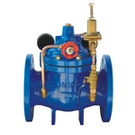
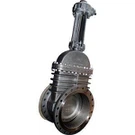
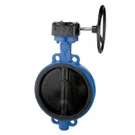
Hey there! As a check valve supplier, I often get asked about the differences between check valves and slide valves. It's a great question, and today I'm gonna break it down for you in a way that's easy to understand.
Let's start with check valves. A check valve is a type of valve that allows fluid to flow in one direction only. It's like a one - way street for liquids or gases. The main job of a check valve is to prevent backflow, which can be a real problem in many systems. For example, in a water supply system, if the water were to flow back, it could contaminate the clean water source.
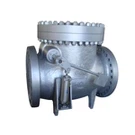
There are different types of check valves, each with its own unique design and function. One popular type is the Swing Type Check Valve. This valve has a disc that swings on a hinge. When the fluid flows in the correct direction, the disc swings open, allowing the fluid to pass through. But when the flow tries to reverse, the disc swings shut, blocking the backflow. It's a simple yet effective design that's been used for a long time.
Another type is the Damping Device check valve. This valve is equipped with a damping device, which helps to reduce the impact and noise when the valve closes. It's especially useful in systems where sudden pressure changes can cause water hammer, a phenomenon that can damage pipes and equipment.
The Ball Float Pattern Rubber Lined Check Valve is also quite interesting. It uses a ball float to control the flow. When the fluid level rises, the ball float rises with it, opening the valve. As the fluid level drops, the ball float falls, closing the valve. The rubber lining helps to prevent corrosion and provides a good seal.
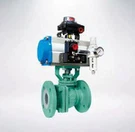
Now, let's talk about slide valves. A slide valve is a valve that uses a sliding gate or disc to control the flow of fluid. Unlike check valves, slide valves are designed to be opened and closed manually or automatically to regulate the flow rate, start or stop the flow, or isolate a section of the pipeline.
One of the main differences between check valves and slide valves is their function. Check valves are mainly used to prevent backflow, while slide valves are used for flow control. Check valves work automatically based on the direction of the fluid flow, without the need for external control. On the other hand, slide valves require some form of control mechanism, such as a handwheel, actuator, or solenoid, to operate.
In terms of design, check valves are relatively simple. They usually have fewer moving parts, which means they are less likely to break down and require less maintenance. Slide valves, however, can be more complex, especially those with sophisticated control systems. The sliding gate or disc in a slide valve needs to be able to move smoothly and seal properly, which can be a challenge in some applications.
Another difference is the flow characteristics. Check valves offer relatively low resistance to flow in the forward direction, which is important for maintaining the efficiency of the system. Slide valves, depending on their design and the position of the gate, can introduce more flow resistance, especially when they are partially open.


Let's look at some real - world applications to see how these differences play out. In a sewage system, check valves are often used at the inlet of pumps or at the connection points between different sections of the pipeline to prevent sewage from flowing back. This helps to protect the pumps and other equipment from damage. Slide valves, on the other hand, can be used to control the flow of sewage in different branches of the system, allowing for maintenance and repair work.
In a steam system, check valves are used to prevent steam from flowing back into the boiler when the pressure drops. This is crucial for the safety and efficiency of the boiler. Slide valves can be used to regulate the steam flow to different parts of the system, such as turbines or heating coils.
When it comes to choosing between a check valve and a slide valve, it really depends on the specific requirements of your application. If you need to prevent backflow, a check valve is the way to go. If you need to control the flow rate or isolate a section of the pipeline, a slide valve might be more suitable.
As a check valve supplier, I can offer a wide range of high - quality check valves to meet your needs. Whether you need a swing type check valve for a simple water system or a damping device check valve for a high - pressure application, I've got you covered. My check valves are made from top - quality materials, ensuring durability and reliable performance.
If you're in the market for check valves or have any questions about the differences between check valves and slide valves, don't hesitate to reach out. I'm here to help you make the right choice for your project. Whether you're a small business owner looking to upgrade your plumbing system or an engineer working on a large - scale industrial project, I can provide you with the best solutions and support.
So, if you're interested in purchasing check valves or just want to learn more, feel free to contact me. Let's have a chat and see how I can assist you in getting the right valves for your application.
References:
- Fluid Mechanics and Thermodynamics of Turbomachinery by S. L. Dixon
- Valve Handbook by Robert K. Mott