

Hey there! As a ball valve supplier, I often get asked about the burst pressure of ball valves. It's a crucial topic, especially for those in industries where safety and reliability are non - negotiable. So, let's dive right in and explore what burst pressure is all about.
What Exactly is Burst Pressure?
Burst pressure is the maximum pressure that a ball valve can withstand before it fails catastrophically. When a valve reaches its burst pressure, it can rupture, leading to leaks, potential damage to the surrounding equipment, and even pose a safety risk to personnel. It's not the same as the working pressure, which is the normal pressure at which the valve is designed to operate. Working pressure is typically much lower than the burst pressure to ensure a safety margin.
Think of it like a balloon. You can inflate a balloon to a certain point, and that's like the working pressure. But if you keep blowing air into it, there comes a point when it pops - that's the burst pressure. In the case of ball valves, the consequences of reaching the burst pressure are far more serious than a popped balloon.
Factors Affecting Burst Pressure
Material
The material of the ball valve plays a huge role in determining its burst pressure. Valves made from high - strength materials like stainless steel can generally withstand higher pressures compared to those made from brass or PVC. For example, stainless steel has excellent mechanical properties, including high tensile strength and good resistance to corrosion. This makes it a great choice for applications where high pressures are involved. On the other hand, PVC valves are more commonly used in low - pressure applications due to their relatively lower strength.
Design
The design of the ball valve also impacts its burst pressure. A well - designed valve with proper wall thickness and reinforcement will have a higher burst pressure. For instance, Top Entry Ball Valve often has a robust design that allows it to handle higher pressures. The way the valve is assembled, the quality of the seals, and the overall construction all contribute to its ability to withstand pressure.
Size
The size of the ball valve is another important factor. Generally, smaller valves can handle higher pressures than larger ones. This is because the stress on the valve walls is more evenly distributed in smaller valves. As the size of the valve increases, the force exerted on the walls due to pressure also increases, making it more challenging to maintain a high burst pressure.
Testing Burst Pressure
Manufacturers usually conduct burst pressure tests on ball valves to determine their safe operating limits. These tests are carried out in a controlled environment, where the valve is subjected to increasing pressure until it fails. The pressure at which the valve bursts is then recorded.
During the test, the valve is connected to a pressure - generating device, and the pressure is gradually increased. Sensors are used to monitor the pressure and any signs of deformation or leakage in the valve. Once the valve fails, the test is stopped, and the data is analyzed. This information is then used to set the working pressure and other specifications for the valve.
Importance of Knowing Burst Pressure
Safety
Safety is the number one reason why knowing the burst pressure of a ball valve is so important. In industries such as oil and gas, chemical processing, and power generation, high - pressure systems are common. If a valve fails due to exceeding its burst pressure, it can lead to dangerous situations, including explosions, fires, and the release of hazardous substances. By choosing a valve with an appropriate burst pressure for the application, companies can minimize these risks.

Equipment Protection
Using a ball valve with the right burst pressure also helps protect other equipment in the system. When a valve fails, it can cause a sudden release of pressure, which can damage pumps, pipes, and other components. By ensuring that the valve can handle the expected pressures, companies can extend the lifespan of their equipment and reduce maintenance costs.
Compliance
Many industries are subject to strict regulations regarding pressure safety. Knowing the burst pressure of ball valves is essential for ensuring compliance with these regulations. Companies that fail to use valves with appropriate burst pressures may face fines and legal issues.
Different Types of Ball Valves and Their Burst Pressures
DBB Ball Valve
DBB ball valve are designed to provide double isolation and bleeding capabilities. These valves are often used in critical applications where high - pressure isolation is required. Due to their robust design and construction, DBB ball valves typically have a high burst pressure. They are commonly used in the oil and gas industry, where they need to withstand the high pressures associated with drilling and production operations.
Ceramic Lined Ball Valve
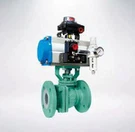
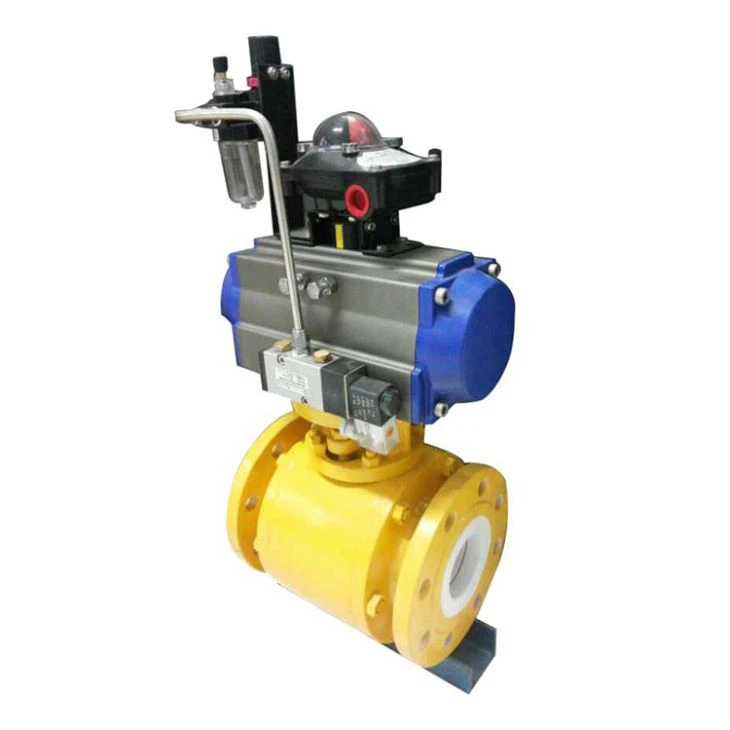
Ceramic Lined Ball Valve are known for their excellent wear resistance and corrosion resistance. The ceramic lining provides an additional layer of protection to the valve, which can enhance its burst pressure. These valves are often used in applications where the media is abrasive or corrosive, such as in mining and chemical processing. The high - strength ceramic material helps the valve withstand the forces exerted by the pressure and the harsh media.
How to Choose the Right Ball Valve Based on Burst Pressure
When selecting a ball valve for your application, it's important to consider the expected pressure in the system. You should always choose a valve with a burst pressure that is significantly higher than the maximum working pressure. A good rule of thumb is to select a valve with a burst pressure at least 1.5 to 2 times the maximum working pressure.
It's also important to take into account the other factors we discussed earlier, such as the material, design, and size of the valve. If you're not sure which valve is right for your application, don't hesitate to reach out to us. We have a team of experts who can help you make the best choice based on your specific needs.
Conclusion
In conclusion, the burst pressure of a ball valve is a critical factor that should not be overlooked. It affects the safety, reliability, and performance of your system. By understanding what burst pressure is, the factors that affect it, and how to choose the right valve, you can ensure that your operations run smoothly and safely.
If you're in the market for a high - quality ball valve, whether it's a DBB ball valve, Ceramic Lined Ball Valve, or Top Entry Ball Valve, we've got you covered. Our valves are tested to ensure they meet the highest standards of quality and performance. So, if you have any questions or want to discuss your requirements, feel free to get in touch with us. We're here to help you find the perfect ball valve for your needs.
References
- "Valve Handbook: Principles and Applications" by J. R. A. Pearson
- "Pressure Vessel Design Manual" by Dennis R. Moss