

Hey there! As a diaphragm valve supplier, I'm super stoked to share with you all about what a diaphragm valve is. So, let's dive right in!
What Exactly is a Diaphragm Valve?
A diaphragm valve is a unique type of valve that uses a flexible diaphragm to control the flow of fluid through a pipeline. This diaphragm is usually made of materials like rubber, Teflon, or other elastomers. It acts as a barrier between the flow medium and the valve's operating mechanism.
The basic principle behind a diaphragm valve is pretty straightforward. When the valve is open, the diaphragm is lifted, allowing the fluid to pass through the valve. When the valve is closed, the diaphragm is pressed against the valve seat, blocking the flow. It's like a little gatekeeper for your pipes!


How Does it Work?
There are two main types of diaphragm valves based on their operation: manual and automated. Manual diaphragm valves are operated by hand, usually with a handwheel or a lever. You turn the handwheel, and it moves the stem, which in turn moves the diaphragm up or down to control the flow.
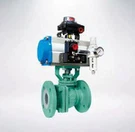
Automated diaphragm valves, on the other hand, can be operated using various actuators. For example, pneumatic diaphragm valve use compressed air to move the diaphragm. When air is supplied to the actuator, it pushes the diaphragm down to close the valve, and when the air is released, a spring or other mechanism lifts the diaphragm to open the valve.
Advantages of Diaphragm Valves
One of the biggest advantages of diaphragm valves is their excellent sealing performance. The diaphragm forms a tight seal against the valve seat, preventing any leakage of the fluid. This makes them ideal for applications where leakage is a major concern, such as in the chemical and pharmaceutical industries.
Another great thing about diaphragm valves is their ability to handle corrosive and abrasive fluids. Since the diaphragm is in direct contact with the fluid, it can be made from materials that are resistant to corrosion and abrasion. For instance, Pneumatic Teflon lined diaphragm valve have a Teflon lining on the diaphragm, which makes them highly resistant to a wide range of chemicals.
Diaphragm valves also have a simple design, which makes them easy to install, operate, and maintain. There are fewer moving parts compared to other types of valves, which means less chance of mechanical failure.
Types of Diaphragm Valves
There are several different types of diaphragm valves, each designed for specific applications. One common type is the Straight Type Diaphragm Valve. As the name suggests, this valve has a straight-through design, which allows for a smooth flow of fluid with minimal pressure drop.
Another type is the weir-type diaphragm valve. In this valve, the diaphragm is pressed against a weir or a raised seat. This design provides better throttling control and is often used in applications where precise flow control is required.
Applications of Diaphragm Valves
Diaphragm valves are used in a wide variety of industries. In the chemical industry, they are used to control the flow of corrosive chemicals, such as acids and alkalis. In the pharmaceutical industry, they are used in processes where sterility is crucial, as they can be easily cleaned and sterilized.
They are also commonly used in the food and beverage industry to control the flow of liquids and gases. Since the diaphragm is in direct contact with the product, it can be made from food-grade materials to ensure compliance with food safety regulations.
In the water treatment industry, diaphragm valves are used to control the flow of water, chemicals, and sludge. Their ability to handle abrasive and viscous fluids makes them well-suited for these applications.
Maintenance of Diaphragm Valves
Maintaining diaphragm valves is relatively easy. Regular inspection of the diaphragm is essential to check for any signs of wear or damage. If the diaphragm is damaged, it should be replaced immediately to prevent leakage.
The valve's actuator, if it's an automated valve, also needs to be maintained. This includes checking the air supply (for pneumatic actuators), lubricating moving parts, and ensuring that the actuator is functioning properly.
Why Choose Us as Your Diaphragm Valve Supplier?
As a diaphragm valve supplier, we offer a wide range of high-quality diaphragm valves to meet your specific needs. Our valves are manufactured using the latest technology and the best materials to ensure reliable performance and long service life.
We have a team of experienced engineers and technicians who can provide you with expert advice on valve selection, installation, and maintenance. Whether you're a small business or a large industrial company, we can offer you the right solution at a competitive price.
If you're in the market for diaphragm valves, we'd love to hear from you. Whether you have a specific application in mind or just want to learn more about our products, feel free to reach out. We're here to help you find the perfect valve for your needs. Let's start a conversation and see how we can work together to solve your valve requirements.
References
- Perry, R. H., & Green, D. W. (1997). Perry's Chemical Engineers' Handbook. McGraw-Hill.
- Valves Handbook: Selection, Applications, and Sizing. (2012). Elsevier.