

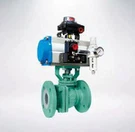
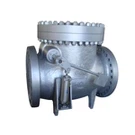
As a supplier of Swing Type Check Valves, I understand the critical importance of protecting these valves from corrosion. Corrosion can significantly reduce the lifespan of a valve, compromise its performance, and lead to costly repairs or replacements. In this blog post, I will share some effective strategies to safeguard Swing Type Check Valves against corrosion.


Understanding the Causes of Corrosion in Swing Type Check Valves
Before delving into protection methods, it's essential to understand what causes corrosion in Swing Type Check Valves. Several factors can contribute to corrosion, including the nature of the fluid flowing through the valve, the environmental conditions, and the material of the valve itself.
- Fluid Composition: The chemical properties of the fluid passing through the valve play a major role. For instance, fluids with high acidity or alkalinity, or those containing corrosive substances like chlorides or sulfides, can accelerate corrosion. In industrial applications where the valve may handle chemicals, wastewater, or seawater, the risk of corrosion is particularly high.
- Environmental Conditions: The external environment where the valve is installed also matters. Valves exposed to high humidity, salt - laden air (such as in coastal areas), or polluted atmospheres are more prone to corrosion. Temperature variations can also exacerbate the corrosion process, as thermal cycling can cause stress on the valve material and promote the formation of corrosion cells.
- Valve Material: The choice of material for the Swing Type Check Valve is crucial. Some metals are more susceptible to corrosion than others. For example, carbon steel is a common material for valves, but it can rust easily if not properly protected. On the other hand, stainless steel offers better corrosion resistance, but different grades of stainless steel have varying levels of resistance depending on their alloy composition.
Selecting the Right Valve Material
One of the most fundamental steps in protecting a Swing Type Check Valve from corrosion is choosing the appropriate material. Here are some common materials and their suitability for different applications:
- Stainless Steel: Stainless steel is a popular choice due to its excellent corrosion resistance. It contains chromium, which forms a passive oxide layer on the surface of the metal, protecting it from further corrosion. Grades such as 304 and 316 stainless steel are commonly used in valve manufacturing. 316 stainless steel, in particular, has better resistance to chloride - induced corrosion, making it suitable for applications involving seawater or chloride - containing fluids.
- Bronze: Bronze is another material known for its corrosion resistance. It has good resistance to water and many chemicals, and it is often used in applications where the fluid is relatively mild, such as in domestic water systems. Bronze valves are also less likely to cause galvanic corrosion when in contact with other metals.
- Duplex Stainless Steel: Duplex stainless steel combines the advantages of austenitic and ferritic stainless steels. It has high strength and excellent corrosion resistance, especially in environments with high chloride concentrations. Duplex stainless steel is a good choice for demanding industrial applications, such as in the oil and gas industry.
Applying Protective Coatings
In addition to selecting the right material, applying protective coatings can provide an extra layer of defense against corrosion. There are several types of coatings available, each with its own advantages:
- Epoxy Coatings: Epoxy coatings are widely used in valve protection. They form a hard, durable barrier that adheres well to the valve surface. Epoxy coatings can resist a variety of chemicals and provide good protection against moisture and abrasion. They are suitable for both internal and external coating of the valve.
- Zinc - Rich Primers: Zinc - rich primers are often used as a base coat for valves. Zinc acts as a sacrificial anode, meaning it corrodes preferentially to the underlying metal. This helps to protect the valve from corrosion, especially in environments where there is a risk of galvanic corrosion.
- Powder Coatings: Powder coatings are applied as a dry powder and then cured to form a smooth, hard finish. They offer good corrosion resistance and are available in a wide range of colors. Powder coatings are also environmentally friendly, as they produce less waste compared to liquid coatings.
Proper Installation and Maintenance
Proper installation and maintenance are essential for preventing corrosion in Swing Type Check Valves.
- Installation: During installation, it's important to ensure that the valve is properly aligned and tightened. Incorrect installation can cause stress on the valve, which can lead to cracks or gaps where corrosion can start. Additionally, the valve should be installed in a location where it is protected from physical damage and extreme environmental conditions.
- Maintenance: Regular maintenance is crucial for detecting and preventing corrosion. This includes inspecting the valve for signs of corrosion, such as rust spots or discoloration, and cleaning the valve to remove any dirt or debris that could trap moisture and promote corrosion. It's also important to check the valve's operation regularly to ensure that it is functioning properly.
Cathodic Protection
Cathodic protection is a technique used to prevent corrosion by making the valve the cathode of an electrochemical cell. There are two main types of cathodic protection:
- Sacrificial Anode Protection: In sacrificial anode protection, a more active metal (such as zinc or magnesium) is connected to the valve. The sacrificial anode corrodes instead of the valve, protecting it from corrosion. This method is relatively simple and cost - effective, but the sacrificial anode needs to be replaced periodically as it corrodes.
- Impressed Current Cathodic Protection: Impressed current cathodic protection involves applying an external electrical current to the valve to make it the cathode. This method is more complex and requires a power source, but it can provide more precise control over the protection level and is suitable for larger valves or valves in more aggressive environments.
Monitoring and Inspection
Regular monitoring and inspection are essential for early detection of corrosion. There are several techniques available for monitoring corrosion in Swing Type Check Valves:
- Visual Inspection: Visual inspection is the simplest and most common method. It involves looking for signs of corrosion, such as rust, pitting, or discoloration on the valve surface. Regular visual inspections can help to detect corrosion at an early stage and take appropriate action.
- Non - Destructive Testing (NDT): NDT techniques, such as ultrasonic testing, magnetic particle testing, and eddy current testing, can be used to detect internal corrosion or defects in the valve without damaging it. These techniques are more accurate than visual inspection and can detect corrosion that is not visible on the surface.
Conclusion
Protecting a Swing Type Check Valve from corrosion is a multi - faceted process that involves selecting the right material, applying protective coatings, proper installation and maintenance, cathodic protection, and regular monitoring and inspection. By implementing these strategies, you can significantly extend the lifespan of your Swing Type Check Valve and ensure its reliable performance.
If you are in the market for high - quality Swing Type Check Valves or need more information on corrosion protection, we are here to help. We also offer a range of related products such as Dual Plate Check Valve, Steam Extraction Check Valve, and Damping Device check valve. Contact us for more details and let's start a fruitful procurement negotiation.
References
- Fontana, M. G. (1986). Corrosion Engineering. McGraw - Hill.
- Uhlig, H. H., & Revie, R. W. (1985). Corrosion and Corrosion Control. Wiley - Interscience.
- ASM Handbook, Volume 13A: Corrosion: Fundamentals, Testing, and Protection. ASM International.