

Hey there! As a plug valve supplier, I often get asked about how to check the leakage rate of a plug valve. It's a crucial aspect, especially when you're dealing with systems where even a tiny leak can lead to big problems. So, let's dive right in and explore the ins and outs of checking the leakage rate of a plug valve.
First off, let's understand why checking the leakage rate is so important. Plug valves are used in a wide range of industries, from oil and gas to chemical processing. In these industries, the substances flowing through the valves can be hazardous, expensive, or both. A leaky valve can not only result in the loss of valuable materials but also pose a safety risk to the environment and personnel. That's why ensuring that your plug valves have a low leakage rate is essential.
Now, there are several methods to check the leakage rate of a plug valve. One of the most common methods is the pressure test. This involves applying a specific pressure to the valve and then monitoring for any pressure drop over a set period. If there's a significant pressure drop, it indicates that there's a leak in the valve.
To perform a pressure test, you'll need a pressure source, such as a pump or a compressor, and a pressure gauge. First, you'll close the valve and isolate it from the rest of the system. Then, you'll connect the pressure source to one side of the valve and the pressure gauge to the other side. Next, you'll gradually increase the pressure to the specified test pressure. Once the pressure reaches the desired level, you'll stop the pressure source and start the timer.
During the test period, you'll need to keep an eye on the pressure gauge. If the pressure drops below a certain threshold, it means that there's a leak in the valve. The amount of pressure drop and the time it takes for the drop to occur can give you an idea of the severity of the leak.
Another method to check the leakage rate is the bubble test. This method is particularly useful for detecting small leaks. To perform a bubble test, you'll need a solution that forms bubbles when it comes into contact with a gas. Soapy water is a common choice for this purpose.
First, you'll close the valve and isolate it from the rest of the system. Then, you'll apply the soapy water solution to all the potential leak points, such as the valve stem, the valve body joints, and the sealing surfaces. Next, you'll apply a small amount of pressure to the valve. If there's a leak, bubbles will form at the leak point.
The bubble test is a simple and effective way to detect small leaks. However, it may not be suitable for detecting leaks in high-pressure systems or in systems where the fluid is not a gas.
In addition to these methods, there are also more advanced techniques for checking the leakage rate of a plug valve. For example, ultrasonic testing can be used to detect leaks by measuring the sound waves produced by the leaking fluid. This method is non-invasive and can be used to detect leaks in hard-to-reach areas.
Another advanced technique is helium mass spectrometry. This method involves using helium as a tracer gas and detecting the presence of helium in the surrounding environment. Helium is a very small molecule that can easily pass through small leaks, making it an ideal tracer gas for detecting leaks.
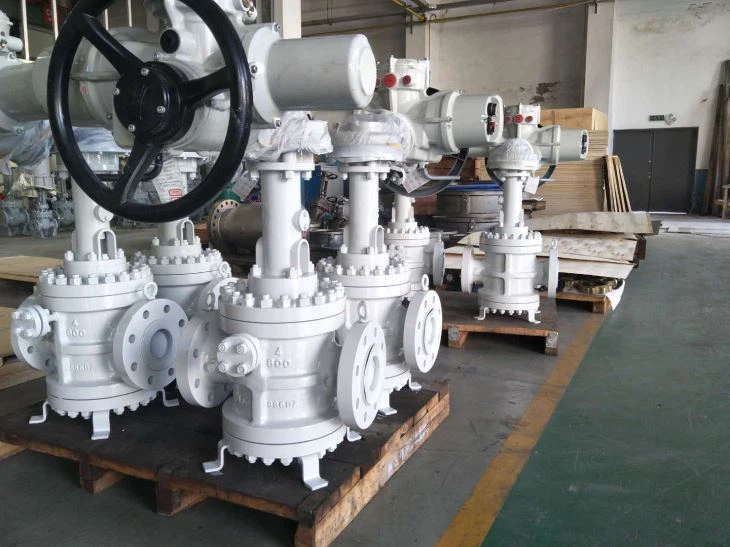

Now, let's talk about some factors that can affect the leakage rate of a plug valve. One of the most important factors is the type of plug valve. There are different types of plug valves, such as Type Plug Valve, Double Block and Bleed Plug Valve, and Soft Seat Plug Valve. Each type of valve has its own unique design and sealing mechanism, which can affect its leakage rate.
For example, a soft seat plug valve typically has a lower leakage rate than a metal seat plug valve. This is because the soft seat provides a better seal against the plug, reducing the chances of leakage. However, soft seat plug valves may not be suitable for high-temperature or high-pressure applications, as the soft seat material may degrade over time.
Another factor that can affect the leakage rate is the condition of the valve. Over time, the valve components may wear out or become damaged, which can lead to an increase in the leakage rate. Regular maintenance and inspection of the valve can help to identify and address any potential issues before they become major problems.
The installation of the valve also plays a crucial role in its leakage rate. If the valve is not installed correctly, it may not form a proper seal, leading to leakage. Make sure that the valve is installed according to the manufacturer's instructions and that all the connections are tight and secure.
As a plug valve supplier, I understand the importance of providing high-quality valves with low leakage rates. That's why we use the latest manufacturing techniques and materials to ensure that our valves meet the highest standards of quality and performance.
If you're in the market for a plug valve, I encourage you to get in touch with us. We can provide you with detailed information about our products and help you choose the right valve for your specific application. Whether you need a Type Plug Valve, a Double Block and Bleed Plug Valve, or a Soft Seat Plug Valve, we've got you covered.
In conclusion, checking the leakage rate of a plug valve is an important part of ensuring its proper functioning and safety. There are several methods available for checking the leakage rate, ranging from simple pressure tests to advanced techniques such as ultrasonic testing and helium mass spectrometry. By understanding these methods and the factors that can affect the leakage rate, you can make informed decisions about the maintenance and selection of plug valves for your systems.
If you have any questions or need further information about our plug valves or the leakage rate testing process, don't hesitate to reach out. We're here to help you find the best solutions for your needs.
References:
- Valves Handbook, 4th Edition, by Richard W. Miller
- ASME B16.34 - Valves - Flanged, Threaded, and Welding End