

Hey there! As a supplier of top entry ball valves, I often get asked if these valves can be used for slurry applications. Well, let's dive right into this topic and find out.


First off, let's understand what slurry is. Slurry is basically a mixture of solid particles and a liquid, usually water. It can be found in a whole bunch of industries like mining, chemical processing, and power generation. Slurry can be pretty tough on equipment because those solid particles can cause a lot of wear and tear.
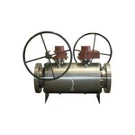
Now, a top entry ball valve is a type of valve where the ball, stem, and seats can be accessed from the top of the valve body. This design makes it easier for maintenance and repair. But the big question is, can it handle the challenges that come with slurry applications?
One of the main concerns with using a valve in slurry applications is erosion. The solid particles in the slurry can act like sandpaper, wearing down the valve components over time. Top entry ball valves are typically made from materials that are relatively resistant to erosion. For example, some valves are made with hardened steel or other alloys that can withstand the abrasive action of the slurry. However, the level of resistance depends on the specific material and the hardness of the solid particles in the slurry.
Another important factor is the sealing performance. A good seal is crucial to prevent leakage, especially when dealing with potentially hazardous or valuable slurries. Top entry ball valves usually have a ball that rotates inside the valve body to control the flow. The seats of the valve are designed to create a tight seal around the ball. In slurry applications, the seats need to be able to withstand the abrasive forces without losing their sealing ability. Some top entry ball valves come with Soft Seated Ball Valve options. These soft seats can provide a better seal, but they may wear out faster in abrasive slurry environments.
The design of the valve also plays a role. The flow path inside the valve should be smooth to minimize the chances of the solid particles getting stuck and causing blockages. Top entry ball valves often have a streamlined design that allows the slurry to flow through with relatively low resistance. However, if the valve has any sharp edges or corners, the slurry particles can accumulate there, leading to increased wear and potential blockages.
Now, let's talk about some of the advantages of using a top entry ball valve in slurry applications. One of the biggest advantages is the ease of maintenance. Since the valve components can be accessed from the top, it's much quicker and easier to replace worn parts. This means less downtime for the system, which is a huge plus in industries where continuous operation is critical.
Another advantage is the flexibility in terms of size and pressure ratings. Top entry ball valves are available in a wide range of sizes, from small valves used in laboratory applications to large valves for industrial pipelines. They can also handle different pressure levels, making them suitable for various slurry systems.
However, there are also some limitations. As mentioned earlier, the soft seats in some top entry ball valves may not be suitable for highly abrasive slurries. In such cases, you might need to consider a DBB ball valve or an API 6D Floating Type Ball Valve, which are designed to provide better sealing and durability in harsh environments.
In addition, the cost of top entry ball valves can be relatively high compared to some other types of valves. This is because of the more complex design and the use of high-quality materials. But when you consider the long-term benefits, such as reduced maintenance and downtime, the investment can be well worth it.
So, can a top entry ball valve be used for slurry applications? The answer is yes, but with some considerations. It's important to choose the right valve based on the specific characteristics of the slurry, such as the particle size, hardness, and concentration. You also need to think about the operating conditions, such as the pressure and temperature.
If you're in the market for a top entry ball valve for your slurry application, I'd be more than happy to help. We have a wide range of top entry ball valves that are designed to meet the needs of different industries. Whether you need a small valve for a pilot project or a large valve for a major industrial installation, we can provide you with the right solution.
Don't hesitate to reach out to us if you have any questions or if you'd like to discuss your specific requirements. We're here to make sure you get the best valve for your slurry application. Let's work together to find the perfect fit for your needs.
References
- Valve Handbook, 4th Edition, by J. S. T. Smith
- Industrial Valves: Selection and Sizing, by R. A. Streeter