

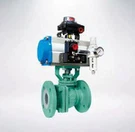
Are metal seated ball valves suitable for liquid applications? This is a question that many industry professionals often ponder when selecting the appropriate valves for their liquid handling systems. As a supplier of Metal Seated Ball Valves, I am well - versed in the capabilities and limitations of these valves in liquid applications, and I'm excited to share my insights with you.
Understanding Metal Seated Ball Valves
Before delving into their suitability for liquid applications, let's first understand what metal seated ball valves are. Metal seated ball valves are a type of quarter - turn valve that uses a spherical disc (the ball) with a hole in the middle to control the flow of fluid. The seat of the valve, which comes into contact with the ball, is made of metal. This is in contrast to Soft Seated Ball Valve, where the seat is typically made of a soft material like rubber or PTFE.
The use of metal seats provides several advantages. Metal seats are highly resistant to wear, erosion, and high temperatures. They can withstand harsh operating conditions, including high - pressure and high - velocity fluid flows. These valves are also suitable for applications involving abrasive or corrosive fluids, as the metal seat can resist the erosive and corrosive effects better than soft seats.
Suitability for Liquid Applications
High - Temperature and High - Pressure Liquids
One of the primary scenarios where metal seated ball valves shine in liquid applications is in high - temperature and high - pressure environments. For example, in power plants, where steam and hot water are used for power generation, the temperature and pressure can be extremely high. Metal seated ball valves can handle these extreme conditions without deforming or losing their sealing integrity. The metal seat can maintain its shape and performance even when exposed to temperatures that would cause soft seats to melt or degrade.
Abrasive Liquids
Liquids that contain solid particles, such as slurries in mining or wastewater treatment plants, are highly abrasive. Soft seated ball valves would quickly wear out when used with these types of liquids, leading to leakage and reduced valve lifespan. Metal seated ball valves, on the other hand, are much more resistant to abrasion. The hard metal seat can withstand the impact of solid particles, ensuring a long - lasting and reliable sealing performance.
Corrosive Liquids
In chemical processing plants, many liquids are highly corrosive. Metal seated ball valves can be made from corrosion - resistant materials such as stainless steel, nickel - based alloys, or titanium. These materials can resist the corrosive effects of acids, alkalis, and other chemicals, making metal seated ball valves a suitable choice for handling corrosive liquids.
Viscous Liquids
When dealing with viscous liquids like oil or molasses, metal seated ball valves can provide efficient flow control. The quarter - turn operation of the ball valve allows for quick opening and closing, which is beneficial for controlling the flow of viscous fluids. The metal seat also provides a tight seal, preventing any leakage of the viscous liquid.
Limitations in Liquid Applications
Low - Temperature Liquids
While metal seated ball valves are excellent for high - temperature applications, they may face challenges in low - temperature environments. At extremely low temperatures, some metals can become brittle, which may lead to cracking or failure of the valve seat. In such cases, special low - temperature alloys may need to be used, or alternative valve types may be more suitable.
Precise Flow Control
Although metal seated ball valves are effective for on - off control and general flow regulation, they may not be the best choice for applications that require very precise flow control. V Port Ball Valve is often a better option for such applications. The V - shaped ball in a V port ball valve allows for more accurate throttling and flow control, providing a more linear flow characteristic compared to a standard metal seated ball valve.
Comparison with Other Valve Types
Soft Seated Ball Valves
As mentioned earlier, soft seated ball valves have a soft seat made of materials like rubber or PTFE. These valves are known for their excellent sealing performance at low pressures and temperatures. They are also relatively inexpensive compared to metal seated ball valves. However, they are not suitable for high - temperature, high - pressure, abrasive, or corrosive applications. In contrast, metal seated ball valves offer better durability and performance in harsh operating conditions, although they are generally more expensive.
Fully Welded Ball Valves
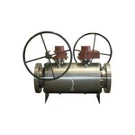
Fully Welded Ball Valve are another type of valve commonly used in liquid applications, especially in pipelines. These valves are welded together, providing a leak - free and robust design. They are suitable for high - pressure applications and can handle a wide range of liquids. Metal seated ball valves can be used in conjunction with fully welded ball valves in applications where high - temperature, abrasive, or corrosive liquids are involved. The metal seat adds an extra layer of protection and durability to the valve.
Considerations for Selection
When selecting a metal seated ball valve for a liquid application, several factors need to be considered. First, the properties of the liquid, including temperature, pressure, viscosity, abrasiveness, and corrosiveness, should be carefully evaluated. This will help determine the appropriate material for the valve body and seat. Second, the required flow control accuracy should be considered. If precise flow control is needed, a V port ball valve or other specialized valve types may be more suitable. Third, the operating environment, such as the presence of dust, moisture, or vibration, should also be taken into account.
Conclusion
In conclusion, metal seated ball valves are highly suitable for many liquid applications, especially those involving high - temperature, high - pressure, abrasive, or corrosive liquids. Their durability, resistance to wear and corrosion, and ability to withstand harsh operating conditions make them a reliable choice for a wide range of industries. However, they may not be the best option for all liquid applications, such as low - temperature or applications requiring precise flow control.
If you are in the process of selecting valves for your liquid handling system and are considering metal seated ball valves, I encourage you to reach out to us. Our team of experts can provide you with detailed information, technical support, and customized solutions based on your specific requirements. We are committed to helping you find the most suitable valves for your applications and ensuring the efficient and reliable operation of your systems. Contact us today to start a procurement discussion and explore how our Metal Seated Ball Valves can meet your needs.


References
- Valve Handbook, Second Edition, by Leslie E. Spira
- Industrial Valves: Selection and Sizing, by Joseph F. Monks
- Ball Valves: Design, Applications, and Maintenance, by John T. Watson