Valves are used to control the flow of liquids and gases. Ball, gate and globe valves are used to control the flow of liquids. These various forms of valves are used to create waterways, so understanding the differences and their uses is critical.
Ball valve introduction
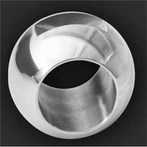
Ball valves made of solid elements are highly durable and function perfectly even after long periods of inactivity. It has a sphere made of brass, stainless steel or chrome-plated brass that is embedded within the conduit. At the top of the sphere is a lever that can only be shaken a quarter of a turn. When the horizontal plane is parallel to the pipe, the sphere allows water to flow. When the lever is perpendicular to the pipe, the solid ball stops the flow of water. The water flow is controlled by moving the joystick from 0 to 90 degrees from the angle of the pipe it is attached to.
On the other hand, you can partially flow the water through the pipe by holding the lever between the 2 limits, but the pipe may deform due to the water pressure.
The advantage of this valve is that you can open or close it easily and quickly. However, the water will keep hammering the sides of the sphere and pipe unless it is fully opened to direct the water.
Introduction of globe valve
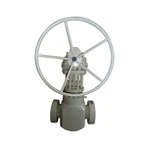
Globe valves are wheel-based valves that, when open, reduce the flow of water through a pipe by means of a set of fixed ring seats held in a spherical body. Globe valves contain a spherical area that is divided into two halves by an opening that forms the valve seat. On this seat, the stopper can be tightened using a wheel that controls the flow of water or stops it completely.
Whether the globe valve is open or closed, especially partially open, is difficult to understand. Also, it cannot be operated with one hand like a ball valve.
Introduction of gate valve
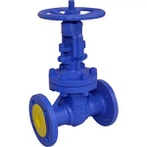
Gate valves are used to control the flow of liquids and are usually operated by turning a wheel and moving the gate valve up and down. When turning the wheel to lower the sluice, the water wheel reaches its lowest position, which stops the flow of water. When operating the wheels to do the opposite, the gate is in the highest position and the water can flow unhindered.
It is easy to see which position the gate valve is in by looking at the rising stem that is part of the gate valve. If the stem is up and visible, the gate valve is open; when the stem is not visible, the gate valve is closed.
Gate valves remain in contact with flowing water and are therefore highly susceptible to corrosion, subsequent failure, and eventual rupture. Since it's slow, the chance of water hammer is negligible. It should be used in open or closed conditions, it can be damaged by water pressure and vibration if not kept properly.